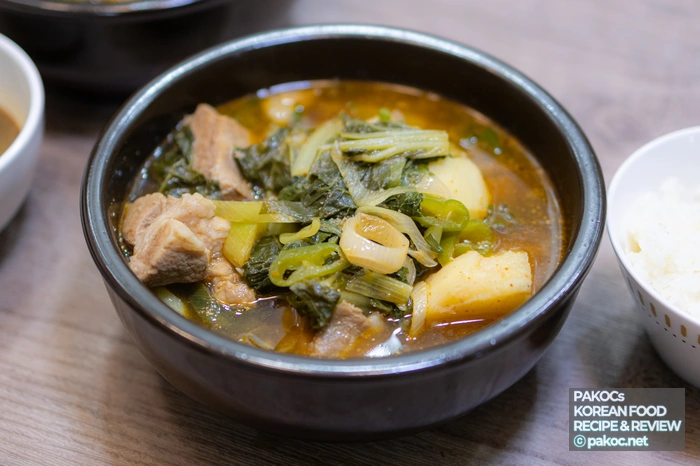
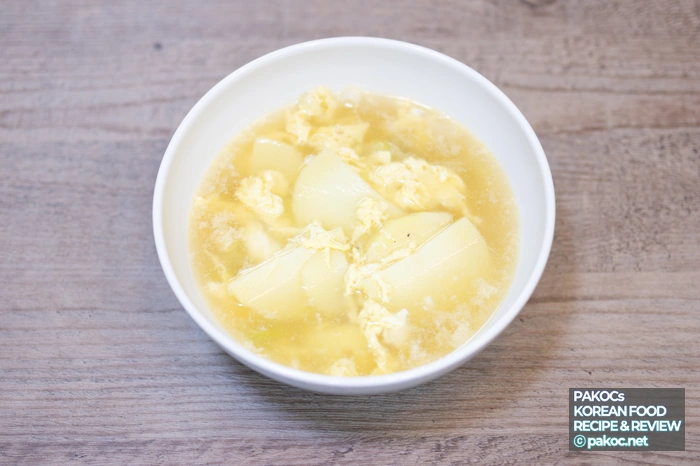
Hello. Today’s recipe is Hearty One-Chicken Kalguksu, a big pot of noodles you can simmer and enjoy with the whole family. Compared with many recipes you’ll find online, this one uses a larger chicken and a more generous amount of noodles. So, it feels like something you’d get at a specialty restaurant. Now, let’s take a look at the recipe.
📋 At a Glance
- Dish: Hearty One-Chicken Kalguksu
- Servings: 4
- Difficulty: Medium (beginner-friendly)
- Prep time: 15 minutes
- Cook time: 50 minutes
- Main ingredients: Chicken for dakbokkeumtang (800–1000 g), fresh kalguksu noodles (4 servings), potato, onion, scallion, chicken stock
- Dipping sauce: Soy sauce, red pepper flakes, perilla oil, toasted sesame seeds, minced garlic, black pepper (optional)
- Ways to use leftovers: Chicken rice porridge, rice in broth, add sujebi (hand-torn dough)
Ingredients Overview
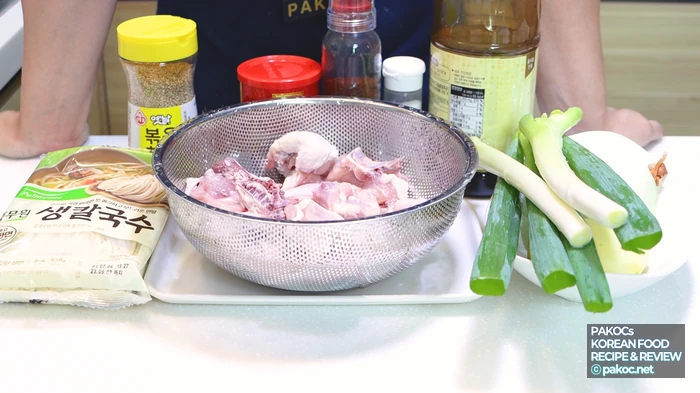
First, the ingredients for this dish are simpler than you might think. Just prep the basics you associate with chicken kalguksu. If you have any add-ins you like for kalguksu, feel free to include them. Also, I recommend making the dipping sauce. That said, it’s optional. You can season with just salt and pepper.
ⓒ
Copyright PAKOC https://pakoc.net[Basic Ingredients for 4 Servings of One-Chicken Kalguksu]
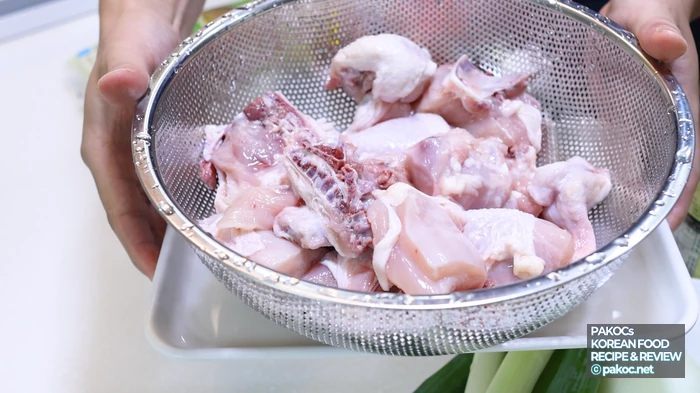
- 1 whole chicken, 800–1000 g (cut-up chicken for dakbokkeumtang)
- Fresh kalguksu noodles, 4 servings
- 1 stalk scallion
- 1 potato
- 1 onion
- 1/3–1/2 Korean zucchini (optional)
- 2 tbsp cooking oil
- 3.5–4 L water
- 1/2 tbsp seasoned salt
- 1 tbsp chicken stock
- 2 tbsp cooking wine
- 1 tbsp minced garlic
- A little black pepper
[Dipping Sauce for Chicken Kalguksu]
- 6 tbsp soy sauce
- 2 tbsp red pepper flakes
- 1 tbsp perilla oil
- 1/2 tbsp toasted sesame seeds
- 1 tsp minced garlic
- A little black pepper
Recipe Summary
- Prepare 800–1000 g of cut-up chicken for dakbokkeumtang.
- Slice 1 onion into thick slices. Julienne 1 potato. Finely chop 2 scallions. If using Korean zucchini, julienne about half.
- In a large wok, add 2 tbsp cooking oil. Add the washed chicken and the sliced onion. Stir-fry until nicely browned.
- Add 3.5 L water, 1 tbsp minced garlic, 1/2 tbsp seasoned salt, 1 tbsp Lee Kum Kee chicken stock, and 2 tbsp cooking wine. Bring to a boil.
- Once the broth is boiling hard, rinse the starch off 3–4 servings of fresh kalguksu noodles. Add the noodles and cook.
- While the noodles cook, make the sauce with 6 tbsp soy sauce, 2 tbsp red pepper flakes, 1 tbsp perilla oil, 1/2 tbsp toasted sesame seeds, 1 tsp minced garlic, and a little black pepper.
- At the end, add 2 scallions (finely chopped) and the sliced Korean zucchini. Bring back to a quick boil, then adjust seasoning with a little black pepper.
🍗 Add the dipping sauce to the finished chicken kalguksu, or dip the chicken in it.
🥣 If you’re only eating 1–2 servings, refrigerate the remaining broth before adding noodles. The next day, it’s great for a broth dish like chicken rice porridge.
🧂 Instead of the dipping sauce, you can keep it simple with just seasoned salt and black pepper for a clean, mild flavor.
🥗 Ingredient prep time: 15 minutes
🍳 Cook time: 50 minutes
This recipe uses a large chicken sold for dakbokkeumtang. Typically, it’s an 800–1000 g chicken. Washing raw chicken isn’t generally recommended due to salmonella risk. However, if you dislike the scum, you can rinse it under running water without splashing. After rinsing, be sure to clean the sink well. For the noodles, I prepared a generous 4 servings of fresh kalguksu noodles.
ⓒ
Copyright PAKOC https://pakoc.net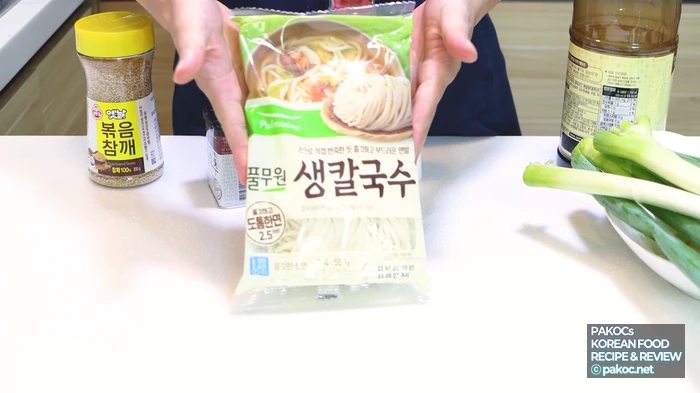
ⓒ
Copyright PAKOC https://pakoc.netIngredient Prep
Prepping the Onion, Potato, and Scallions
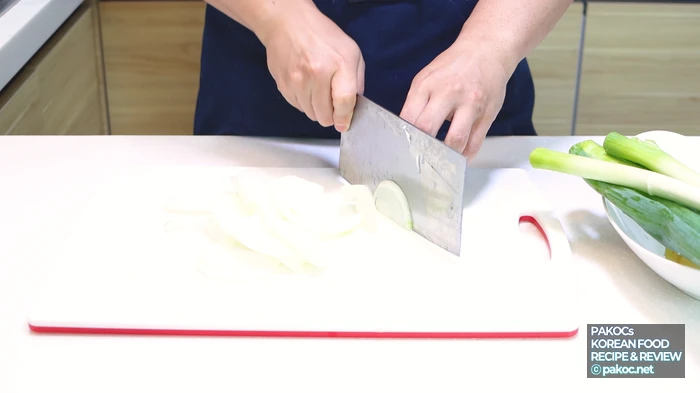
First, slice 1 onion into thick slices. Depending on how much onion you add, the broth can taste slightly sweet. So, adjust the amount to your preference.
ⓒ
Copyright PAKOC https://pakoc.net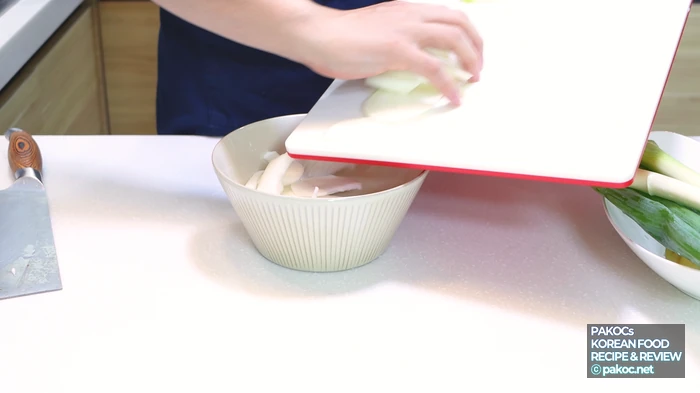
ⓒ
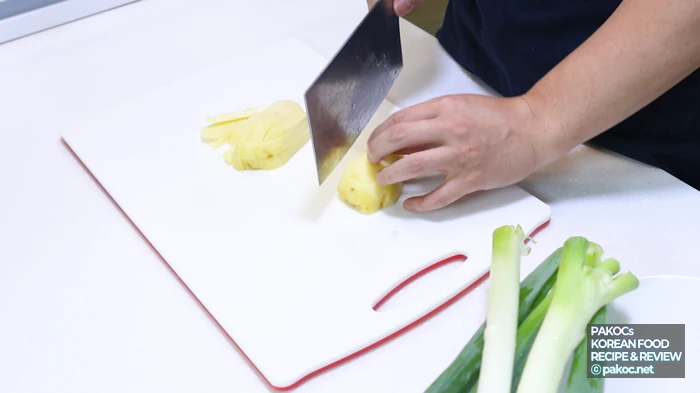
Copyright PAKOC https://pakoc.netJulienne 1 potato and half a Korean zucchini. I only prepped the potato first. If you cut it to a good size, it helps to soak it in cold water so some starch comes out.
ⓒ
Copyright PAKOC https://pakoc.net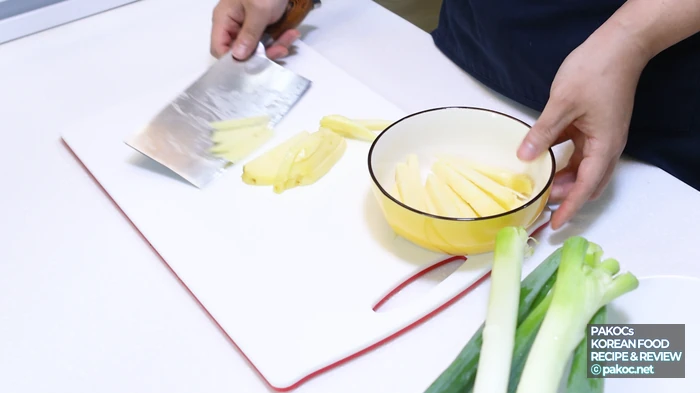
ⓒ
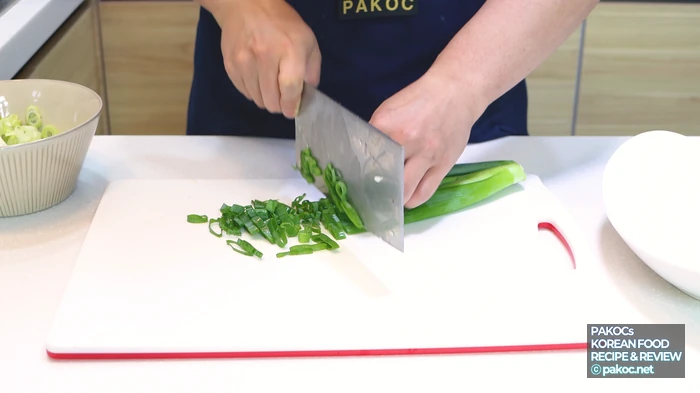
Copyright PAKOC https://pakoc.netI prepared 2 scallions. Consider both what goes into the broth and what you’ll add at the end.
ⓒ
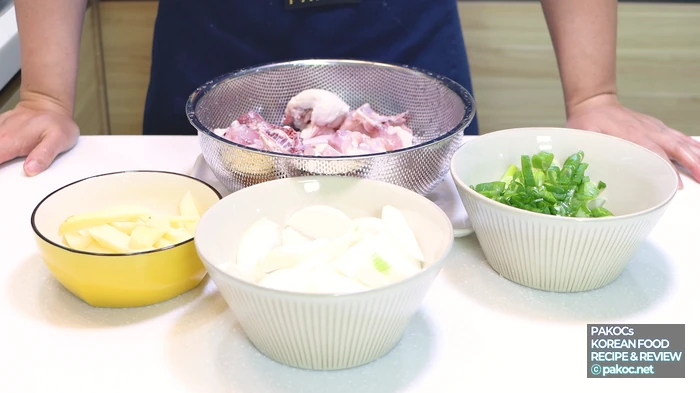
Copyright PAKOC https://pakoc.netThat wraps up the prep. Aside from the chicken, onion, scallions, and potato, most of the rest are seasonings. So, it shouldn’t be difficult to get everything ready.
ⓒ
Copyright PAKOC https://pakoc.netCooking
Sautéing the Chicken and Onion
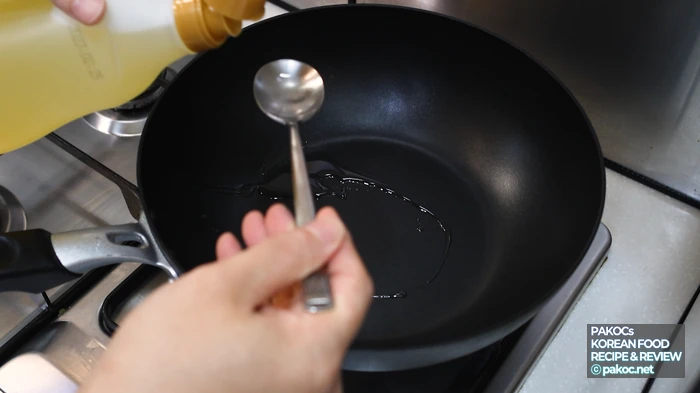
Let’s start cooking. Add 2 tbsp cooking oil to a large wok. Heat on high at first, then reduce to medium once the pan is hot.
ⓒ
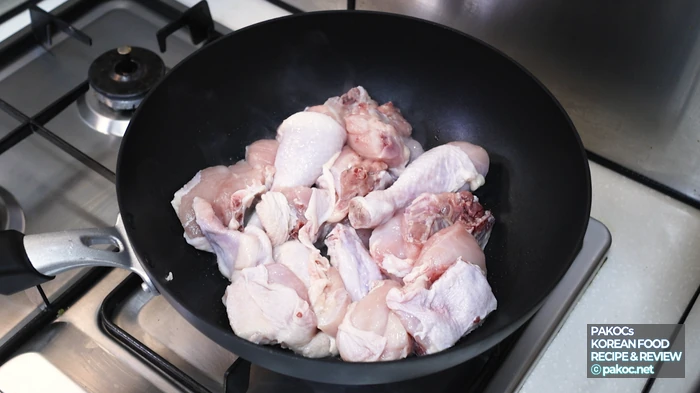
Copyright PAKOC https://pakoc.netNext, add the chicken and sear until lightly browned. If you rinsed it, pat it dry before adding it. You are not cooking it through at this stage. Above all, make sure it doesn’t burn.
ⓒ
Copyright PAKOC https://pakoc.net
ⓒ
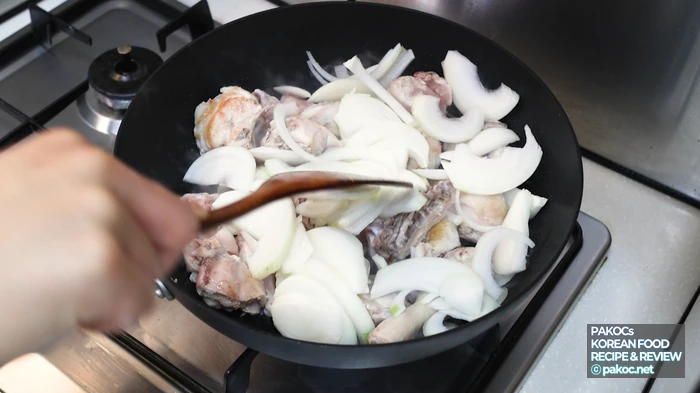
Copyright PAKOC https://pakoc.netOnce the chicken is partly cooked and nicely browned, add the sliced onion. Cook it briefly.
ⓒ
Copyright PAKOC https://pakoc.netSimmering the Broth (30–40 Minutes)
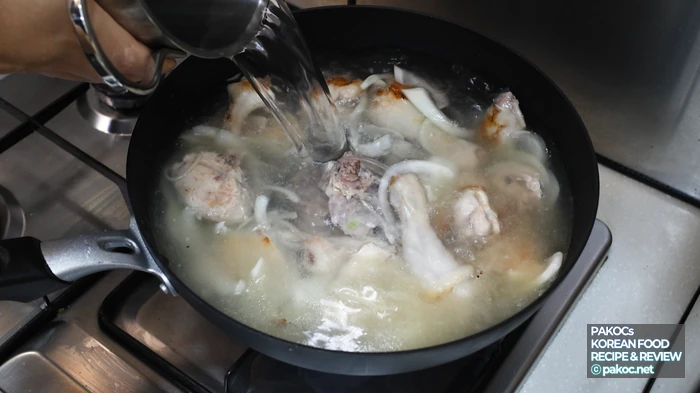
Add 3.5 L water and 1 tbsp minced garlic to the sautéed ingredients. If the broth turns out salty, you can add more water and adjust later. Still, leave enough room for the noodles so it won’t overflow.
ⓒ
Copyright PAKOC https://pakoc.net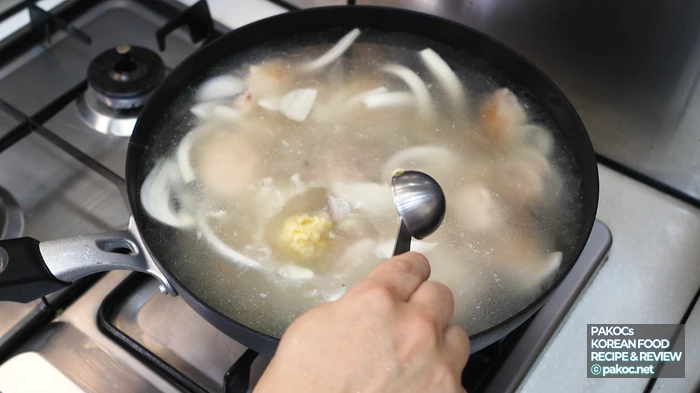
ⓒ
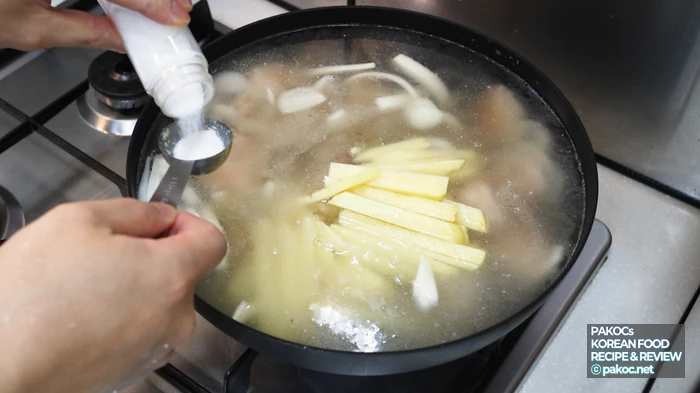
Copyright PAKOC https://pakoc.netThen add 1/2 tbsp seasoned salt, 1 tbsp Lee Kum Kee chicken stock, and 2 tbsp cooking wine. I added the chicken stock for a bit more umami. However, if you prefer a lighter taste, you can skip it.
ⓒ
Copyright PAKOC https://pakoc.net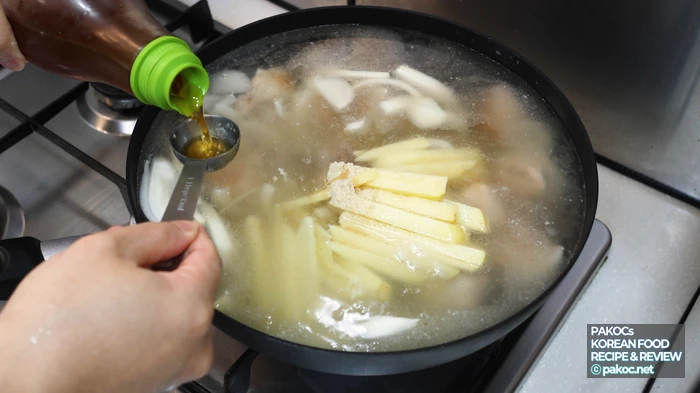
ⓒ

Copyright PAKOC https://pakoc.netBring it to a boil over high heat. Once it starts boiling, keep it simmering over medium heat so it doesn’t overflow. Simmer for 30–40 minutes, until the broth reduces slightly.
ⓒ
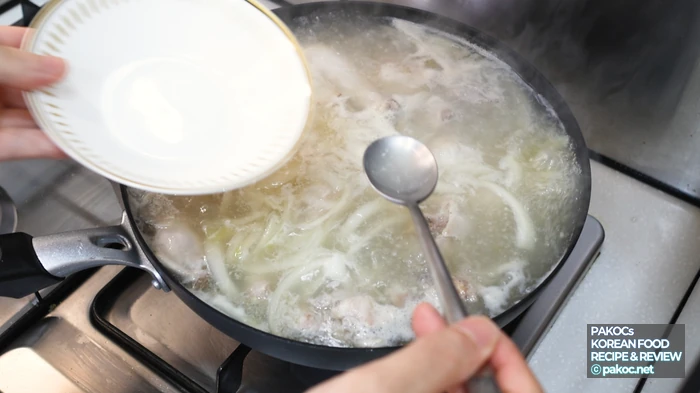
Copyright PAKOC https://pakoc.netTaste and adjust seasoning once during simmering. Since you’ll boil the noodles in the broth, it’s fine to keep it slightly under-seasoned. You can always fix the seasoning later.
ⓒ
Copyright PAKOC https://pakoc.netAdding the Noodles and Finishing
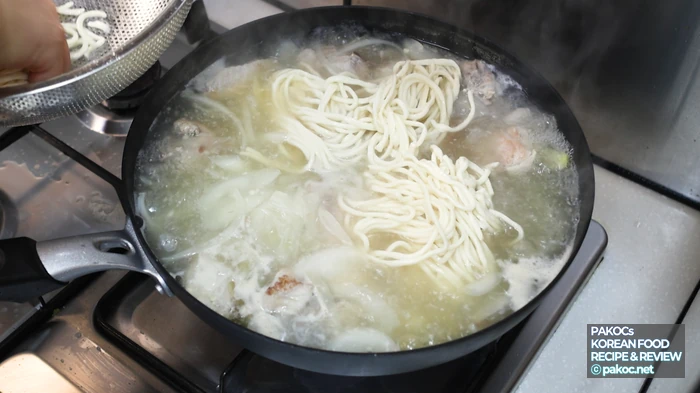
Once the broth has reduced a bit, lightly rinse the starch off 3–4 servings of fresh kalguksu noodles and add them in. Finally, add 2 scallions (finely chopped) and the sliced Korean zucchini. Bring it to a quick boil to finish.
ⓒ
Copyright PAKOC https://pakoc.net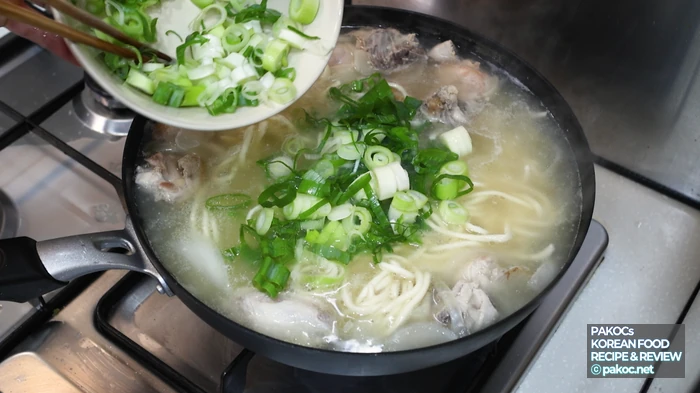
ⓒ
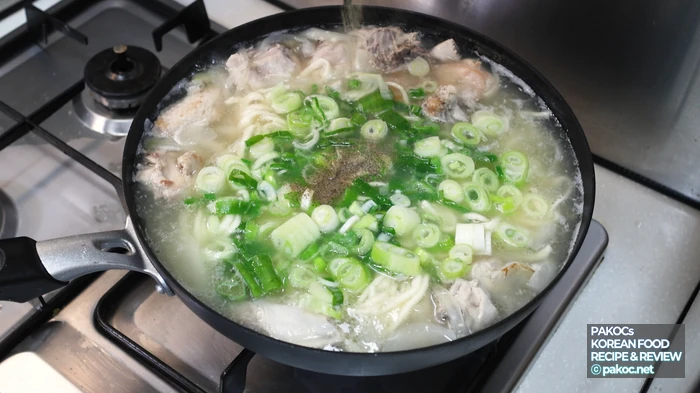
Copyright PAKOC https://pakoc.netI adjusted the final seasoning with just a little more black pepper. However, you can also tweak it to taste while eating.
ⓒ
Copyright PAKOC https://pakoc.netMaking the Dipping Sauce

While the noodles cook, make the sauce to your taste. Combine 6 tbsp soy sauce, 2 tbsp red pepper flakes, 1 tbsp perilla oil, 1/2 tbsp toasted sesame seeds, 1 tsp minced garlic, and a little black pepper. Usually, boiling the noodles for about 5 minutes is enough. If it looks like it might boil over, lower the heat and give it a stir with chopsticks.
ⓒ
Copyright PAKOC https://pakoc.net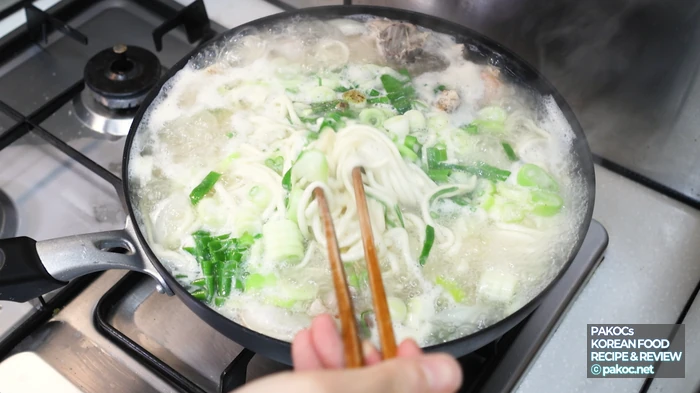
ⓒ
Copyright PAKOC https://pakoc.netFinished Dish Gallery
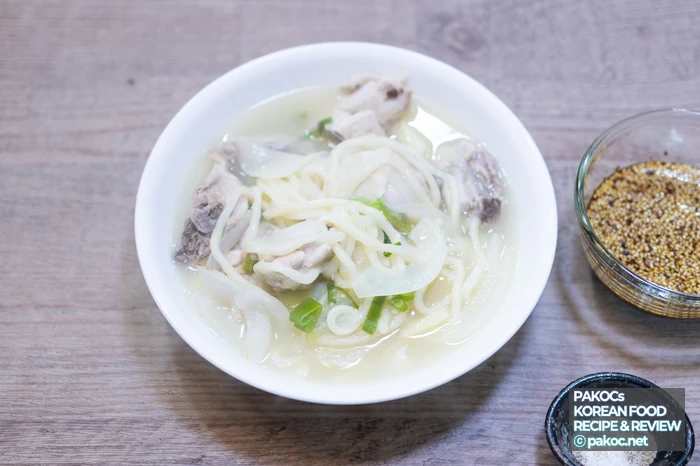
ⓒ
Copyright PAKOC https://pakoc.net
Serving Ideas and Leftover Tips
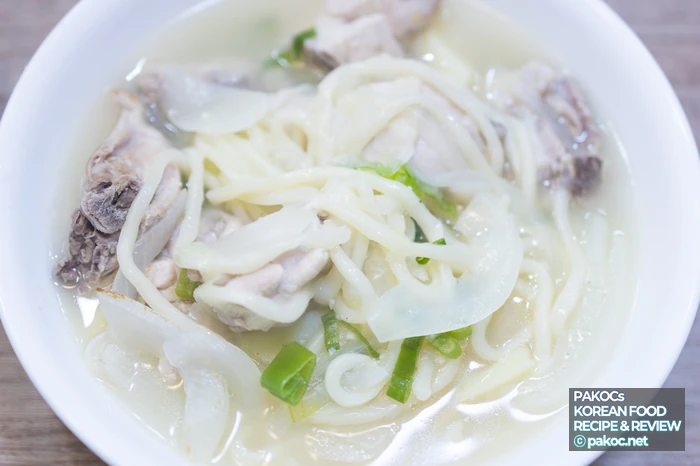
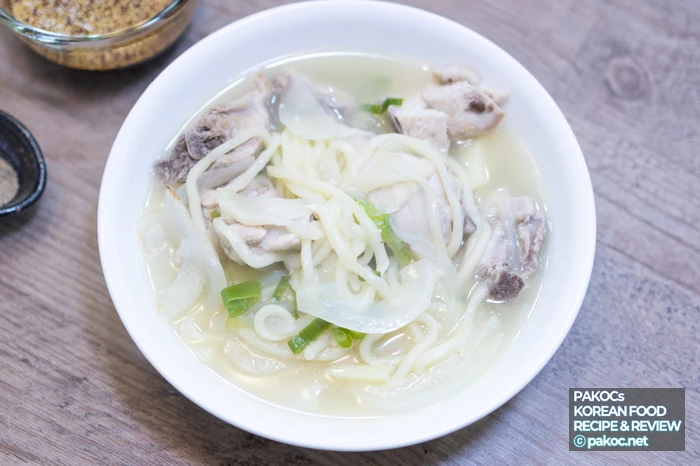
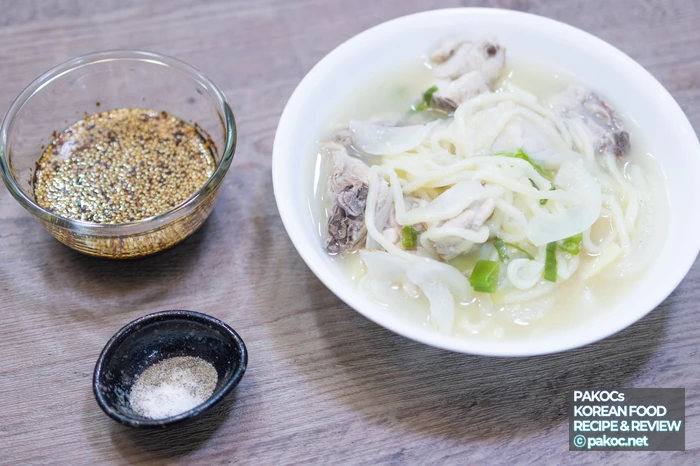
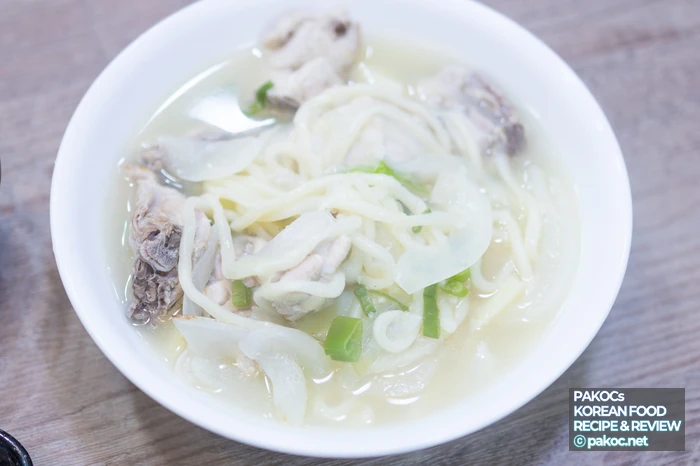
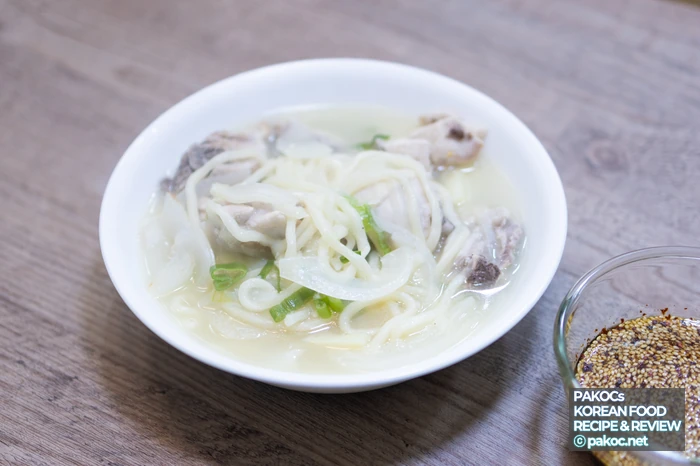
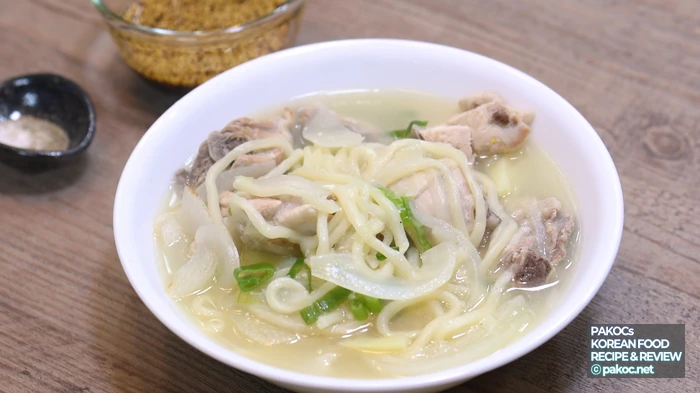
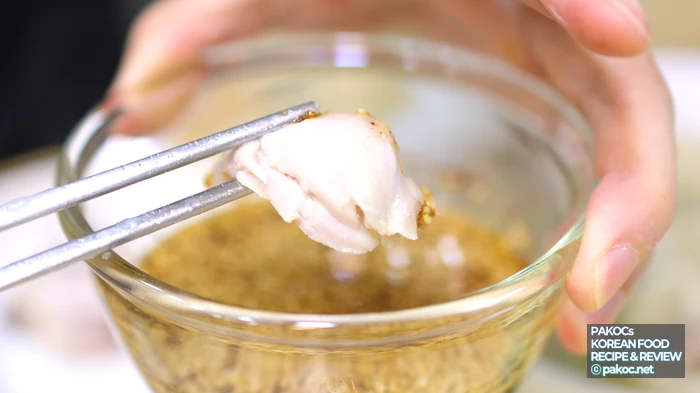
This is the finished Hearty One-Chicken Kalguksu. The bowl for the noodles is pretty large, yet the portion is still generous. As you can see, you can season it with salt and pepper. Or, make the simple dipping sauce I shared and dip the chicken. You can also fine-tune the broth seasoning.
ⓒ
Copyright PAKOC https://pakoc.net
ⓒ
Copyright PAKOC https://pakoc.netAdding Rice and Extra Sujebi
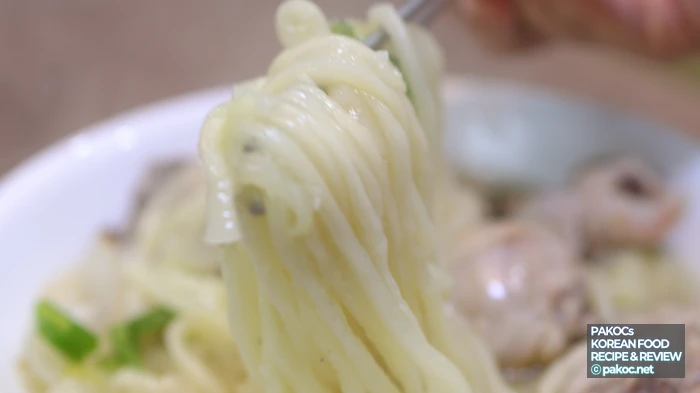
The broth becomes slightly thick after cooking the noodles. If you like, add sujebi (hand-torn dough) for an extra-special bite. Honestly, it’s also great just with rice mixed into the broth.
ⓒ
Copyright PAKOC https://pakoc.netFor chicken broth dishes like this, almost any carb works well. So, try customizing it to your taste. Still, nothing beats kalguksu.
ⓒ
Copyright PAKOC https://pakoc.net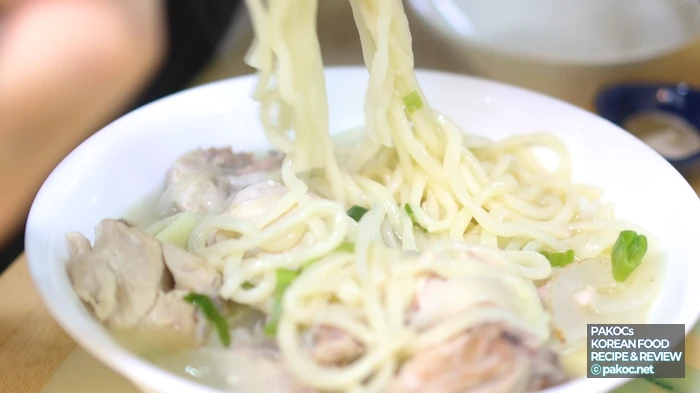
ⓒ
Copyright PAKOC https://pakoc.netPlenty for a Family of Four
Because it uses chicken for dakbokkeumtang, the pieces are big and meaty. Also, after simmering for a long time, it turns very tender. Make sure to enjoy the chicken along with the noodles.
ⓒ
Copyright PAKOC https://pakoc.net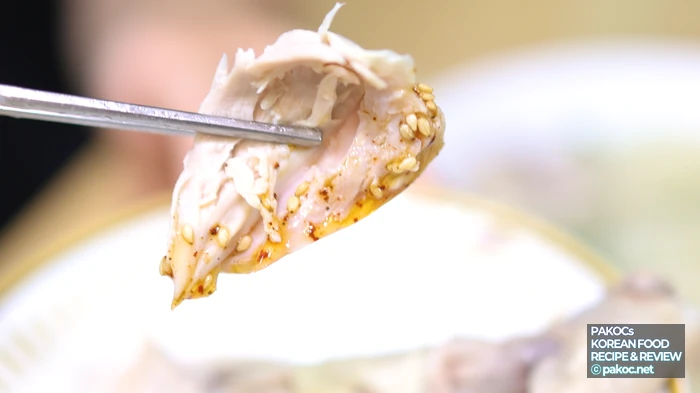
ⓒ
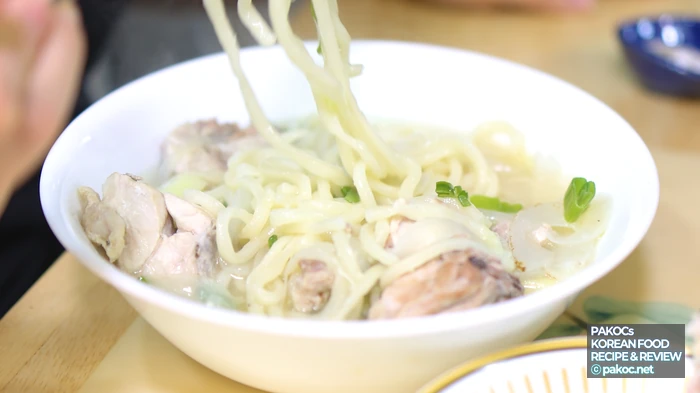
Copyright PAKOC https://pakoc.netIt’s hearty in every way, so even a family of four can eat comfortably. Even households raising two boys won’t find it lacking. Haha. Since there’s plenty of broth, be sure to have rice ready. It’s the kind of flavor you won’t regret.
ⓒ
Copyright PAKOC https://pakoc.netFrequently Asked Questions
Q. How long does it take to make one-chicken kalguksu?
It takes about 1 hour total: 15 minutes for prep and 50 minutes for cooking. The key is simmering the broth for a full 30–40 minutes. Add the kalguksu noodles at the end and cook for about 5 minutes.
Q. What kind of chicken should I use for one-chicken kalguksu?
Use an 800–1000 g chicken sold for dakbokkeumtang. A larger chicken gives you bigger pieces of meat. Also, after a long simmer, it becomes tender and gives that specialty-restaurant feel.
Q. How can I use the leftover broth?
Store it in the fridge and simmer it the next day into chicken rice porridge. It’s also delicious with rice mixed into the broth. Moreover, adding sujebi (hand-torn dough) works well. Since it’s chicken broth, it pairs nicely with many kinds of carbs.
image sources
- 볶은참깨 양념장 재료 준비: Copyright PAKOC https://pakoc.net
- 다진마늘 양념장 조리법: Copyright PAKOC https://pakoc.net
- 후추 양념장 맛 조절: Copyright PAKOC https://pakoc.net
- 식용유 조리 필수 재료: Copyright PAKOC https://pakoc.net
- 물 국물 조리 비율: Copyright PAKOC https://pakoc.net
- 맛소금 간 조절 방법: Copyright PAKOC https://pakoc.net
- 치킨스톡 국물 감칠맛: Copyright PAKOC https://pakoc.net
- 국물 간 맞추기 팁: Copyright PAKOC https://pakoc.net
- 닭한마리 칼국수 완성 사진: Copyright PAKOC https://pakoc.net
- 양념장 혼합 조리 방법: Copyright PAKOC https://pakoc.net
- 조리 시간 계산 방법: Copyright PAKOC https://pakoc.net
- 찬물 감자 전분기 제거 방법: Copyright PAKOC https://pakoc.net
- 국물 걸쭉한 면 조리법: Copyright PAKOC https://pakoc.net
- 닭고기 찍어먹기 방법: Copyright PAKOC https://pakoc.net
- 칼국수 면 삶는 시간: Copyright PAKOC https://pakoc.net
- 재료 다듬기 과정 사진: Copyright PAKOC https://pakoc.net
- 닭한마리 칼국수 개성 있게: Copyright PAKOC https://pakoc.net
- 양념장 재료 준비 방법: Copyright PAKOC https://pakoc.net
- 한냄비 요리 장점 소개: Copyright PAKOC https://pakoc.net
- 칼국수 맛있게 먹는 방법: Copyright PAKOC https://pakoc.net
- 닭한마리 칼국수 조리 과정: Copyright PAKOC https://pakoc.net
- 푸짐한 국물 요리 그릇: Copyright PAKOC https://pakoc.net
- 국물 간 맞추기 방법: Copyright PAKOC https://pakoc.net
- 양파 슬라이스 준비 방법: Copyright PAKOC https://pakoc.net
- 닭고기 세척 재료 준비: Copyright PAKOC https://pakoc.net
- 완성된 닭칼국수 비주얼 사진: Copyright PAKOC https://pakoc.net
- 대파 썰기 준비 과정: Copyright PAKOC https://pakoc.net
- 감자 채썰기 조리 팁: Copyright PAKOC https://pakoc.net
- 애호박 추가 재료 조리법: Copyright PAKOC https://pakoc.net
- 식용유 사용 방법 설명: Copyright PAKOC https://pakoc.net
- 다진마늘 양념 혼합 방법: Copyright PAKOC https://pakoc.net
- 닭고기 볶기 조리 과정: Copyright PAKOC https://pakoc.net