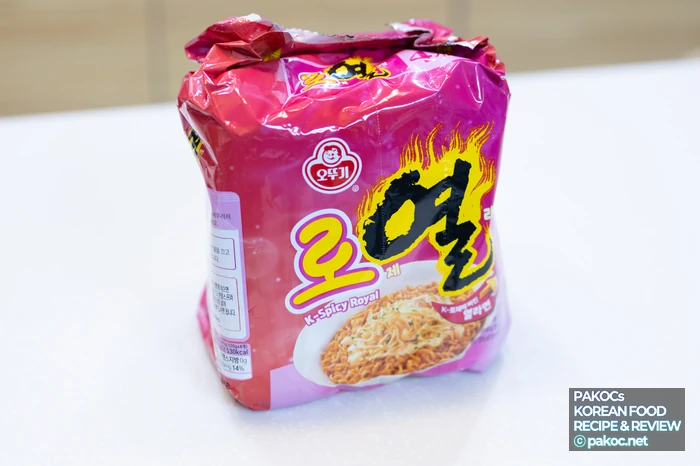
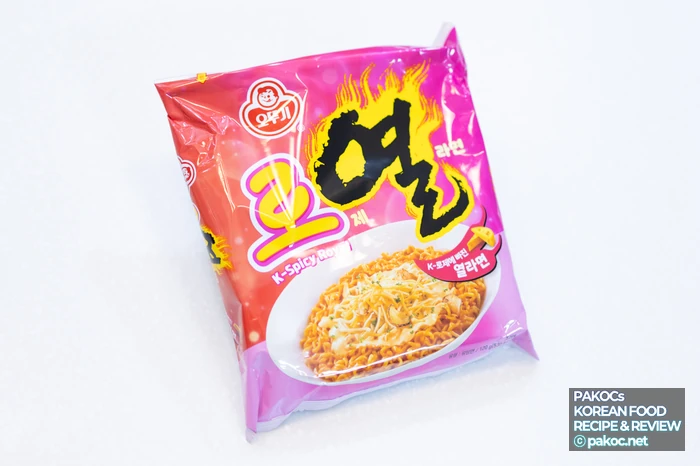
Ottogi’s Yeol Ramen just got a rosé pasta makeover. Today’s review is the Rosé Yeol Ramen, officially nicknamed Royeol Ramen (a portmanteau of Rosé and Yeol). Released on May 18, 2026, this spicy noodle gets a cheddar-mascarpone cream treatment inspired by a viral K-rosé recipe. As someone who struggles with spicy food, finding this not just tolerable but genuinely enjoyable was a surprise. Let’s take a look.
📋 At a Glance
- Product: Ottogi Rosé Yeol Ramen (Royeol Ramen)
- Brand: Ottogi
- Launch date: May 18, 2026
- Price: 4-pack 6,000 won (retail) / approx. 4,580 won (discounted)
- Weight / Calories: 120 g / 530 kcal per pack
- Sodium: 70% of daily recommended intake
- Contents: noodles + Yeol Ramen base powder + additional cheddar-cream powder sachet
- Notes: Ottogi 30th anniversary commemorative product; viral YouTube K-rosé recipe turned product; cheddar + mascarpone + cream combination
- Verdict: ★4.0 — Top-tier cheese quality, thick rosé bibim texture, accessible spice for beginners too!
Ottogi Rosé Yeol Ramen: Price and Features
This product was developed to celebrate Yeol Ramen’s 30th anniversary. Specifically, it started as a recipe that went viral on YouTube with over one million views — the kind of social media-to-product pipeline that’s become a recognizable trend. Retail price is around 6,000 won for a 4-pack, though the official Ottogi store and major supermarkets typically carry it for around 4,580 won.
ⓒ
Copyright PAKOC https://pakoc.net | All Rights Reserved Pakoc(http://Pakoc.net)The concept is “Yeol Ramen gone K-rosé.” The original recipe became a social media trend both in Korea and internationally — people were experimenting with it overseas too. The product name is deliberately catchy for virality, and officially it delivers “a creamy, smooth flavor from added cream and cheese.” That combination was intriguing enough on its own.
ⓒ
Copyright PAKOC https://pakoc.net | All Rights Reserved Pakoc(http://Pakoc.net)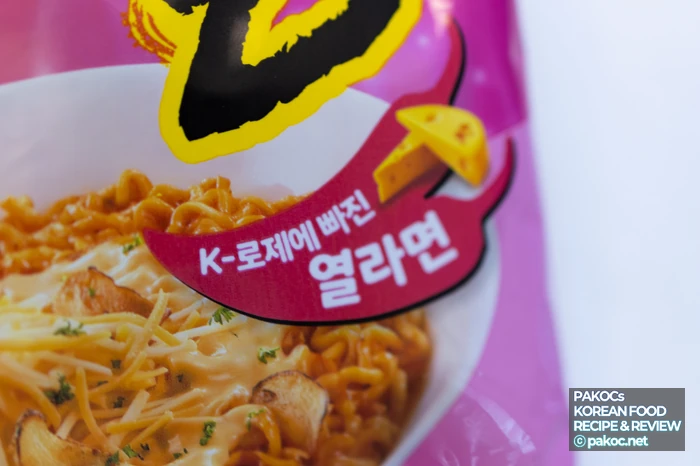
ⓒ
Copyright PAKOC https://pakoc.net | All Rights Reserved Pakoc(http://Pakoc.net)Cooking Methods and Nutritional Info
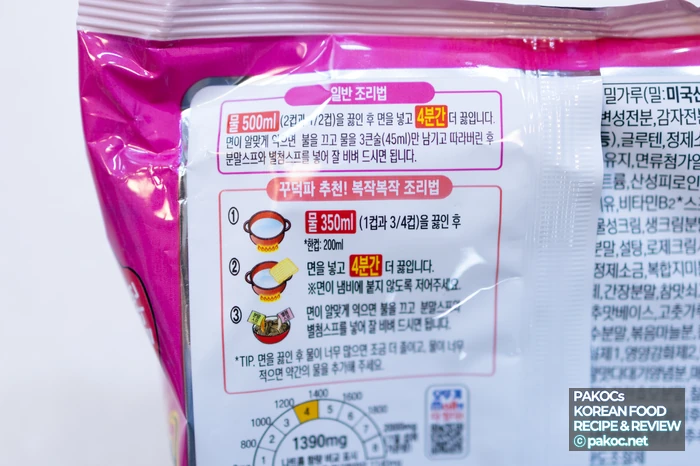
Two cooking methods are offered. The first is the standard bibim (mixed noodle) approach: boil the noodles, drain most of the water, add all the powder sachets, and toss. The second — described as ideal for a thick, “bokjak-bokjak” (stir-and-simmer) result — uses 350 ml of water, boils the noodles for 4 minutes without draining, then turns off the heat, adds both sachets, and tosses. The second method is cleaner to execute, though scaling it up for two packs needs some water adjustment.
ⓒ
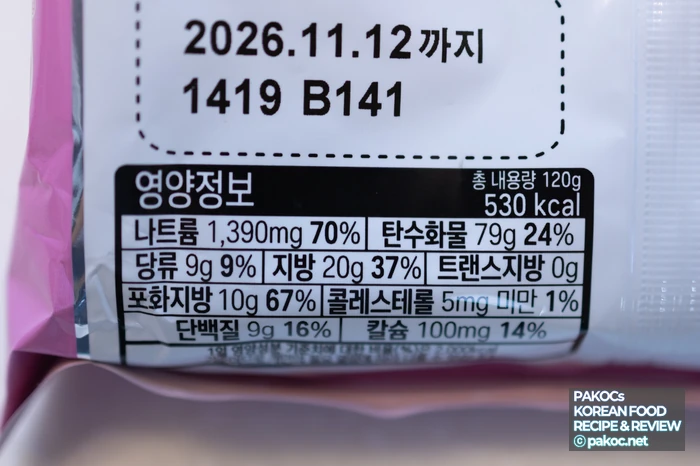
Copyright PAKOC https://pakoc.net | All Rights Reserved Pakoc(http://Pakoc.net)Total weight 120 g, 530 kcal, sodium at 70% of the daily recommended value — broadly in line with standard Korean instant noodles. The ingredient list includes heavy cream, rosé cream powder, cheddar cheese blend, and general cheese powder — components that recall a proper rosé pasta rather than a simple cheese-dusted noodle. Multiple cheese and cream sources combined suggest real effort in the formulation.
ⓒ
Copyright PAKOC https://pakoc.net | All Rights Reserved Pakoc(http://Pakoc.net)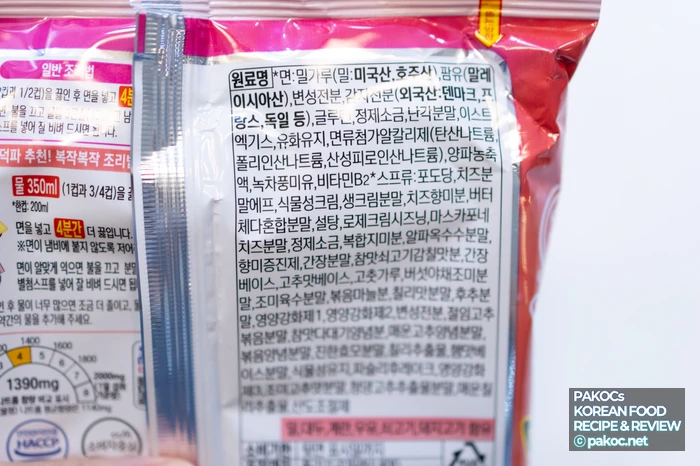
ⓒ
Copyright PAKOC https://pakoc.net | All Rights Reserved Pakoc(http://Pakoc.net)Royeol Ramen: What’s Inside
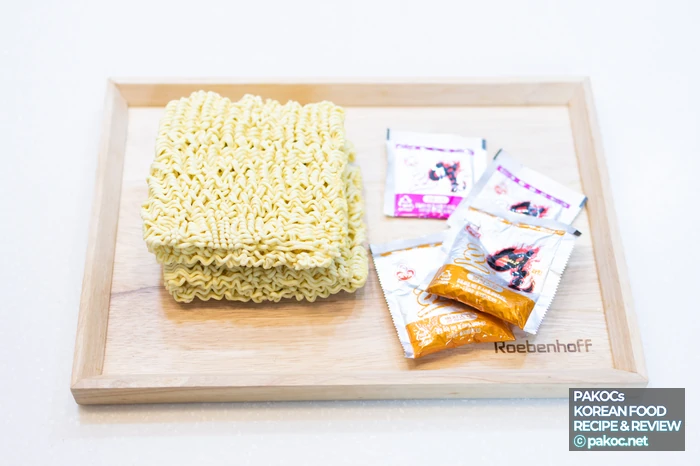
Contents are straightforward: noodles and two powder sachets. No dehydrated vegetable flakes, no liquid sachet — just the noodles (the familiar Yeol Ramen variety) and the two powders.
ⓒ
Copyright PAKOC https://pakoc.net | All Rights Reserved Pakoc(http://Pakoc.net)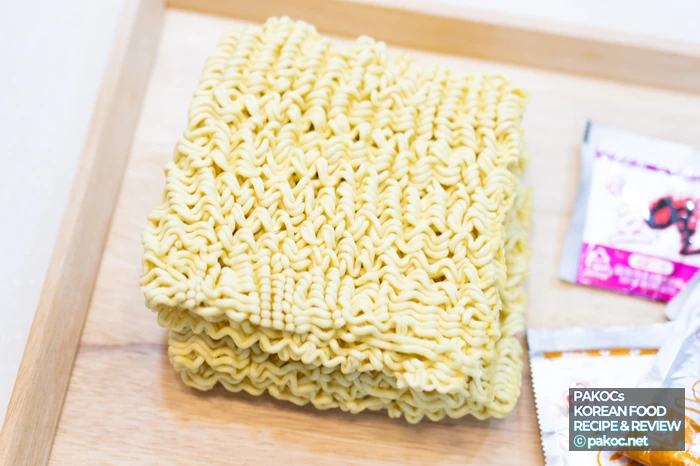
ⓒ
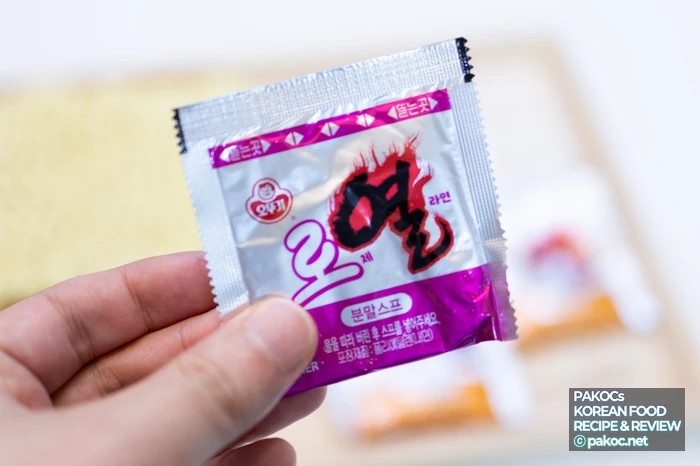
Copyright PAKOC https://pakoc.net | All Rights Reserved Pakoc(http://Pakoc.net)Of the two sachets, the main one is the familiar Yeol Ramen spice base. The second is the additional cheddar-cream powder. Almost everything that makes this product distinct is in that second sachet — heavier, more voluminous, and almost certainly the dominant flavor driver of the finished dish.
ⓒ
Copyright PAKOC https://pakoc.net | All Rights Reserved Pakoc(http://Pakoc.net)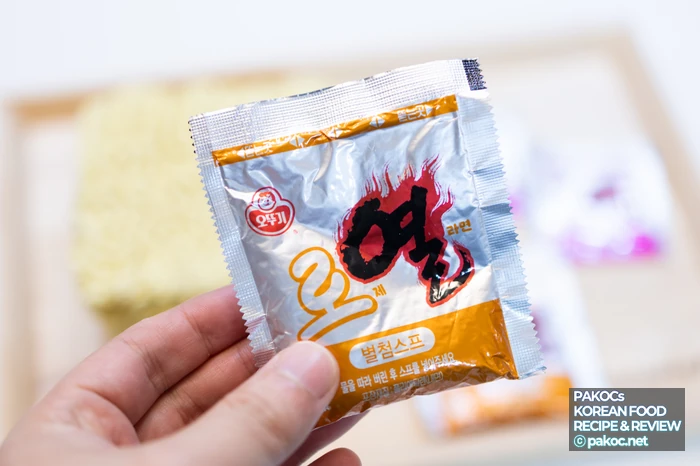
ⓒ
Copyright PAKOC https://pakoc.net | All Rights Reserved Pakoc(http://Pakoc.net)Cooking the Royeol Ramen

Went with the bokjak-bokjak method. Scaling for two packs, 700 ml felt like too much water — used just over 600 ml instead. Once the water boiled, noodles went in and got stirred consistently for 4 minutes to prevent sticking.
ⓒ
Copyright PAKOC https://pakoc.net | All Rights Reserved Pakoc(http://Pakoc.net)
ⓒ

Copyright PAKOC https://pakoc.net | All Rights Reserved Pakoc(http://Pakoc.net)After 4 minutes, no water was drained. Both sachets went in with the heat off, and the whole thing got tossed together. Some concern about whether the powders would mix well — unnecessary: still warm enough that everything combined without resistance.
ⓒ
Copyright PAKOC https://pakoc.net | All Rights Reserved Pakoc(http://Pakoc.net)
ⓒ
Copyright PAKOC https://pakoc.net | All Rights Reserved Pakoc(http://Pakoc.net)Sauce Consistency: How It Thickens
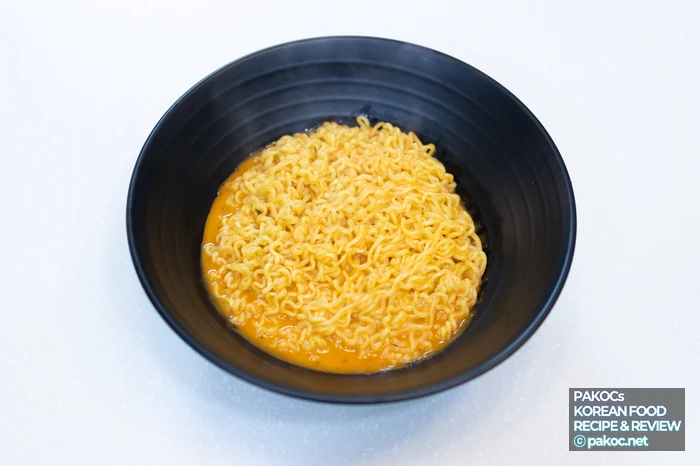
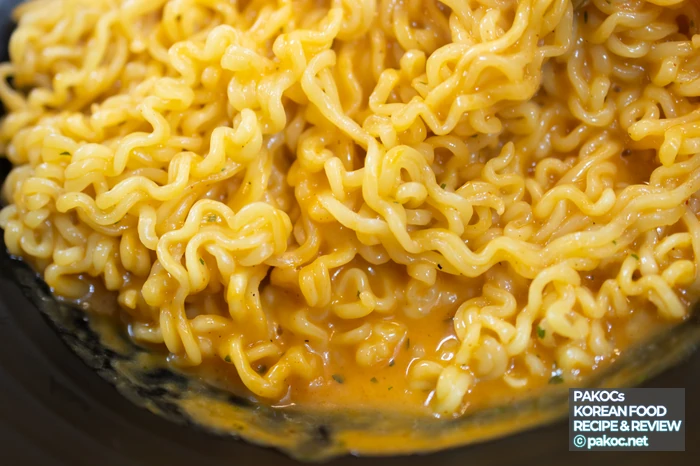
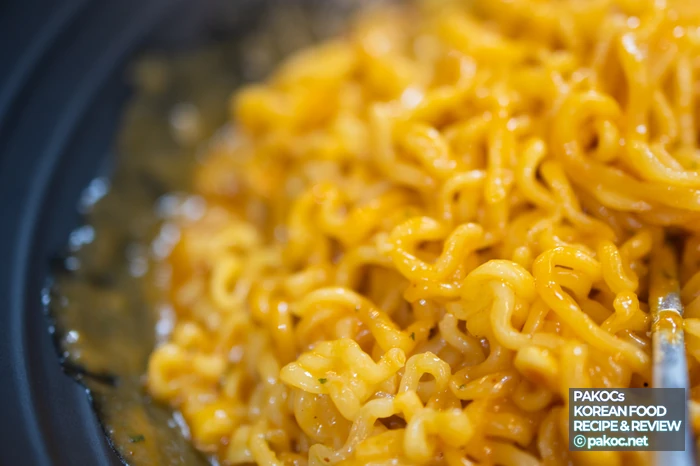
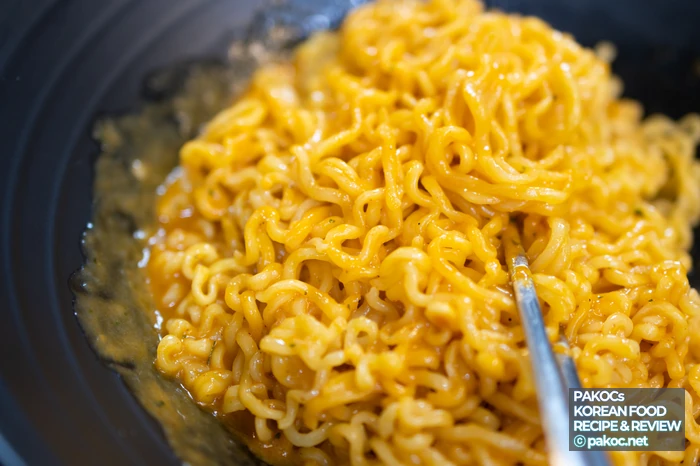
Right at the start of tossing it looked slightly watery — then, between tossing and pausing briefly to take photos, the starch from the noodles naturally thickened the sauce. The initially loose appearance disappeared as mixing continued, and the result reached a genuinely thick, coating consistency — what you’d expect from a real rosé pasta rather than a noodle dish.
ⓒ
Copyright PAKOC https://pakoc.net | All Rights Reserved Pakoc(http://Pakoc.net)The texture is genuinely thick — and the aroma that came off it was impressive. Where many cheese-flavored instant noodles deliver a faint cheese note and nothing more, this one had a rich, pronounced cheese and cream aroma alongside Yeol Ramen’s distinctive spicy fragrance. The anticipation before even tasting was high.

ⓒ
Copyright PAKOC https://pakoc.net | All Rights Reserved Pakoc(http://Pakoc.net)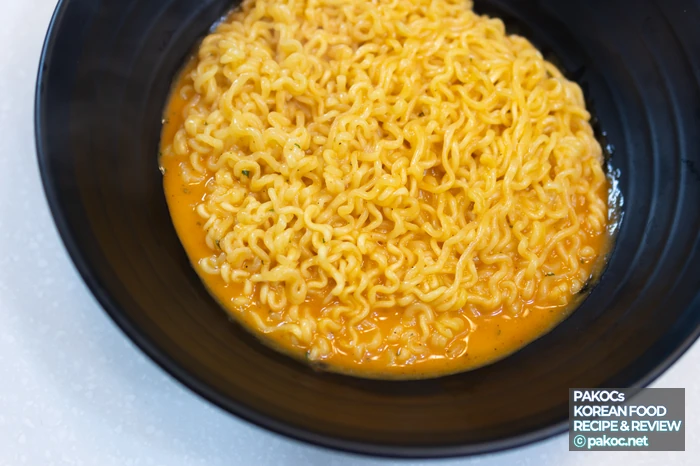
ⓒ
Copyright PAKOC https://pakoc.net | All Rights Reserved Pakoc(http://Pakoc.net)Taste Test
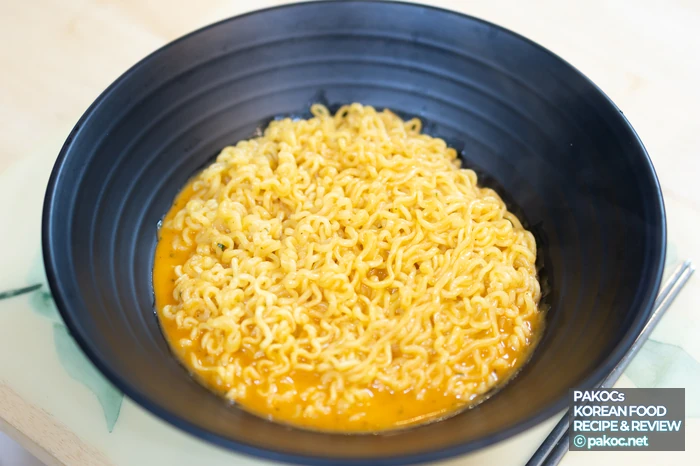
First chopstick-full straight in. First impression: spice is present, but noticeably less intense than standard Yeol Ramen. Not what was expected.
ⓒ
Copyright PAKOC https://pakoc.net | All Rights Reserved Pakoc(http://Pakoc.net)The Yeol Ramen spice profile is there as a foundation, but before it can build to a sharp edge, the cheese’s soft creaminess and the sauce’s thick coating step in and round it off. Spice hits first, then cheese arrives half a beat later to cushion it. The result lands in a sweet spot for two audiences: spice fans get the heat they want, and cheese-ramen fans who find straight Yeol too much can both find something satisfying here.
ⓒ
Copyright PAKOC https://pakoc.net | All Rights Reserved Pakoc(http://Pakoc.net)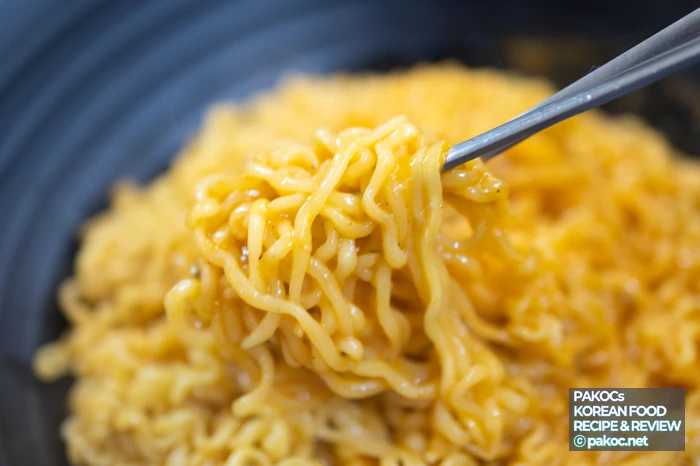
ⓒ
Copyright PAKOC https://pakoc.net | All Rights Reserved Pakoc(http://Pakoc.net)The Cheese Sachet Quality
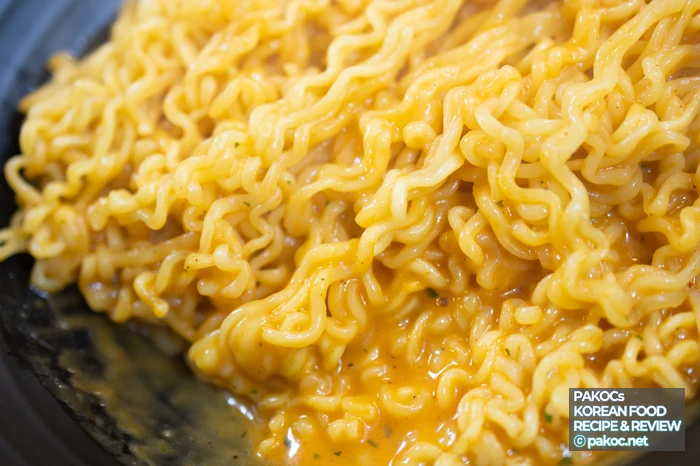
The standout quality here is the cheese. It doesn’t read like processed cheese powder — there’s none of the flat, artificial note that cheap cheese ramen delivers. Among all the cheese-category instant noodles released in Korea, this sits noticeably higher. The weight and richness of the cheese component alone justifies the product — it genuinely resembles real melted cheese rather than a cheese-flavored seasoning dust.
ⓒ
Copyright PAKOC https://pakoc.net | All Rights Reserved Pakoc(http://Pakoc.net)Texture plays a role in the satisfaction too. The sauce coats the noodles so thoroughly that the rosé pasta experience holds up from the first bite to the last — lifting a chopstick-full of noodles brings the sauce up with it, so there’s no watery pool forming at the bottom and no inconsistency as you eat through.
ⓒ
Copyright PAKOC https://pakoc.net | All Rights Reserved Pakoc(http://Pakoc.net)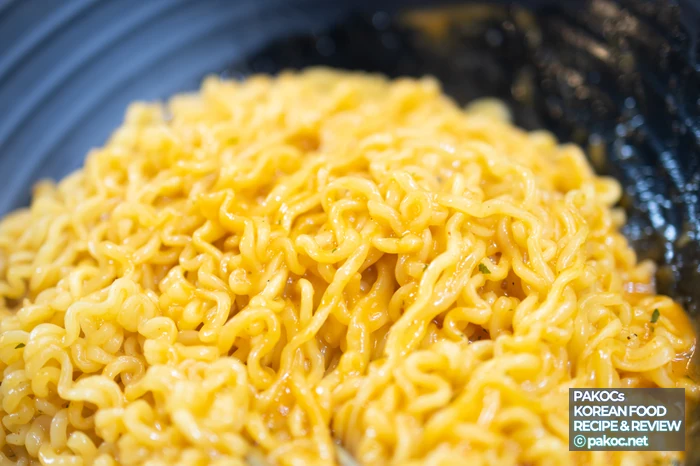
ⓒ
Copyright PAKOC https://pakoc.net | All Rights Reserved Pakoc(http://Pakoc.net)As someone who struggles with spicy food, eating two packs straight through without reaching for a glass of milk is a meaningful data point. The spice isn’t gone — the Yeol Ramen heat character is present throughout — but it never tips into overwhelming territory. Still, for committed spice eaters, the diluted intensity may read as underwhelming.
ⓒ
Copyright PAKOC https://pakoc.net | All Rights Reserved Pakoc(http://Pakoc.net)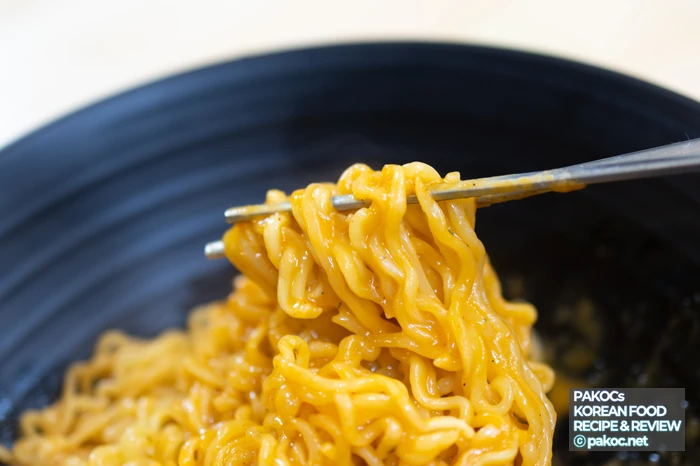
ⓒ
Copyright PAKOC https://pakoc.net | All Rights Reserved Pakoc(http://Pakoc.net)One practical advantage: the spice sachet and cheese sachet are clearly separate. Adjust each to taste — less spice powder for a milder version, more cheese for extra richness. Tailoring the ratio to your palate is easy and the result is reliably good.
ⓒ
Copyright PAKOC https://pakoc.net | All Rights Reserved Pakoc(http://Pakoc.net)Final Verdict
The additional cheese sachet is in a noticeably different class from other cheese instant noodles — richer, more complex, and convincingly real in a way that most powder-based cheese noodles are not. The spice level is accessible enough for beginners and international visitors curious about Korean spicy noodles. Recommended for fans of thick, rosé pasta-style noodles, anyone drawn to spicy cheese ramen, and anyone who’s grown slightly tired of standard instant noodles and wants something genuinely different. Worth buying at any Korean supermarket or convenience store.
ⓒ
Copyright PAKOC https://pakoc.net | All Rights Reserved Pakoc(http://Pakoc.net)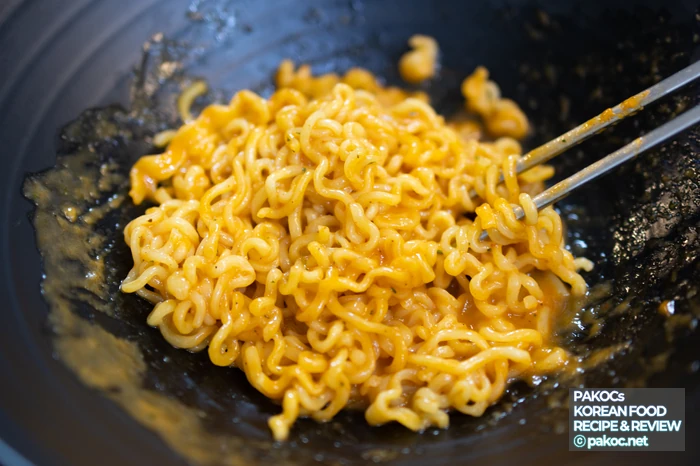
ⓒ
Copyright PAKOC https://pakoc.net | All Rights Reserved Pakoc(http://Pakoc.net)For background on the Royeol Ramen development story and Yeol Ramen’s 30th anniversary, see the (Korean source) Newspim report on the Ottogi Royeol Ramen launch.
Frequently Asked Questions
Q. How much does Ottogi Royeol Ramen cost?
A 4-pack retails around 6,000 won, but the Ottogi official store and major Korean supermarkets typically sell it for about 4,580 won. Per pack that works out to roughly 1,145 won — comparable to a standard Korean instant noodle. Convenience stores may also stock individual packs for those who want to try a single portion first.
Q. How spicy is Royeol Ramen compared to standard Yeol Ramen?
Noticeably milder than regular Yeol Ramen — two packs were finished without any milk or water needed to manage the heat. The cheese and cream sachet softens the Yeol Ramen spice base substantially. Still spicy enough to notice; not spicy enough to overwhelm. For dedicated spice lovers who want full Yeol Ramen intensity, this may feel like a softer version. For international visitors or spice beginners, this is a great entry point into Korean spicy noodles.
Q. What is the bokjak-bokjak cooking method?
Use 350 ml of water per pack. Once boiling, add noodles and stir for 4 minutes. Turn off the heat without draining any water, add both powder sachets, and toss until combined. The starch from the noodles naturally thickens the remaining water into a sauce with the consistency of rosé pasta. When cooking two packs at once, reduce the total water slightly below double (rather than exactly 700 ml) for better sauce density.
image sources
- 오뚜기 로열라면 신제품 소개: Copyright PAKOC https://pakoc.net | All Rights Reserved Pakoc(http://Pakoc.net)