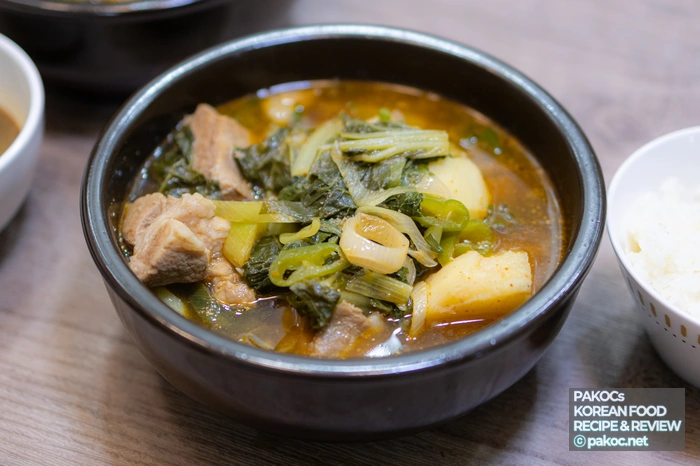
Today’s recipe is a Korean pork shank suyuk (suyu-k, Korean boiled pork) that captures the aromatic flavor of jokbal — Korea’s beloved braised pig trotters — using pork shank instead. The Jokbal-Style Pork Shank Suyuk keeps the characteristic chewy texture of the shank, carries just enough fat for a satisfying bite, and because the whole method is essentially simmer-then-glaze, it doesn’t ask for much hands-on time. Let me walk through the recipe.
📋 At a Glance
- Dish: Jokbal-Style Pork Shank Suyuk (Korean jokbal-flavored boiled pork)
- Servings: approx. 4–6 (based on 1.6 kg pork shank)
- Prep time: 15 minutes
- Cook time: approx. 1 hour (30-min simmer on medium + 10-min seasoning stage + final pan glaze)
- Key ingredients: 1.6 kg pork shank, dark soy sauce (laochou) 3 tbsp, star anise × 3, cloves × 3, soy sauce 150 ml, water 1.5 L, mirin 150 ml
- Notes: jokbal-style spiced soy broth, starch-based pan glaze for a glossy finish
- Storage: refrigerate in an airtight container with broth, up to 3–4 days
- Verdict: ★4.5 — A rewarding one-hour recipe with tender, flavorful pork that needs no dipping sauce
Ingredients for Jokbal-Style Pork Shank Suyuk
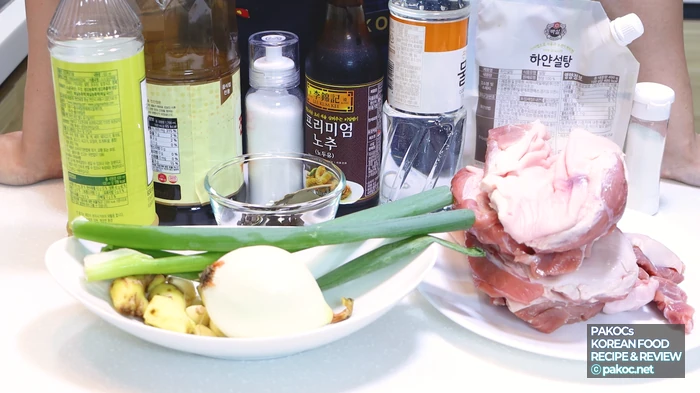
Rinse the 1.6 kg pork shank under running water and set aside. For aromatics, I used ginger, garlic, green onion (scallion), and onion. Whole black peppercorns are also a good addition. Ginger can be omitted if you prefer.
ⓒ
Copyright PAKOC https://pakoc.net | All Rights Reserved Pakoc(http://Pakoc.net)[Base Ingredients]
- Pork shank for suyuk, 1.6 kg
- Water 1.5 L, mirin 150 ml
- Bay leaves × 3, star anise × 2–3
- Cloves × 2–3, fresh ginger × 2 slices
- Whole black peppercorns ½ tbsp, garlic × 10 cloves
- Dark soy sauce (laochou / noduyu) 3 tbsp
- Green onion × 1 stalk, onion × 1
[Seasoning Ingredients]
- Soy sauce 150 ml
- Salt 1 tbsp, MSG ½ tbsp
- Starch syrup (mul-yeot) 4 tbsp, sugar 5 tbsp
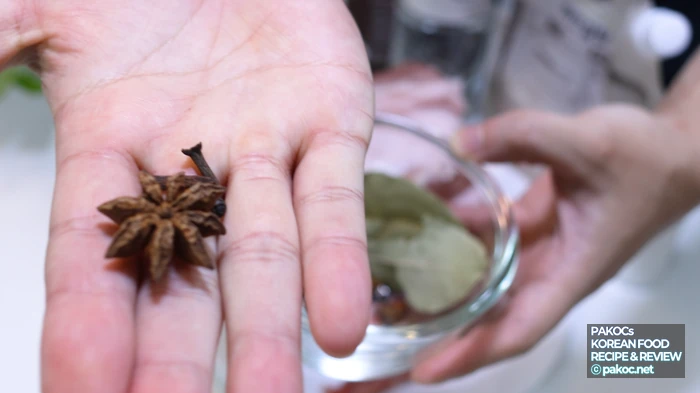
Star anise and cloves give this recipe its signature jokbal-style herbal depth. They can smell a little medicinal, so feel free to leave them out if you dislike strong spices — but I recommend including them if possible. The dark soy sauce (laochou) is there purely for color.
ⓒ
Copyright PAKOC https://pakoc.net | All Rights Reserved Pakoc(http://Pakoc.net)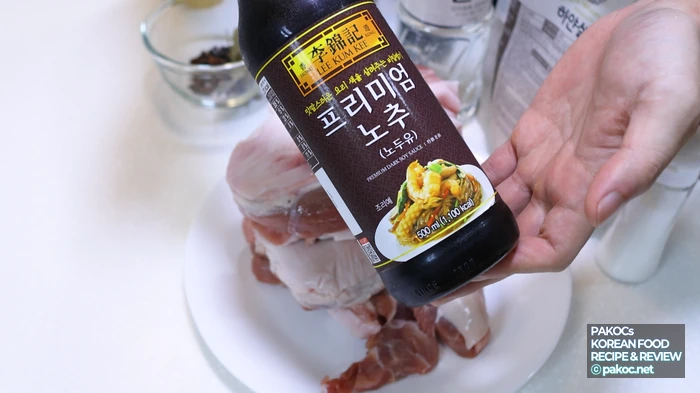
ⓒ
Copyright PAKOC https://pakoc.net | All Rights Reserved Pakoc(http://Pakoc.net)Recipe Summary
- Rinse 1.6 kg pork shank under running water and trim into pieces that will be easy to slice after cooking.
- Place 3 bay leaves, 3 star anise, 3 cloves, 2 slices of ginger, ½ tbsp whole peppercorns, and 10 garlic cloves into a soup spice bag (or add directly to the pot). Slice or fold the green onion stalk. Trim the root and top off the onion and add whole.
- Place the pork in a large pot. Add all spices except the green onion and onion. Pour in 1.5 L water, 3 tbsp dark soy sauce, and 150 ml mirin. Begin simmering over high heat.
- Once the broth reaches a rolling boil, maintain for 2–3 minutes, then reduce to medium heat to prevent the liquid from burning off too quickly.
- Add the green onion and whole onion. Simmer for 30 minutes.
- After 30 minutes, remove all spices, green onion, and onion. Skim off any impurities from the broth with a skimmer or spoon.
- Add to the broth: 150 ml soy sauce, 1 tbsp salt, ½ tbsp MSG, 4 tbsp starch syrup, 5 tbsp sugar. Stir well and simmer for another 10 minutes.
- In a wide pan, ladle in about 2.5 large ladles of broth and heat over medium until just starting to simmer. Dissolve 2 tsp cornstarch in a small amount of broth, then add 800 g of cooked pork and reduce briefly to coat in a glossy glaze. Baste the pork as you cook.

- Slice the finished pork into serving-size pieces and plate.
🍖 Avoid overcooking the shank in the initial simmering stage — it will fall apart.
🧄 Adjust the aromatics to your taste and the size of the meat.
🌿 Prep time: 15 minutes
🍳 Cook time: 1 hour
Preparing the Ingredients
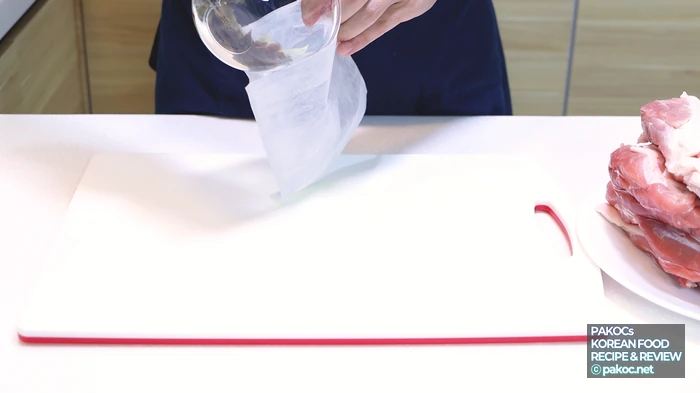
Let me walk through the prep quickly. For jokbal-style cooking, a soup spice bag is handy to hold the dry spices — but you can also add them directly to the pot without any problem.
ⓒ
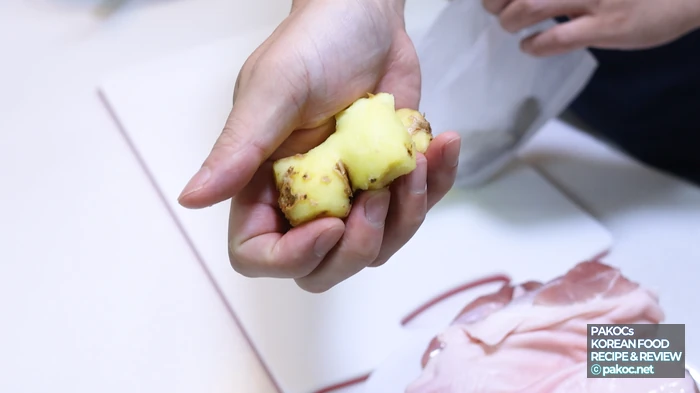
Copyright PAKOC https://pakoc.net | All Rights Reserved Pakoc(http://Pakoc.net)Start with 3 bay leaves, 3 star anise, 3 cloves, 2 ginger slices, ½ tbsp whole peppercorns, and 10 garlic cloves. Scale these up or down depending on the size of your pork and personal preference.
ⓒ
Copyright PAKOC https://pakoc.net | All Rights Reserved Pakoc(http://Pakoc.net)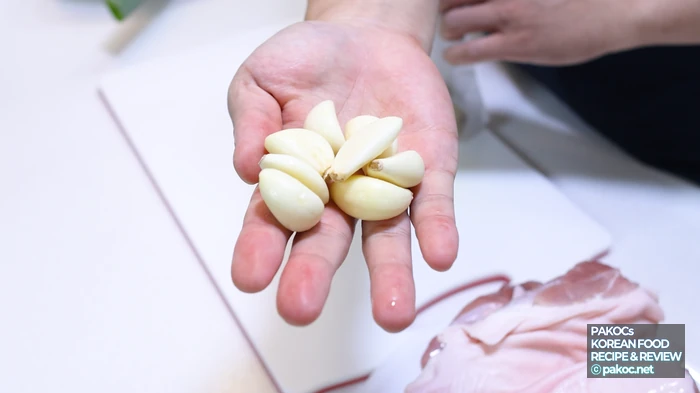
ⓒ
Copyright PAKOC https://pakoc.net | All Rights Reserved Pakoc(http://Pakoc.net)Wash the green onion stalk, then either slice it into sections or simply fold it in half with your hands — either works fine.
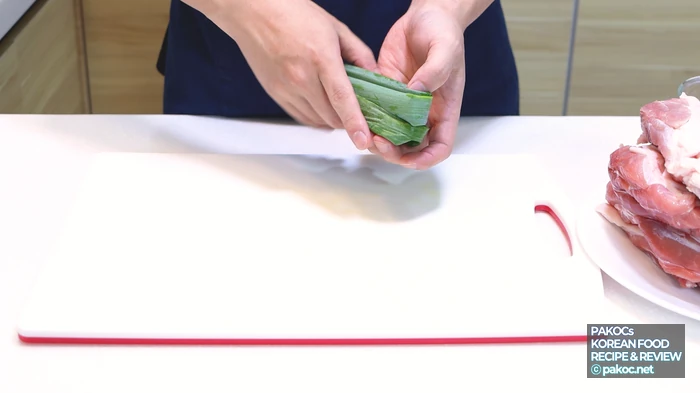
ⓒ
Copyright PAKOC https://pakoc.net | All Rights Reserved Pakoc(http://Pakoc.net)For the onion, just trim the root end and the top, then drop it in whole — easier to fish out later.
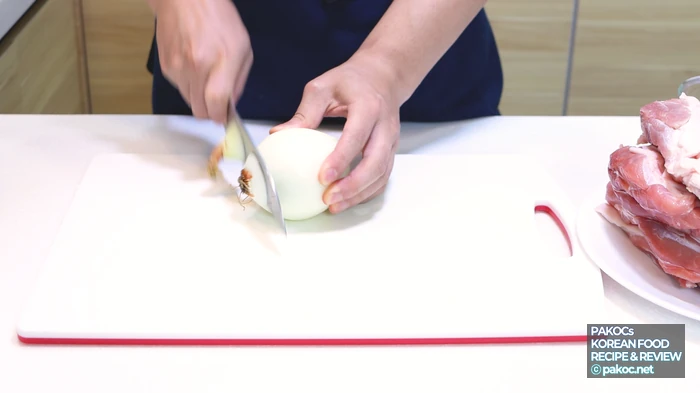
ⓒ
Copyright PAKOC https://pakoc.net | All Rights Reserved Pakoc(http://Pakoc.net)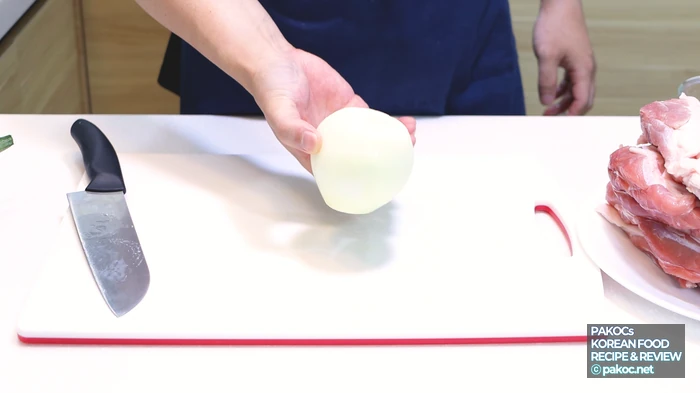
ⓒ
Copyright PAKOC https://pakoc.net | All Rights Reserved Pakoc(http://Pakoc.net)Loading the Pot
The pork shank trim is minimal: the cut has almost no bone to work around and very little connective tissue membrane, so just roughly portion it into pieces you’ll be able to slice easily after cooking.
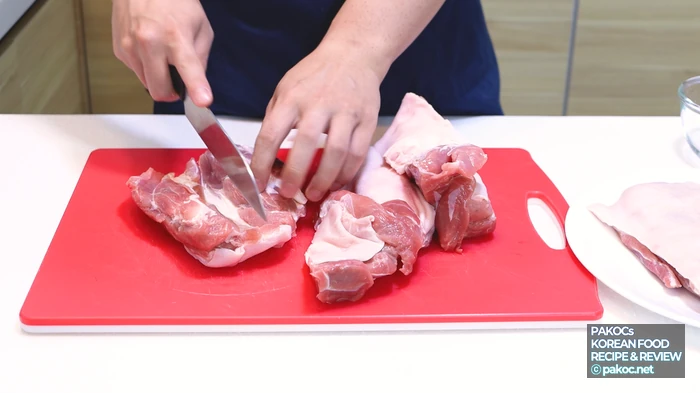
ⓒ
Copyright PAKOC https://pakoc.net | All Rights Reserved Pakoc(http://Pakoc.net)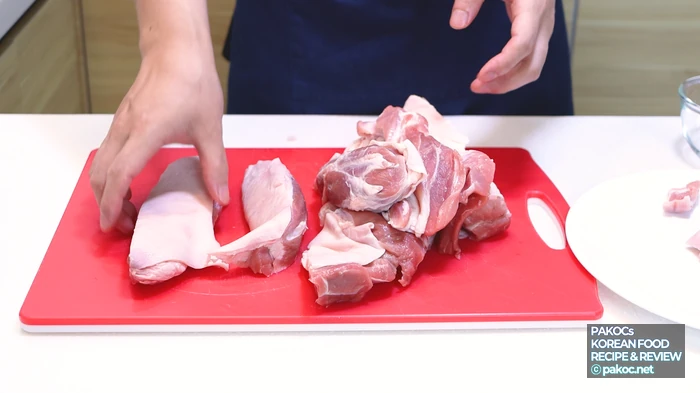
ⓒ
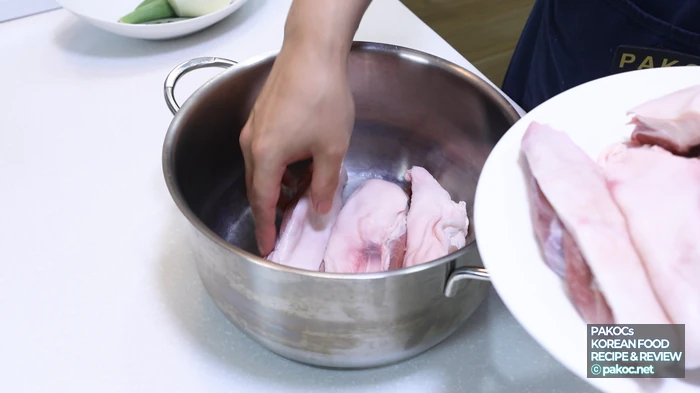
Copyright PAKOC https://pakoc.net | All Rights Reserved Pakoc(http://Pakoc.net)Choose a pot large enough to hold all the pork comfortably, then layer the meat in.
ⓒ
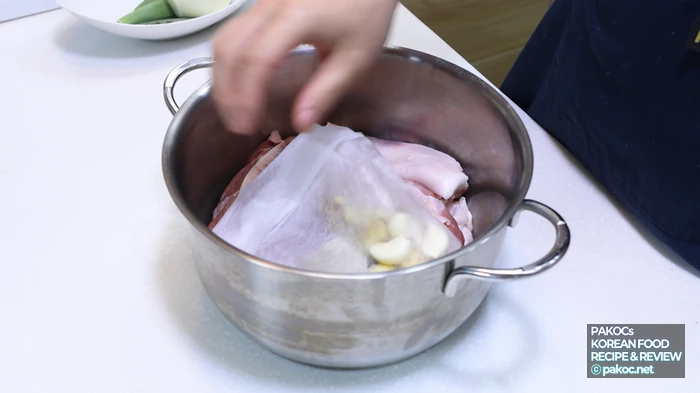
Copyright PAKOC https://pakoc.net | All Rights Reserved Pakoc(http://Pakoc.net)Add all the spices except the green onion and onion, then pour in 1.5 L of water. Adjust the water level so the pork is just about submerged.
ⓒ
Copyright PAKOC https://pakoc.net | All Rights Reserved Pakoc(http://Pakoc.net)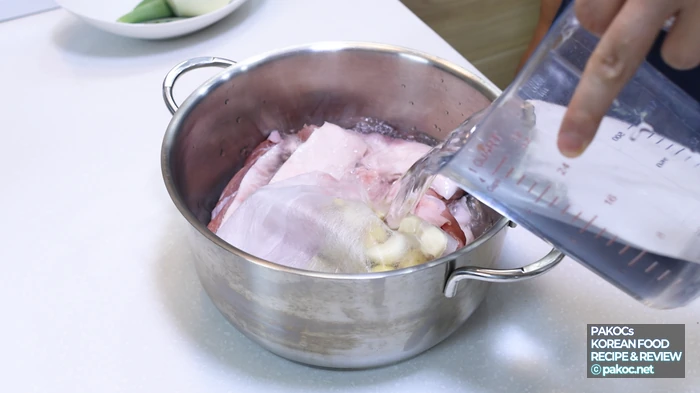
ⓒ
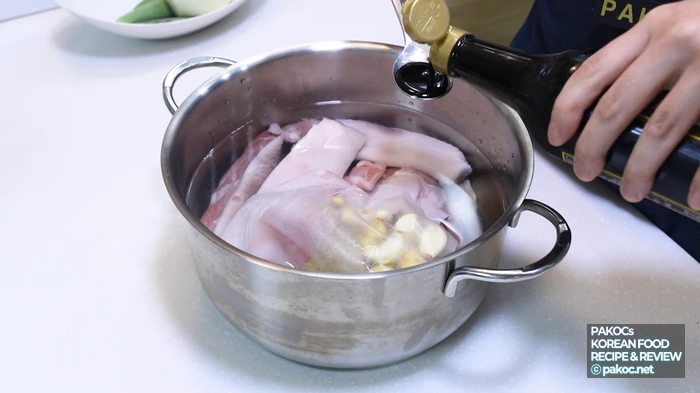
Copyright PAKOC https://pakoc.net | All Rights Reserved Pakoc(http://Pakoc.net)Add the 3 tbsp dark soy sauce and 150 ml mirin, then set to simmer immediately. It really doesn’t take much work at all at this stage.
ⓒ
Copyright PAKOC https://pakoc.net | All Rights Reserved Pakoc(http://Pakoc.net)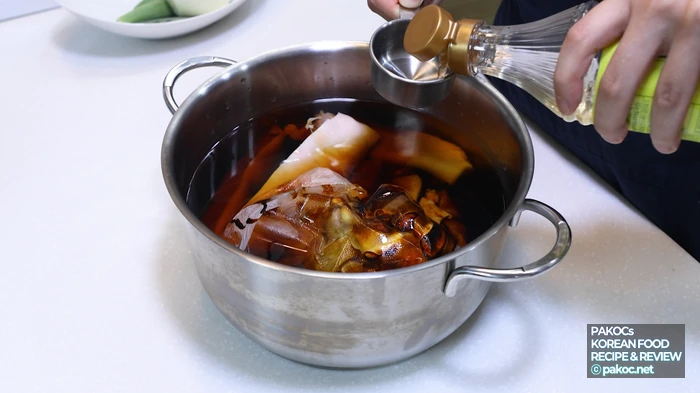
ⓒ
Copyright PAKOC https://pakoc.net | All Rights Reserved Pakoc(http://Pakoc.net)Cooking the Pork Shank Suyuk
Once the broth comes to a rolling boil, keep the heat high for 2–3 minutes, then turn it down to medium. If the heat stays too high, the liquid reduces and risks scorching.
ⓒ
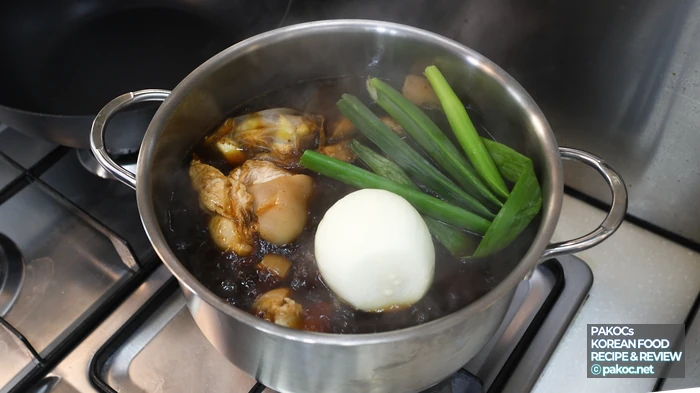
Copyright PAKOC https://pakoc.net | All Rights Reserved Pakoc(http://Pakoc.net)Add the green onion stalk and whole onion, and continue simmering for 30 minutes. You can add them at the very start if you prefer — it makes no significant difference.
ⓒ
Copyright PAKOC https://pakoc.net | All Rights Reserved Pakoc(http://Pakoc.net)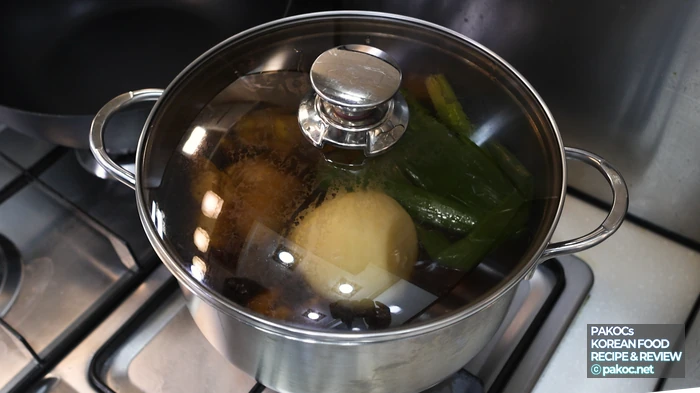
ⓒ
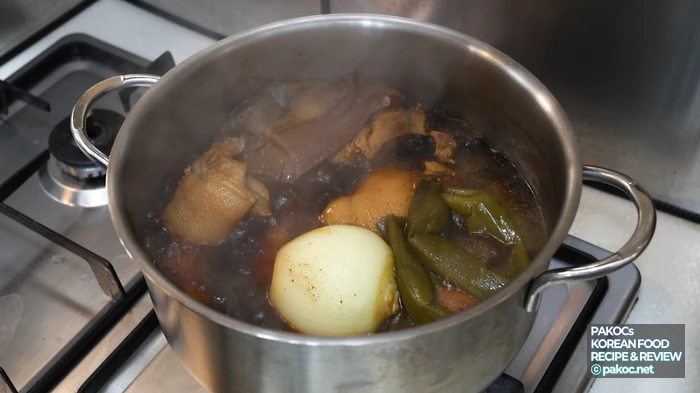
Copyright PAKOC https://pakoc.net | All Rights Reserved Pakoc(http://Pakoc.net)After 30 minutes, remove all the spices, green onion, and onion. Skim off any foam or impurities from the surface of the broth with a skimmer or spoon.
ⓒ
Copyright PAKOC https://pakoc.net | All Rights Reserved Pakoc(http://Pakoc.net)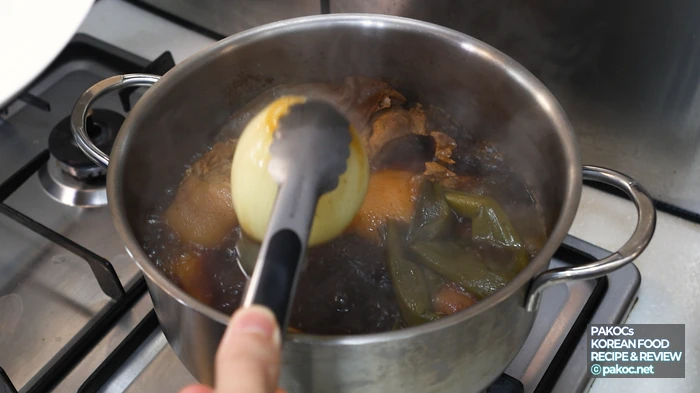
ⓒ
Copyright PAKOC https://pakoc.net | All Rights Reserved Pakoc(http://Pakoc.net)Check that the meat is sufficiently cooked through. Now for the seasoning stage.
Adding the Seasoning and the Final Starch Glaze
ⓒ
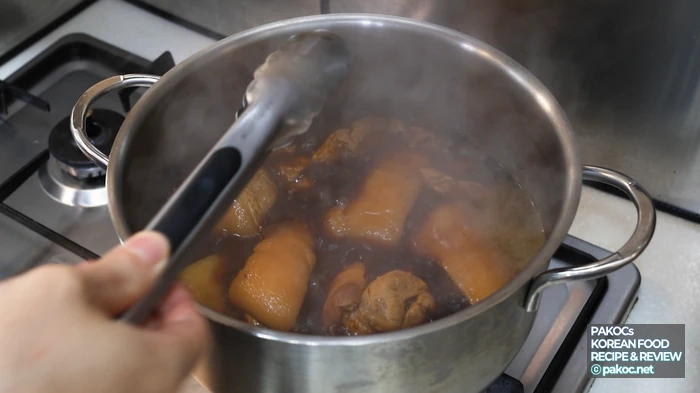
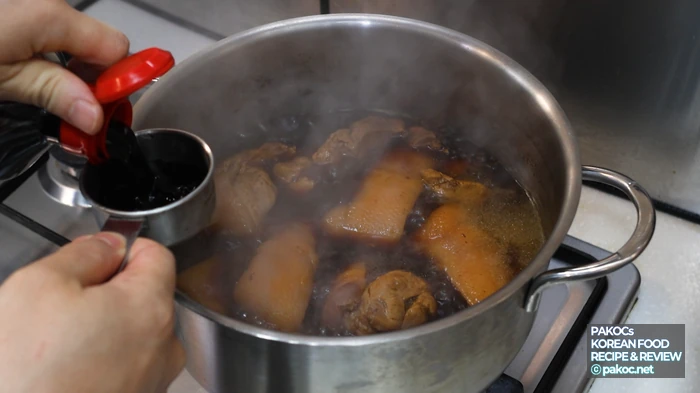
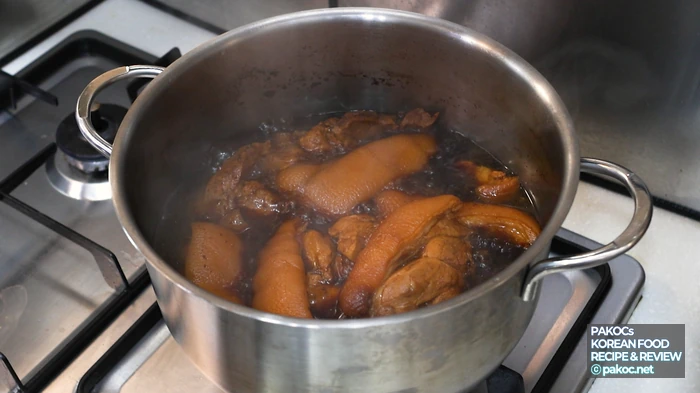
Copyright PAKOC https://pakoc.net | All Rights Reserved Pakoc(http://Pakoc.net)Add 150 ml soy sauce, 1 tbsp salt, ½ tbsp MSG, 4 tbsp starch syrup, and 5 tbsp sugar to the broth. Stir to combine, then simmer for another 10 minutes.
ⓒ
Copyright PAKOC https://pakoc.net | All Rights Reserved Pakoc(http://Pakoc.net)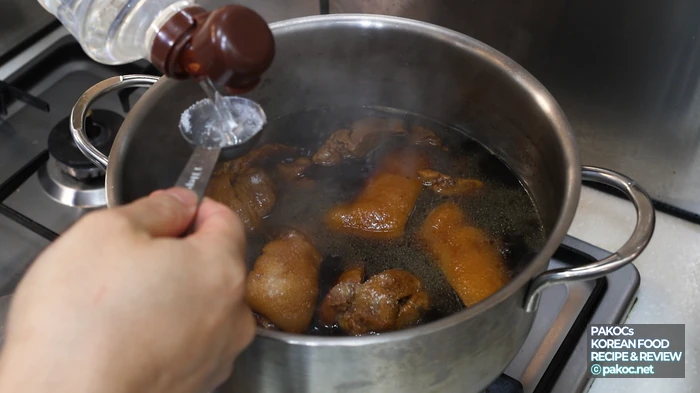
ⓒ
Copyright PAKOC https://pakoc.net | All Rights Reserved Pakoc(http://Pakoc.net)At this stage the suyuk is already done — you can slice and serve it immediately, or transfer it to a clean food container with some broth and rest it before serving. Still, I want to add one more step that makes a real difference.
ⓒ
Copyright PAKOC https://pakoc.net | All Rights Reserved Pakoc(http://Pakoc.net)
ⓒ
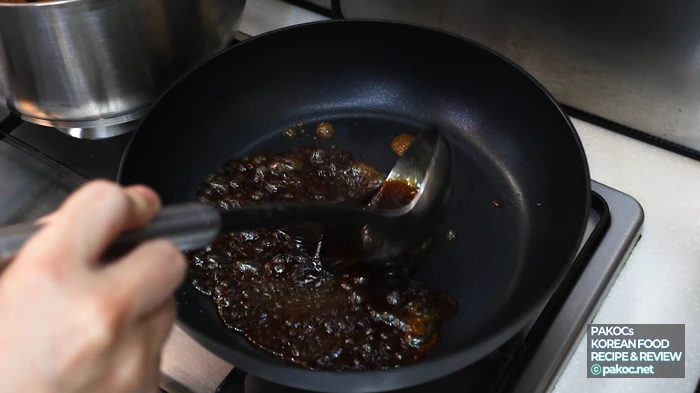
Copyright PAKOC https://pakoc.net | All Rights Reserved Pakoc(http://Pakoc.net)In a wide pan, ladle in about 2.5 large ladles of the seasoned broth and heat over medium until it just begins to bubble. Since the broth is already hot, it will get there quickly.
ⓒ
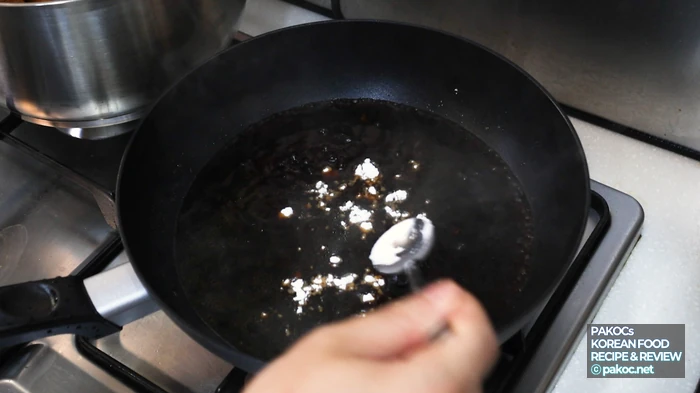
Copyright PAKOC https://pakoc.net | All Rights Reserved Pakoc(http://Pakoc.net)Dissolve 2 tsp cornstarch in a small amount of the broth, stir it into the pan, then add 800 g of the cooked pork. Reduce over medium heat while continuously basting the meat with the sauce until it takes on a beautiful glaze.
ⓒ
Copyright PAKOC https://pakoc.net | All Rights Reserved Pakoc(http://Pakoc.net)
ⓒ
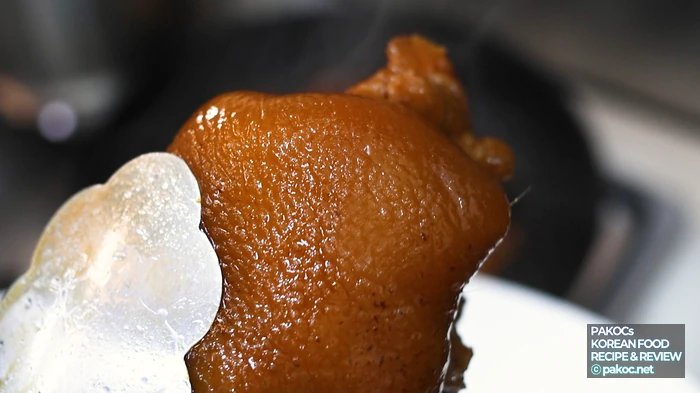

Copyright PAKOC https://pakoc.net | All Rights Reserved Pakoc(http://Pakoc.net)The transformation is visible: the pork lifts out with a glossy, lacquered surface, quite different from the unglazed version. Because the seasoning is worked in, no dipping sauce is needed at all.
ⓒ
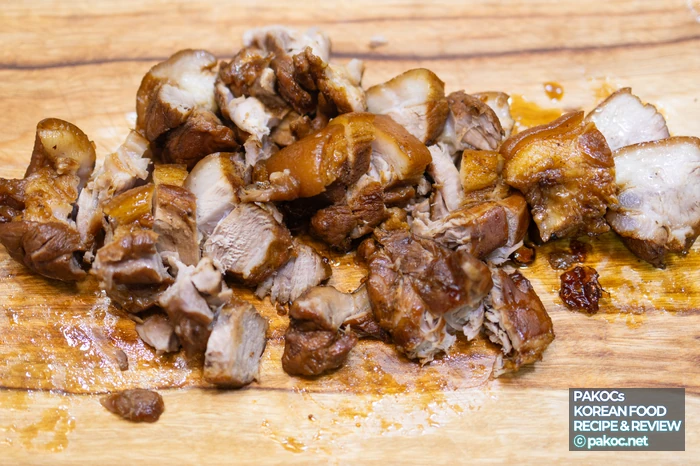
Copyright PAKOC https://pakoc.net | All Rights Reserved Pakoc(http://Pakoc.net)After nearly an hour of simmering, the meat will be very tender. Don’t worry if pieces break apart slightly — just cut into generous chunks and arrange on the plate.
ⓒ
Copyright PAKOC https://pakoc.net | All Rights Reserved Pakoc(http://Pakoc.net)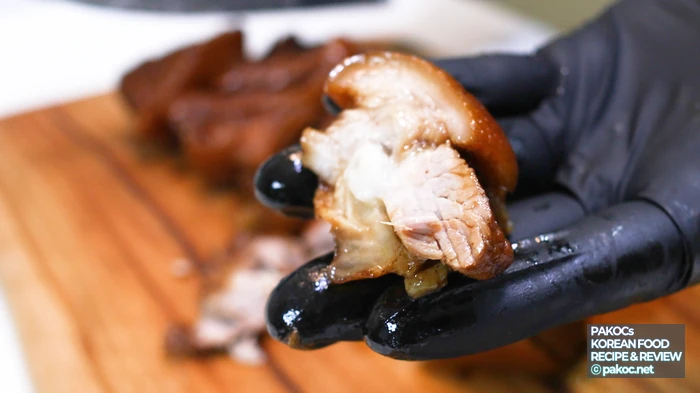
ⓒ
Copyright PAKOC https://pakoc.net | All Rights Reserved Pakoc(http://Pakoc.net)Jokbal-Style Pork Shank — Finished Gallery
ⓒ
Copyright PAKOC https://pakoc.net | All Rights Reserved Pakoc(http://Pakoc.net)
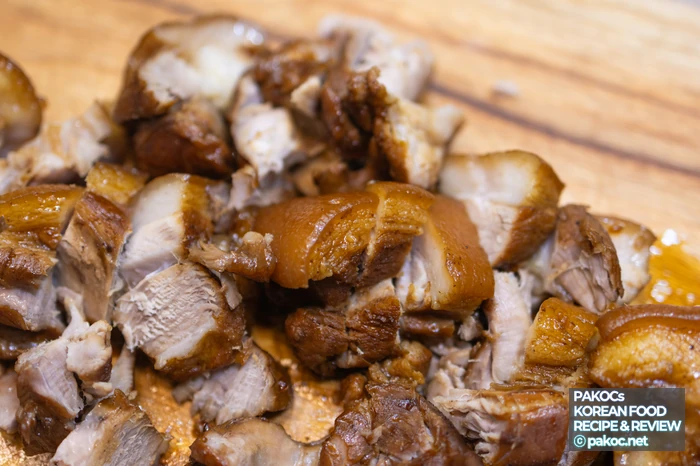
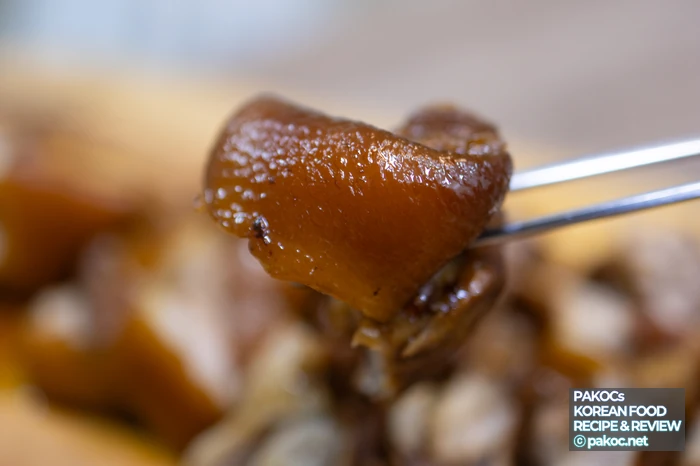
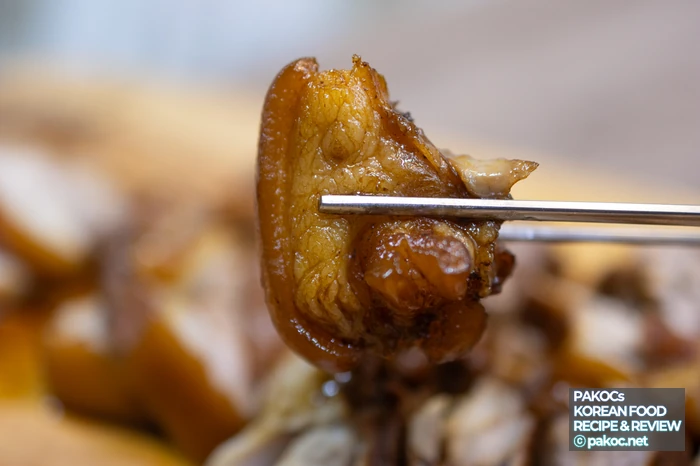
Finished: Jokbal-Style Pork Shank Suyuk
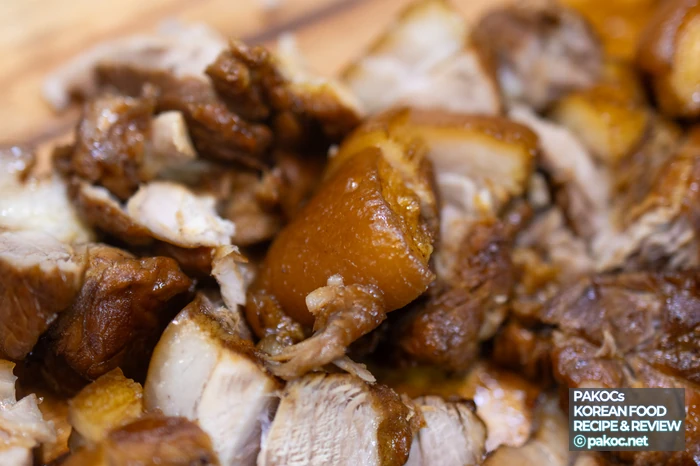
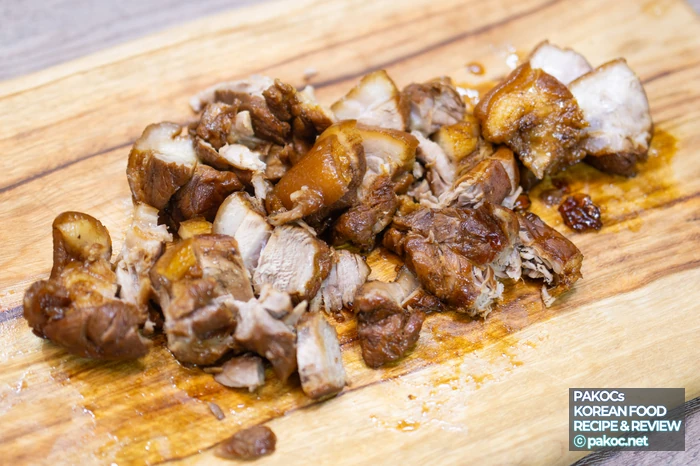
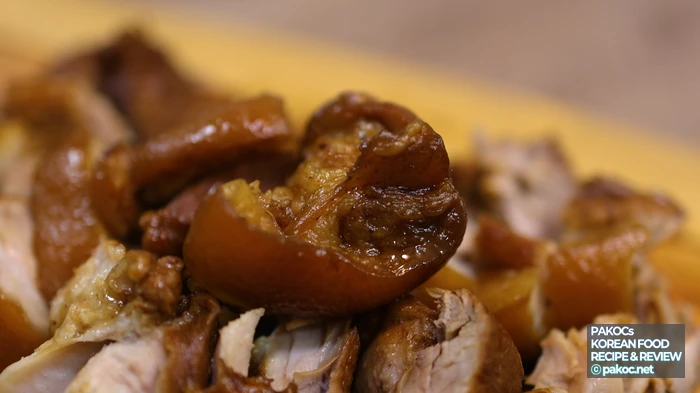

Here’s the finished jokbal-style pork shank suyuk. A gentle jokbal aroma without any gamey smell, and a generous amount of lean meat — it works beautifully as both a drinking snack and a full meal.
ⓒ
Copyright PAKOC https://pakoc.net | All Rights Reserved Pakoc(http://Pakoc.net)That final pan-glazing step means the soy-based seasoning clings to every piece, so no additional dipping sauce is necessary — anyone who tries it will find it satisfying on its own.
ⓒ
Copyright PAKOC https://pakoc.net | All Rights Reserved Pakoc(http://Pakoc.net)
ⓒ
Copyright PAKOC https://pakoc.net | All Rights Reserved Pakoc(http://Pakoc.net)About an hour of total time, minimal active effort, and no special cooking skill required — it genuinely earns a recommendation. Once you’ve made it the first time, you’ll find yourself coming back to this style of recipe again and again. For travelers visiting Korea, jokbal is one of the country’s most iconic after-hours snack foods; if you want to recreate the flavor at home with a more accessible cut, this is the method.
ⓒ
Copyright PAKOC https://pakoc.net | All Rights Reserved Pakoc(http://Pakoc.net)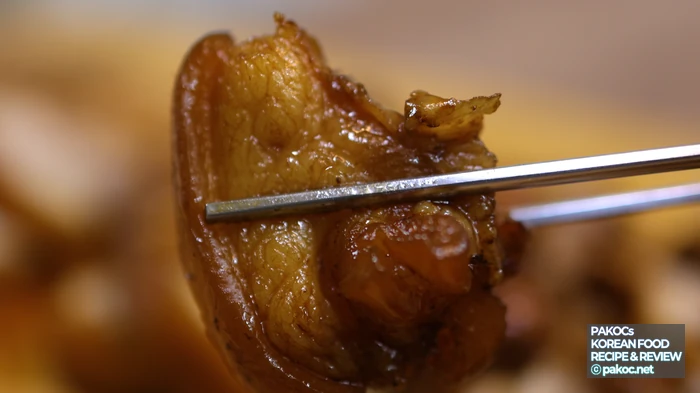
ⓒ
Copyright PAKOC https://pakoc.net | All Rights Reserved Pakoc(http://Pakoc.net)For background on jokbal’s history and the origins of its soy-spice braising style, see the Wikipedia article on Jokbal.
Youtube Video
Frequently Asked Questions
Q. What is pork shank (sataessal), and where can I buy it?
Pork shank (sataessal) is the lower leg muscle of the pig — lean, slightly sinewy, and packed with collagen, which gives it a pleasantly chewy texture after long simmering. In Korean it’s often sold labeled as “sataessal for suyuk” (suyuk-style shank). Outside Korea, look for pork shank or pork shin at Asian grocery stores or any butcher that carries whole leg cuts. The weight used here is 1.6 kg, which comfortably serves 4 to 6 people.
Q. Can I skip the star anise and cloves?
Yes, both can be omitted. They provide the medicinal herbal depth that gives this recipe its jokbal character, but the base pork flavor holds up without them. Bay leaves, whole peppercorns, garlic, green onion, and onion alone are enough to neutralize any gamey smell and build a solid broth. Without the dark soy sauce, the color will be lighter.
Q. How do I store and reheat leftovers?
Store in an airtight container with some of the broth, refrigerated, for up to 3–4 days. Keeping it in the broth prevents the meat from drying out and maintains the flavor. To reheat, microwave directly or add a splash of broth to a pan and warm over low heat — the texture will be close to freshly made.
image sources
- 조리시간 정확한 표시: Copyright PAKOC https://pakoc.net | All Rights Reserved Pakoc(http://Pakoc.net)
- 야채 재료 소개사진: Copyright PAKOC https://pakoc.net | All Rights Reserved Pakoc(http://Pakoc.net)
- 전분 윤기 내는 조리법: Copyright PAKOC https://pakoc.net | All Rights Reserved Pakoc(http://Pakoc.net)
- 국물이 가득한 냄비: Copyright PAKOC https://pakoc.net | All Rights Reserved Pakoc(http://Pakoc.net)
- 안주로 좋은 사태살 사진: Copyright PAKOC https://pakoc.net | All Rights Reserved Pakoc(http://Pakoc.net)
- 집밥 스타일 식사사진: Copyright PAKOC https://pakoc.net | All Rights Reserved Pakoc(http://Pakoc.net)
- 간장 양념 조리법 사진: Copyright PAKOC https://pakoc.net | All Rights Reserved Pakoc(http://Pakoc.net)
- 편리한 조리법 설명: Copyright PAKOC https://pakoc.net | All Rights Reserved Pakoc(http://Pakoc.net)
- 맛있는 안주 추천 사진: Copyright PAKOC https://pakoc.net | All Rights Reserved Pakoc(http://Pakoc.net)
- 맛있게 익은 사태살 사진: Copyright PAKOC https://pakoc.net | All Rights Reserved Pakoc(http://Pakoc.net)
- 부드러운 돼지고기 특징: Copyright PAKOC https://pakoc.net | All Rights Reserved Pakoc(http://Pakoc.net)
- 향긋한 향신료 조합: Copyright PAKOC https://pakoc.net | All Rights Reserved Pakoc(http://Pakoc.net)
- 간단한 조리법 소개: Copyright PAKOC https://pakoc.net | All Rights Reserved Pakoc(http://Pakoc.net)
- 완벽한 사태살 썰기: Copyright PAKOC https://pakoc.net | All Rights Reserved Pakoc(http://Pakoc.net)
- 색다른 수육 레시피 사진: Copyright PAKOC https://pakoc.net | All Rights Reserved Pakoc(http://Pakoc.net)
- 가정에서 쉽게 만드는 요리: Copyright PAKOC https://pakoc.net | All Rights Reserved Pakoc(http://Pakoc.net)
- 양파 대파 조리법: Copyright PAKOC https://pakoc.net | All Rights Reserved Pakoc(http://Pakoc.net)
- 사태살 부드럽고 쫄깃한: Copyright PAKOC https://pakoc.net | All Rights Reserved Pakoc(http://Pakoc.net)
- 국물과 함께 보관하는 방법: Copyright PAKOC https://pakoc.net | All Rights Reserved Pakoc(http://Pakoc.net)
- 조리 과정 단계별 사진: Copyright PAKOC https://pakoc.net | All Rights Reserved Pakoc(http://Pakoc.net)
- 맛있는 수육 레시피 총정리: Copyright PAKOC https://pakoc.net | All Rights Reserved Pakoc(http://Pakoc.net)
- 향신료 조리 비법 공유: Copyright PAKOC https://pakoc.net | All Rights Reserved Pakoc(http://Pakoc.net)
- 족발 스타일 사태살 수육: Copyright PAKOC https://pakoc.net | All Rights Reserved Pakoc(http://Pakoc.net)
- 부드러운 수육 조리법: Copyright PAKOC https://pakoc.net | All Rights Reserved Pakoc(http://Pakoc.net)
- 맛술 사용 팁: Copyright PAKOC https://pakoc.net | All Rights Reserved Pakoc(http://Pakoc.net)
- 다양한 양념 조합: Copyright PAKOC https://pakoc.net | All Rights Reserved Pakoc(http://Pakoc.net)
- 신선한 재료 준비: Copyright PAKOC https://pakoc.net | All Rights Reserved Pakoc(http://Pakoc.net)
- 득템 된 사태살 요리: Copyright PAKOC https://pakoc.net | All Rights Reserved Pakoc(http://Pakoc.net)
- 국물 조리 비법 공유: Copyright PAKOC https://pakoc.net | All Rights Reserved Pakoc(http://Pakoc.net)
- 특별한 안주 만들기: Copyright PAKOC https://pakoc.net | All Rights Reserved Pakoc(http://Pakoc.net)
- 맛있게 요리한 사태살: Copyright PAKOC https://pakoc.net | All Rights Reserved Pakoc(http://Pakoc.net)
- 완벽한 사태살 삶기: Copyright PAKOC https://pakoc.net | All Rights Reserved Pakoc(http://Pakoc.net)
- 간단한 조리 과정 소개: Copyright PAKOC https://pakoc.net | All Rights Reserved Pakoc(http://Pakoc.net)
- 간편한 집밥 준비법: Copyright PAKOC https://pakoc.net | All Rights Reserved Pakoc(http://Pakoc.net)
- 특별한 저녁 메뉴 추천: Copyright PAKOC https://pakoc.net | All Rights Reserved Pakoc(http://Pakoc.net)
- 육질 좋은 돼지고기 특징: Copyright PAKOC https://pakoc.net | All Rights Reserved Pakoc(http://Pakoc.net)
- 고기 부드러움 유지 비법: Copyright PAKOC https://pakoc.net | All Rights Reserved Pakoc(http://Pakoc.net)
- 족발스타일 사태살 수육 완성사진: Copyright PAKOC https://pakoc.net | All Rights Reserved Pakoc(http://Pakoc.net)