Korean convenience stores have been pushing their lunchbox lineups to new heights lately, and GS25’s latest release is the Hyeja Hansang Chinese Edition lunchbox. It looks like the next step in GS25’s Chinese-style dosirak lineup, picking up where the earlier Hankki Manjok Jungsik Hansang left off. Sitting under the Hyeja umbrella, GS25’s series known for generous, value-for-money meals, the contents got a real upgrade: a full nine-side spread. For 6,200 won, you get a range of Chinese-style banchan plus mapo tofu, jajang sauce, and even a red bean steamed bun for dessert. That makes it a surprisingly indulgent convenience-store meal. So let’s take a closer look at what you actually get inside.
📋 At a Glance
- Product: GS25 Hyeja Hansang Chinese Edition lunchbox
- Brand / Store: GS25 convenience stores
- Price: 6,200 won (approx. $4.60 USD)
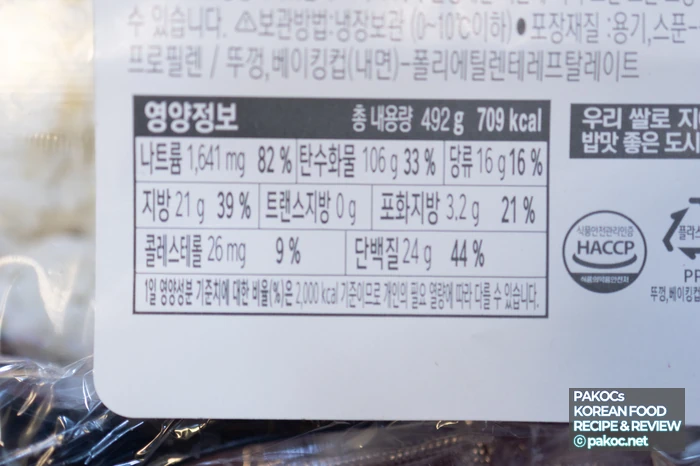
- Weight / Calories: 492 g / 709 kcal (sodium at 82% of daily value)
- Composition: 9 sides — sweet chili chicken, doubanjiang-style pork stir-fry, guobaorou, mushroom and vegetable stir-fry in a hwangdujang-like sauce, mung bean sprouts, pickled radish, mapo tofu, jajang sauce, and a red bean steamed bun for dessert
- Note: Includes a spoon (for the mapo tofu and jajang sauce)
- Verdict: ★4.5 — a generous nine-side Chinese-style spread where the mapo tofu and doubanjiang pork pair seriously well with rice.
Hyeja Hansang Chinese Lunchbox: Price and Highlights
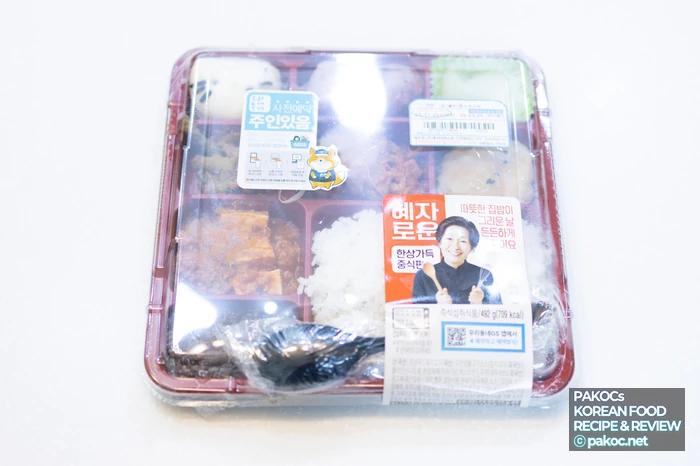
This menu drops under the “comforting home-style meal on a busy day” concept of the Hyeja Hansang series, but now in Chinese form. Putting aside the question of whether Chinese banchan really counts as Korean home cooking, the sheer number of sides packed in here means you definitely won’t go hungry. Despite being a standard multi-side lunchbox, it surprisingly comes with a spoon included, which makes eating it noticeably easier. The price tag is 6,200 won, which gives it a slightly premium feel for a convenience-store dosirak.
ⓒ
Copyright PAKOC https://pakoc.net | All Rights Reserved Pakoc(http://Pakoc.net)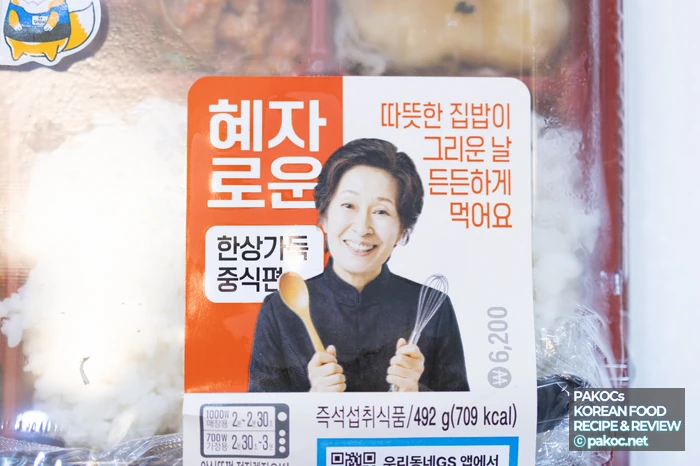
ⓒ
Copyright PAKOC https://pakoc.net | All Rights Reserved Pakoc(http://Pakoc.net)The total weight clocks in at 492 g, with 709 kcal of energy and sodium sitting at 82% of the daily recommended intake. Weight under 500 g and calories over 700 kcal land it right in the same ballpark as other lunchboxes at this price point. Sodium runs slightly higher than average, but not by a wide margin. Honestly though, taste matters far more in the end.
ⓒ
Copyright PAKOC https://pakoc.net | All Rights Reserved Pakoc(http://Pakoc.net)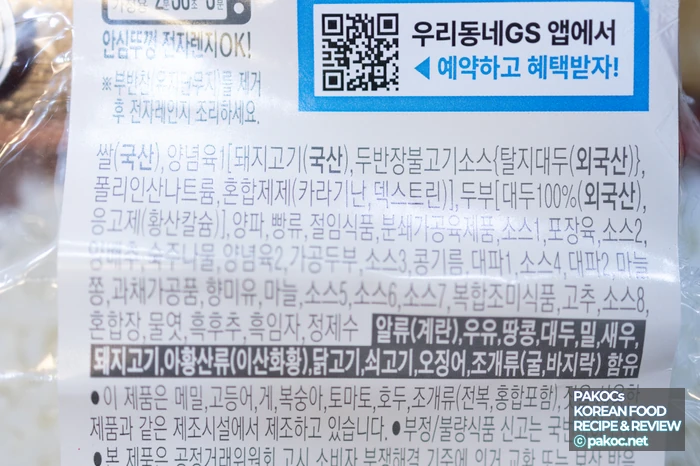
ⓒ
Copyright PAKOC https://pakoc.net | All Rights Reserved Pakoc(http://Pakoc.net)Hyeja Hansang Chinese Lunchbox: What’s Inside
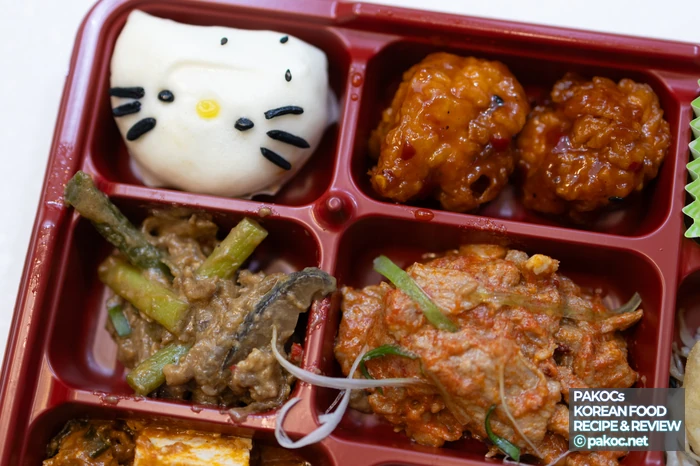
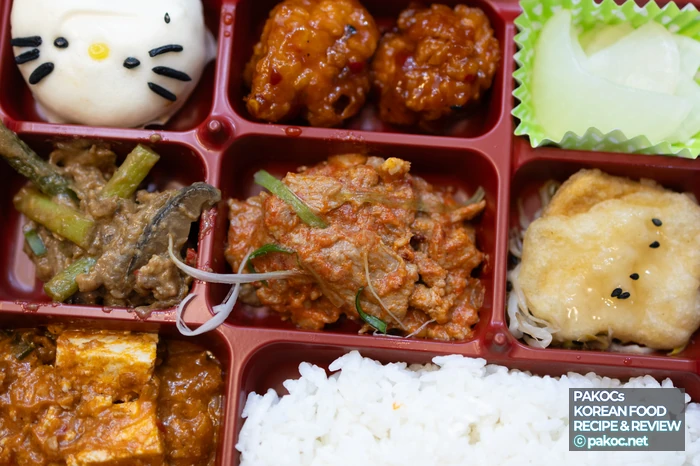
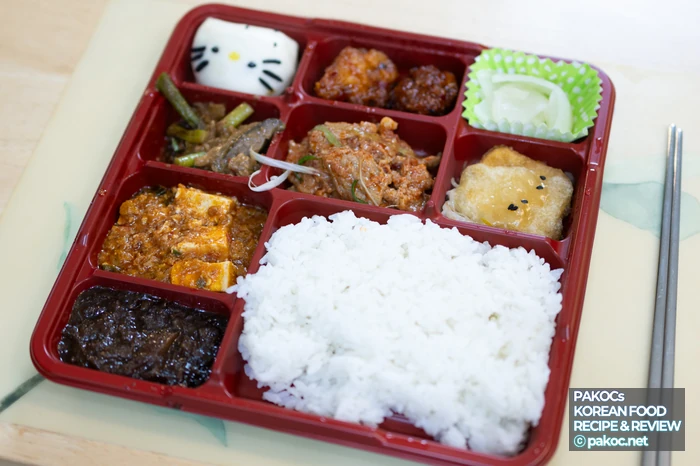
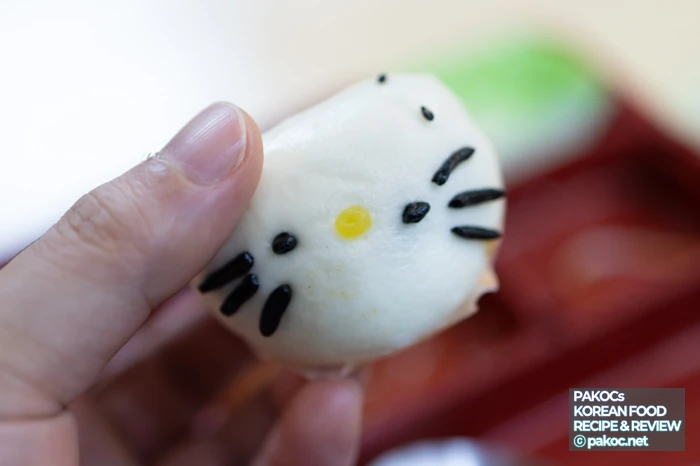
Let’s quickly run through the contents. If you count the cat-shaped item that looks like rice cake or huajuan (Chinese flower bread) at the corner as a dessert, this menu tops out at nine sides. There are plenty of huajuan products on the market, but it could just as easily be a rice cake. I’ll figure out which it is when I get to dessert.

ⓒ
Copyright PAKOC https://pakoc.net | All Rights Reserved Pakoc(http://Pakoc.net)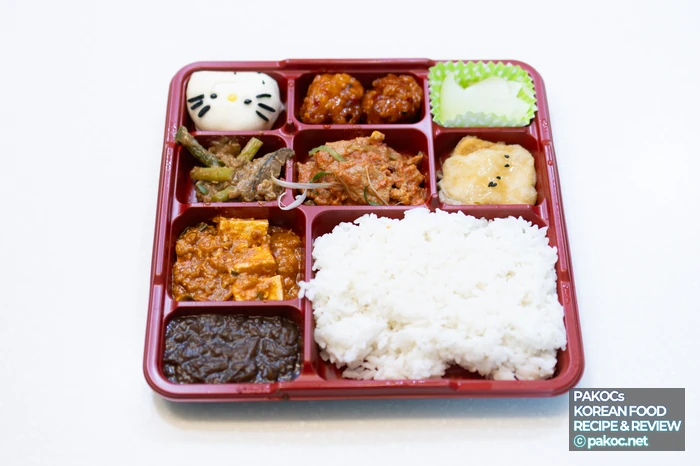
ⓒ
Copyright PAKOC https://pakoc.net | All Rights Reserved Pakoc(http://Pakoc.net)Overall the lineup leans heavily on sauce-based Chinese dishes and lighter meat sides. A lot of these are meant to be spooned over rice, which is probably why the spoon comes included. The brown-toned side at the bottom left looks like hwangdujang (Korean yellow soybean sauce), and it visually resembles Korean doenjang.
ⓒ
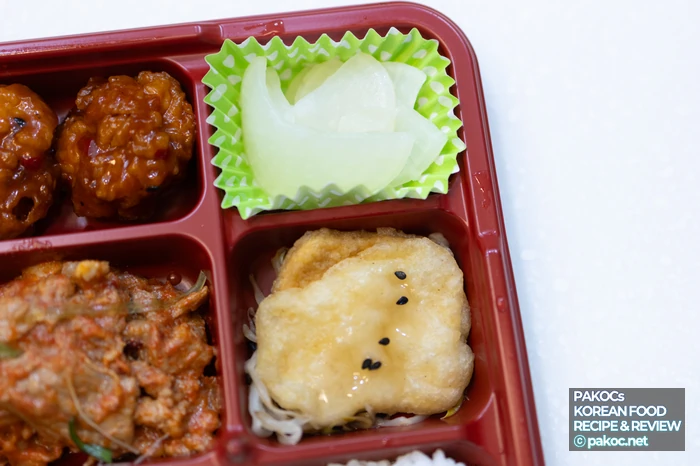
Copyright PAKOC https://pakoc.net | All Rights Reserved Pakoc(http://Pakoc.net)You also get sweet chili chicken that looks like kkanpunggi and guobaorou-style pork, both of which are easy to pop in your mouth. If the heavier flavors get a bit much partway through, there’s also pickled radish on the side. Just skip the radish when reheating in the microwave.
ⓒ
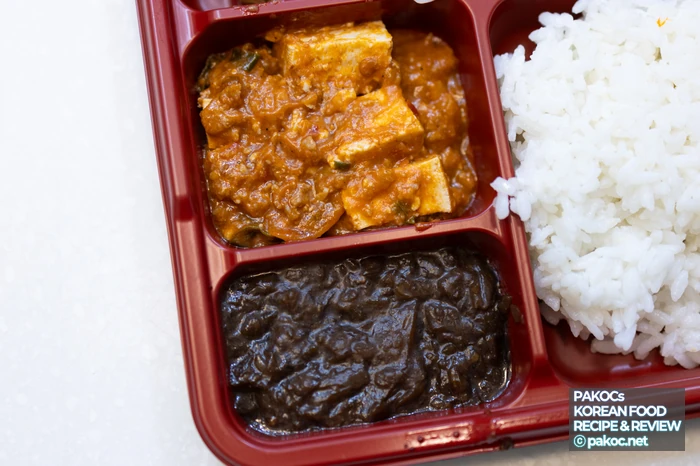
Copyright PAKOC https://pakoc.net | All Rights Reserved Pakoc(http://Pakoc.net)Throw in mapo tofu, jajang sauce, and a Chinese-style pork stir-fry that looks like it was tossed in doubanjiang, and the variety is genuinely impressive compared to the older Chinese spreads that gave you little more than fried mandu, sweet-and-sour pork, and a bit of jajang. As mentioned, a lot of these are sauce-forward dishes, which makes them excellent partners for rice.
ⓒ
Copyright PAKOC https://pakoc.net | All Rights Reserved Pakoc(http://Pakoc.net)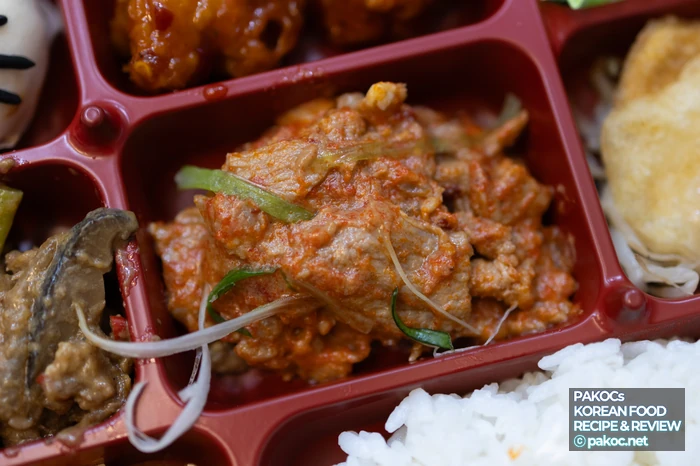
ⓒ
Copyright PAKOC https://pakoc.net | All Rights Reserved Pakoc(http://Pakoc.net)The rice portion is also fairly generous, which means this can easily fill you up for a single meal. Personally, the lineup really clicks for me. If you don’t mind Chinese-style flavors as your main meal, this is the kind of menu that’s likely to win you over.
ⓒ
Copyright PAKOC https://pakoc.net | All Rights Reserved Pakoc(http://Pakoc.net)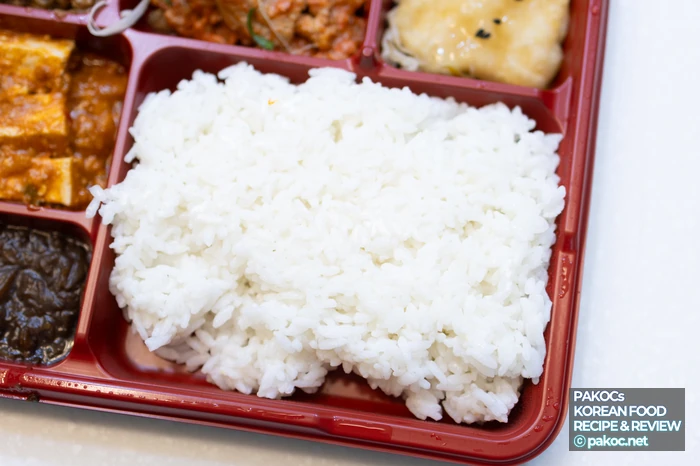
ⓒ
Copyright PAKOC https://pakoc.net | All Rights Reserved Pakoc(http://Pakoc.net)Hyeja Hansang Chinese Lunchbox: Taste Test
Now for the actual tasting. With so many sides crammed into one tray, it’s almost hard to know where to start. Since most of the dishes have strong, distinct flavors, I’ll begin with the simplest sides and work my way up.
ⓒ
Copyright PAKOC https://pakoc.net | All Rights Reserved Pakoc(http://Pakoc.net)Sweet chili chicken and doubanjiang pork
First up is the chicken with that kkanpunggi-style sweet chili glaze. Maybe because of the sauce, it doesn’t quite taste like real kkanpunggi; it’s closer to Korean dakgangjeong with the sauce cooked down a second time. It doesn’t read as spicy at all and works as a perfectly fine, easy-to-eat bite.

ⓒ
Copyright PAKOC https://pakoc.net | All Rights Reserved Pakoc(http://Pakoc.net)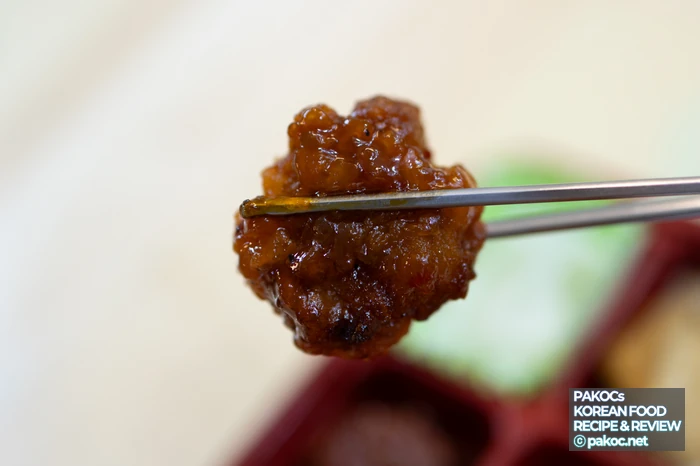
ⓒ
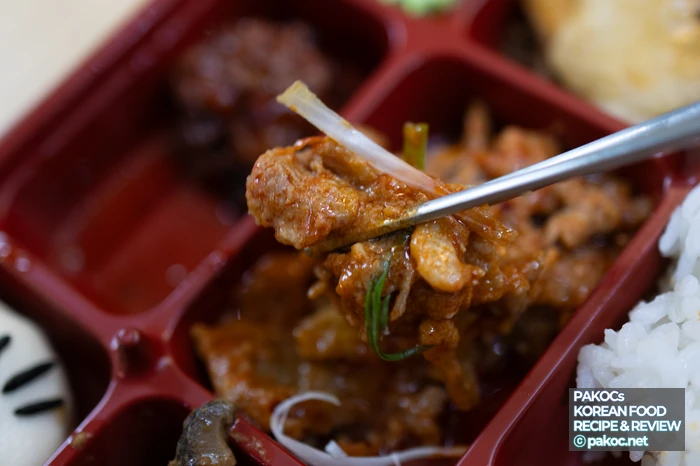

Copyright PAKOC https://pakoc.net | All Rights Reserved Pakoc(http://Pakoc.net)Next is the pork stir-fried with doubanjiang, and this one delivers a stronger kick than expected. If you go in picturing the typical pork bulgogi you usually find in convenience-store lunchboxes, you might do a double take.
ⓒ
Copyright PAKOC https://pakoc.net | All Rights Reserved Pakoc(http://Pakoc.net)It’s not blow-your-head-off spicy, though. The flavor is more of a salty-spicy combo that pairs really nicely with rice. The taste locks onto your palate, but on its own it skews a touch too salty, so it really wants rice alongside it. Personally, this side ended up being one of my favorites.
Hwangdujang mushroom stir-fry, guobaorou, mung bean sprouts
ⓒ
Copyright PAKOC https://pakoc.net | All Rights Reserved Pakoc(http://Pakoc.net)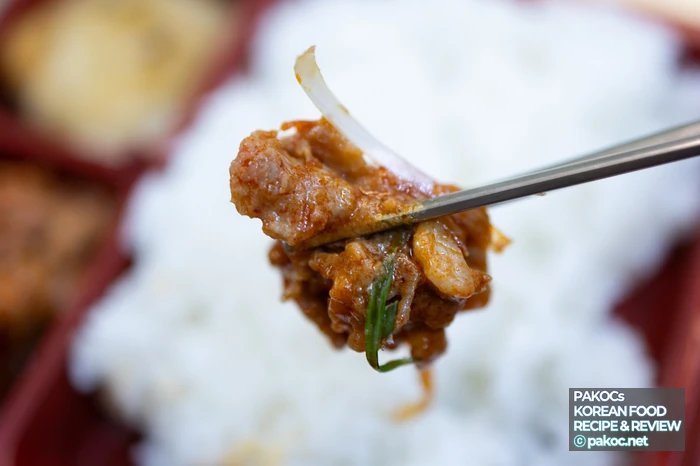
ⓒ
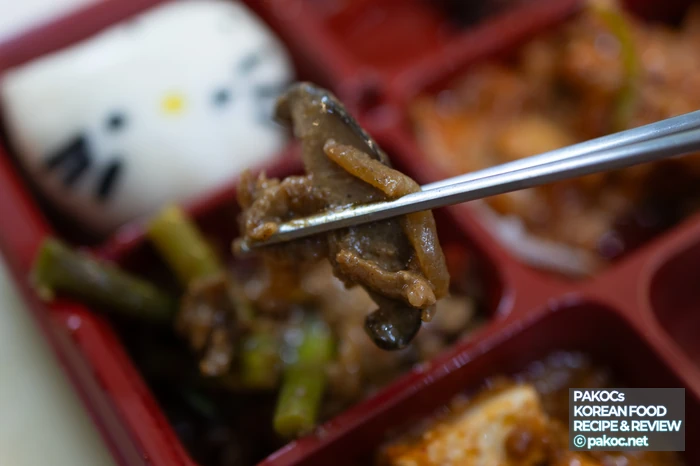
Copyright PAKOC https://pakoc.net | All Rights Reserved Pakoc(http://Pakoc.net)The brown-toned side I mentioned earlier turned out to be mushrooms and a few vegetables stir-fried in something like hwangdujang (Korean yellow soybean sauce). The flavor is mellow but with a hint of saltiness, so this one is a bit of a love-it-or-leave-it pick. Under the guobaorou there were mung bean sprouts, but I didn’t end up trying those separately. They were also unremarkable.
ⓒ
Copyright PAKOC https://pakoc.net | All Rights Reserved Pakoc(http://Pakoc.net)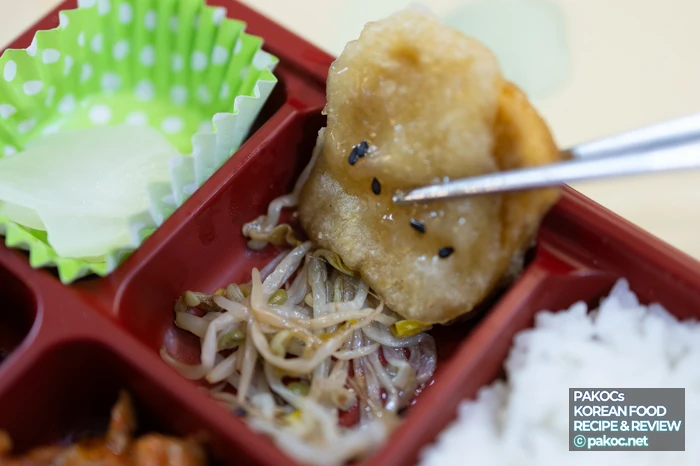
ⓒ
Copyright PAKOC https://pakoc.net | All Rights Reserved Pakoc(http://Pakoc.net)Mapo tofu, jajang sauce, and the steamed-bun dessert

The mapo tofu turned out to be the real standout for me. Thanks to this and the jajang sauce, the reason a spoon comes packed in becomes obvious. It’s exactly the style of mapo I like, and it pairs beautifully with rice. That said, the portion isn’t huge, so it’s worth pacing yourself across the meal.
ⓒ
Copyright PAKOC https://pakoc.net | All Rights Reserved Pakoc(http://Pakoc.net)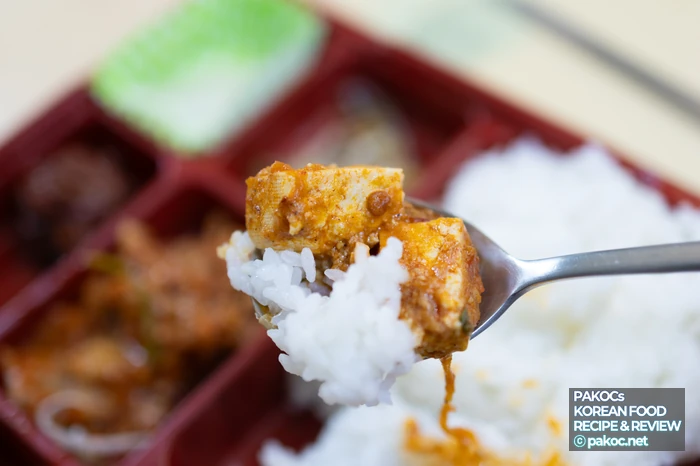
ⓒ
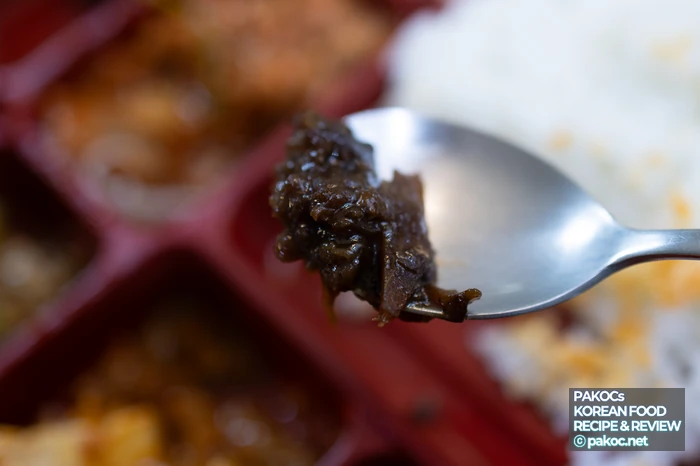
Copyright PAKOC https://pakoc.net | All Rights Reserved Pakoc(http://Pakoc.net)The jajang is exactly what it looks like: a fairly standard 3-minute jajang sauce. You can take a spoonful here and there whenever you’re in the mood. The portion is a touch smaller than a typical retort jajang pouch, so the saltiness comes through a bit more pronounced.
ⓒ
Copyright PAKOC https://pakoc.net | All Rights Reserved Pakoc(http://Pakoc.net)I tried the rice-cake-looking item last and discovered it wasn’t a rice cake at all; it’s a steamed bun with red bean paste inside. A neat, bite-sized way to wrap up the meal on a sweet note.
Final Verdict — Recommended for a Quick Chinese-Style Meal
True to its Chinese-style billing, this menu has a well-thought-out lineup of sides with enough variety to keep things genuinely fun to eat. If you’re a fan of Chinese flavors or you just want a satisfying convenience-store lunchbox for a single meal, this one earns a strong recommendation. For visitors in Korea, you can grab this at almost any GS25 branch, and pairing it with a bottle of barley tea or Chinese-style chilled drink rounds it out nicely.
ⓒ
Copyright PAKOC https://pakoc.net | All Rights Reserved Pakoc(http://Pakoc.net)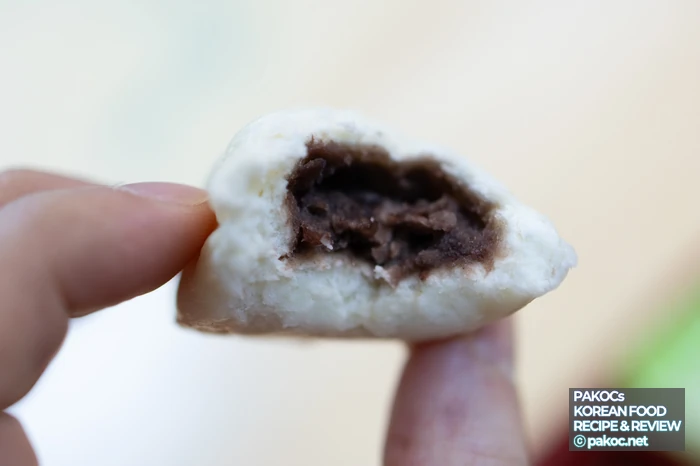
ⓒ
Copyright PAKOC https://pakoc.net | All Rights Reserved Pakoc(http://Pakoc.net)For more background on GS25 itself and its dosirak lineup, check the Wikipedia article on GS25.
Frequently Asked Questions
Q. How much does the GS25 Hyeja Hansang Chinese lunchbox cost?
The price is 6,200 won, which leans slightly premium for a convenience-store lunchbox. Given the 492 g weight, the nine-side composition, and the red bean steamed bun for dessert, the value-for-money still adds up. Telecom-partner discounts and the GS25 subscription perk can drop it further if you qualify.
Q. Which side ended up being the standout?
Personally, the mapo tofu stole the show. The doubanjiang-stirred Chinese-style pork was a close second, with its salty-spicy profile pairing exceptionally well with rice. Both of these sides are the reason a spoon comes included with the tray.
Q. Is this lunchbox suitable for people who can’t handle spicy food?
It depends on which sides you prioritize. The doubanjiang pork is the spiciest item and may be a bit much if you’re sensitive to heat. The remaining sides — sweet chili chicken, hwangdujang mushroom stir-fry, guobaorou, and the jajang — are all mild, so you can ease off the spicier dish and still enjoy a satisfying meal.
image sources
- 고추기름 두반장 마파두부: Copyright PAKOC https://pakoc.net | All Rights Reserved Pakoc(http://Pakoc.net)