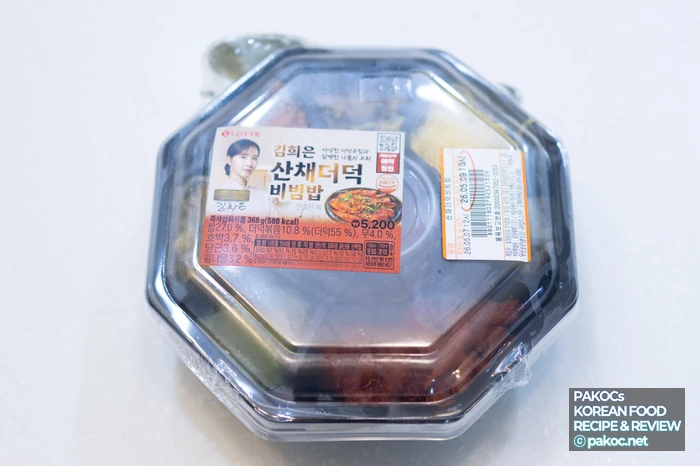
Today’s Seven-Eleven dosirak is a collaboration with Chef Kim Hee-eun of the Korean Netflix cooking show Black and White Chef (Season 2) — a Korean fine dining chef who runs Soul restaurant, a Michelin 1-star for three consecutive years. The result: the Kim Hee-eun Sanchaedodeok Bibimbap (Mountain Herb Deodeok Bibimbap). At 5,200 won, it features deodeok — a crunchy Korean mountain root vegetable that rarely makes it onto convenience store shelves — as the centerpiece topping. Seven-Eleven’s bibimbap lineup is personally considered the strongest among Korean convenience store chains, making this a high-anticipation order. Let’s take a look.
📋 At a Glance
- Product: Kim Hee-eun Sanchaedodeok Bibimbap (Mountain Herb Deodeok Bibimbap)
- Brand: Seven-Eleven Korea
- Collaboration: Chef Kim Hee-eun (Owner-Chef of Soul restaurant, 3 consecutive Michelin 1-star; Black and White Chef Season 2 White Spoon team)
- Launch date: April 29, 2026
- Price: 5,200 won
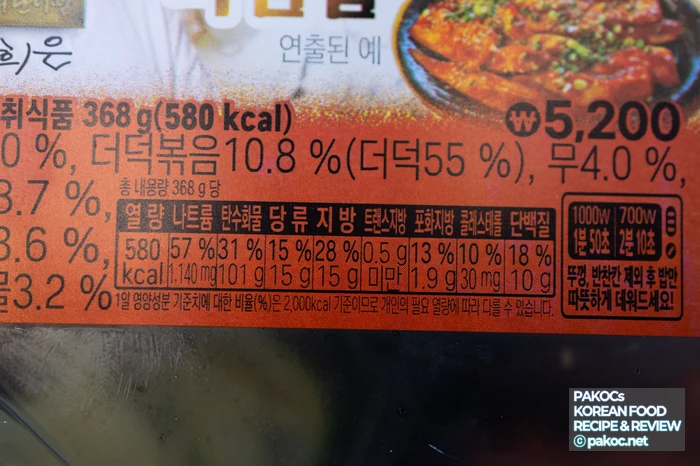
- Weight / Calories: 368 g / 580 kcal
- Sodium: 57% of daily recommended intake
- Contents: deodeok seasoned root, radish greens, sautéed zucchini, bean sprouts, julienned carrot, mushroom strips, egg jidan (thin fried egg strip), gochujang + sesame oil (7 toppings total)
- Notes: first deodeok-focused bibimbap in Korean convenience store format; no meat toppings; mountain herb bibimbap style; deodeok of Chinese origin
- Verdict: ★4.0 — Crunchy, nutty deodeok brings a genuinely unique character to a healthy convenience store bibimbap!
Kim Hee-eun Deodeok Bibimbap: Price and Features
Seven-Eleven’s core dosirak lineup is arguably weaker than some other convenience store chains in Korea — but their bibimbap is where they consistently excel. The choice to launch the first Chef Kim Hee-eun collaboration item as a bibimbap makes complete sense. The unusual hook here is deodeok (Codonopsis lanceolata), a crunchy, mildly bitter Korean mountain root vegetable that almost never appears in convenience store food. The concept: “the harmony of crunchy seasoned deodeok and clean mountain herb flavors.” Price: 5,200 won — slightly high for a convenience store bibimbap, but within premium collab territory.
ⓒ
Copyright PAKOC https://pakoc.net | All Rights Reserved Pakoc(http://Pakoc.net)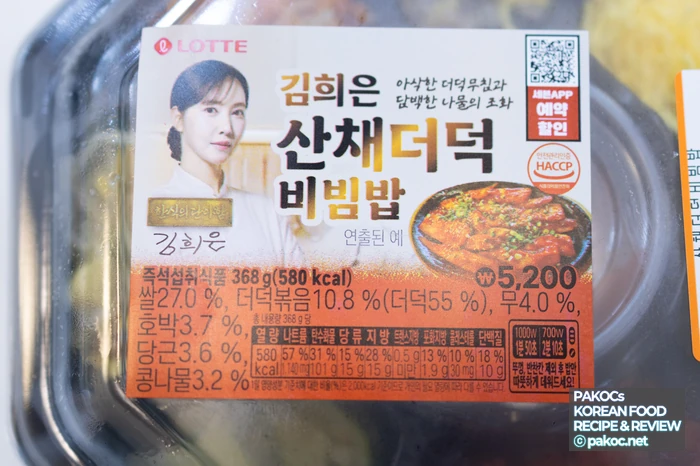
ⓒ
Copyright PAKOC https://pakoc.net | All Rights Reserved Pakoc(http://Pakoc.net)Nutritional Info and Ingredient Origin
Total weight 368 g, 580 kcal, sodium at 57% of the daily recommended value — lighter than a typical dosirak, fitting for a vegetable-forward bibimbap. Worth noting: the deodeok used is sourced from China rather than Korea.
ⓒ
Copyright PAKOC https://pakoc.net | All Rights Reserved Pakoc(http://Pakoc.net)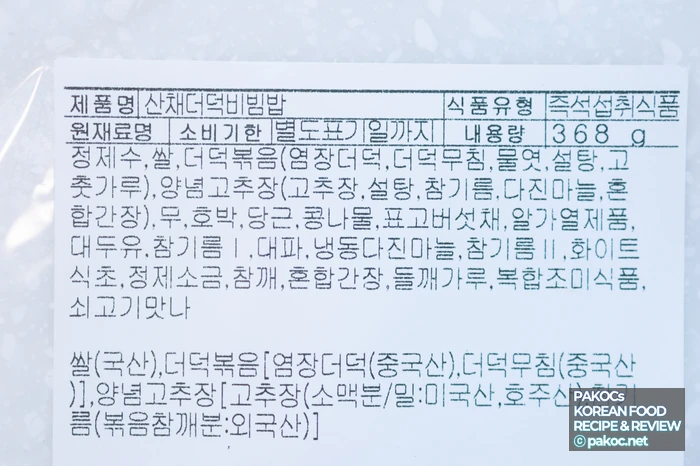
ⓒ
Copyright PAKOC https://pakoc.net | All Rights Reserved Pakoc(http://Pakoc.net)Kim Hee-eun Deodeok Bibimbap: What’s Inside?
A quick look at the composition. Seven toppings in total, and the seasoned deodeok is easily the dominant element by volume. The overall arrangement looks clean and well-organized.

ⓒ
Copyright PAKOC https://pakoc.net | All Rights Reserved Pakoc(http://Pakoc.net)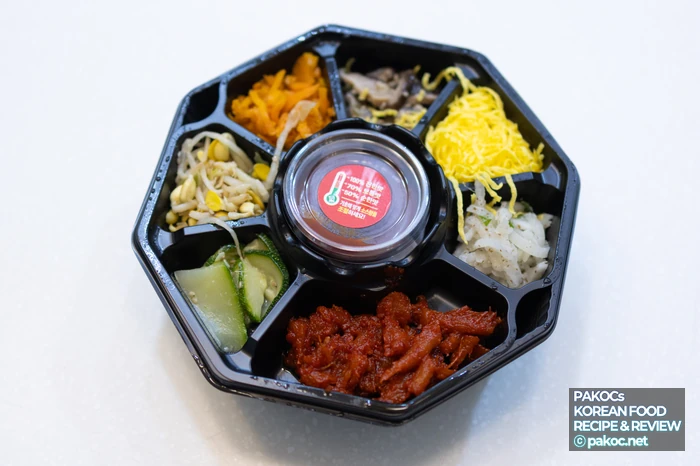
ⓒ
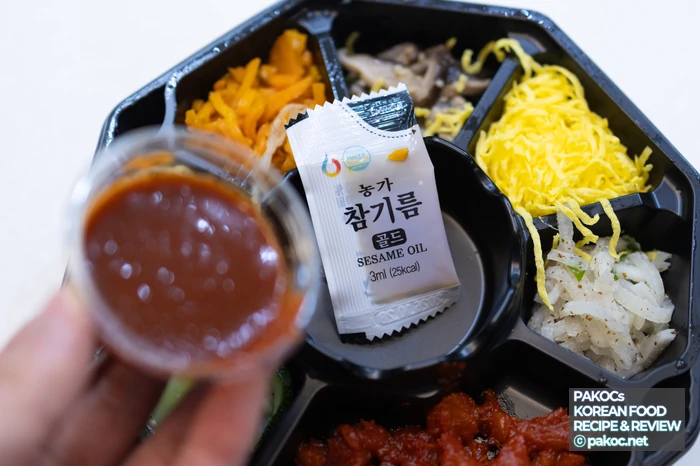
Copyright PAKOC https://pakoc.net | All Rights Reserved Pakoc(http://Pakoc.net)Gochujang sits in a sauce cup in the center of the toppings, with sesame oil packaged separately. Some convenience store bibimbap products have started combining both in a single cup to cut costs — having them separate here allows individual adjustment, which is a thoughtful touch.
ⓒ
Copyright PAKOC https://pakoc.net | All Rights Reserved Pakoc(http://Pakoc.net)The Deodeok Topping: Appearance and Build
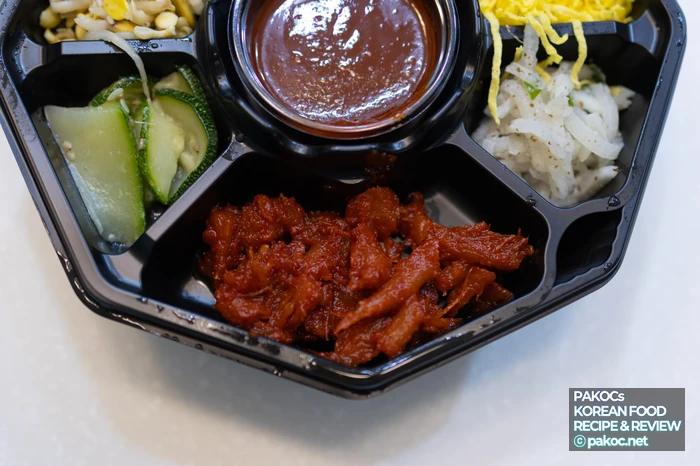
The seasoned deodeok could easily be mistaken at first glance for spicy sautéed pollock — the visual resemblance is striking. The quantity is notably generous, cut into bite-sized pieces that are easy to mix into rice.
ⓒ
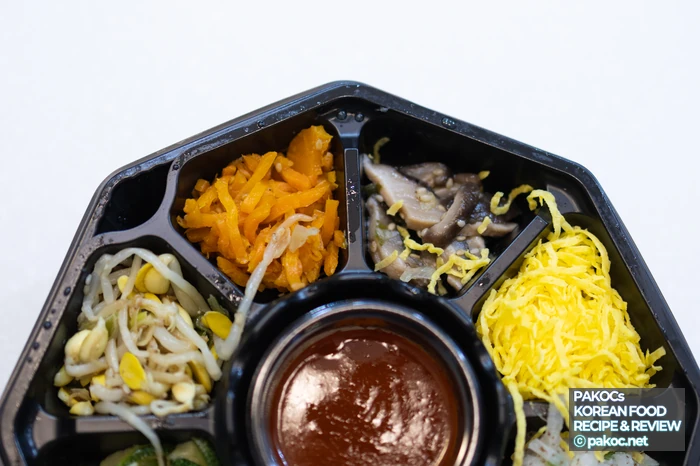
Copyright PAKOC https://pakoc.net | All Rights Reserved Pakoc(http://Pakoc.net)Remaining toppings: radish greens, sautéed zucchini, bean sprouts, julienned carrot, mushroom strips, and egg jidan. The toppings sit in a tray on top — lift the tray and the rice is below. Heating is simple: only the rice section goes in the microwave; the toppings go on cold.
ⓒ
Copyright PAKOC https://pakoc.net | All Rights Reserved Pakoc(http://Pakoc.net)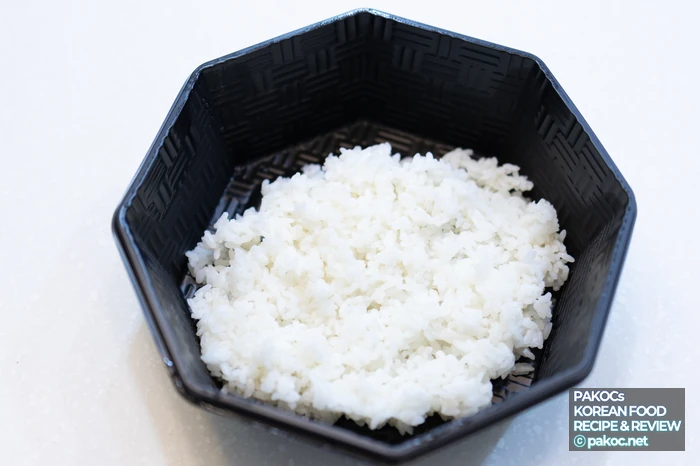
ⓒ
Copyright PAKOC https://pakoc.net | All Rights Reserved Pakoc(http://Pakoc.net)After microwaving the rice, toppings go on top and gochujang and sesame oil get added. The portion of toppings is generous, and based on experience Seven-Eleven’s standard gochujang portion is adequate — mixing is easy and straightforward.

ⓒ
Copyright PAKOC https://pakoc.net | All Rights Reserved Pakoc(http://Pakoc.net)
ⓒ
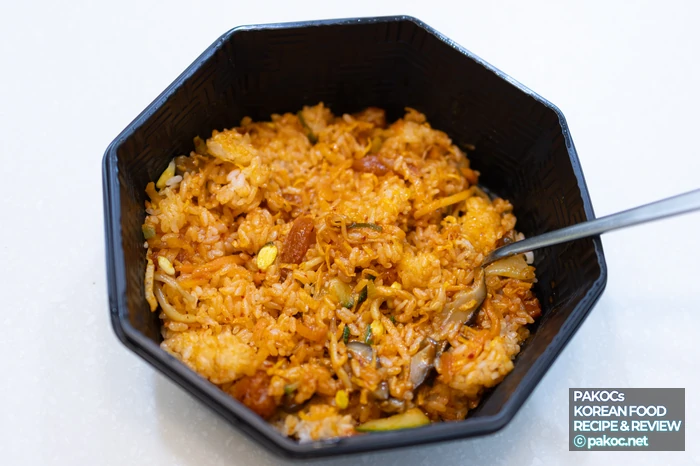
Copyright PAKOC https://pakoc.net | All Rights Reserved Pakoc(http://Pakoc.net)The fully mixed result: no meat in sight, which might read as sparse — but a bibimbap that includes deodeok, which is rare even at dedicated bibimbap restaurants, creates its own curiosity. This one is best approached as a mountain herb bibimbap rather than a standard mixed rice.
ⓒ
Copyright PAKOC https://pakoc.net | All Rights Reserved Pakoc(http://Pakoc.net)Taste Test: What Does It Actually Taste Like?
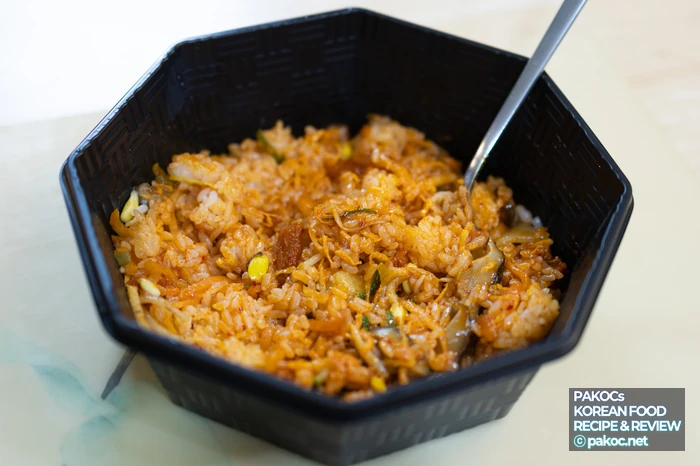
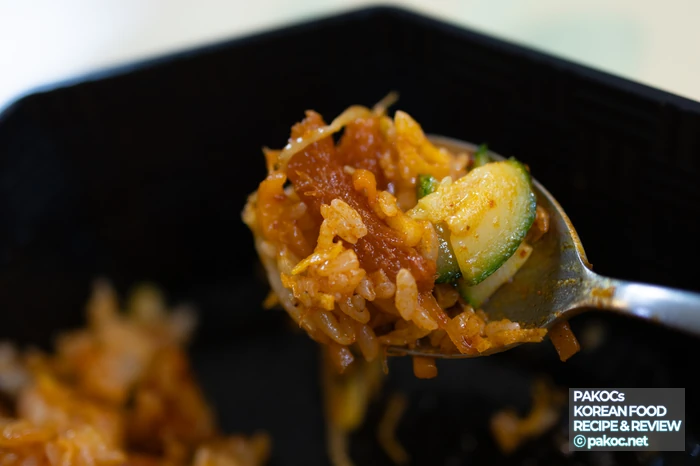
Right into tasting — targeting a spoonful with a large piece of the seasoned deodeok to get the full flavor first.
ⓒ
Copyright PAKOC https://pakoc.net | All Rights Reserved Pakoc(http://Pakoc.net)The deodeok’s crunch is notably stronger than expected — genuinely satisfying snap texture. The seasoning has done its job: the slightly bitter note that deodeok can carry is subdued, leaving the characteristic nutty, crunchy flavor to take center stage. Unusual, but pleasant as part of a bibimbap.

ⓒ
Copyright PAKOC https://pakoc.net | All Rights Reserved Pakoc(http://Pakoc.net)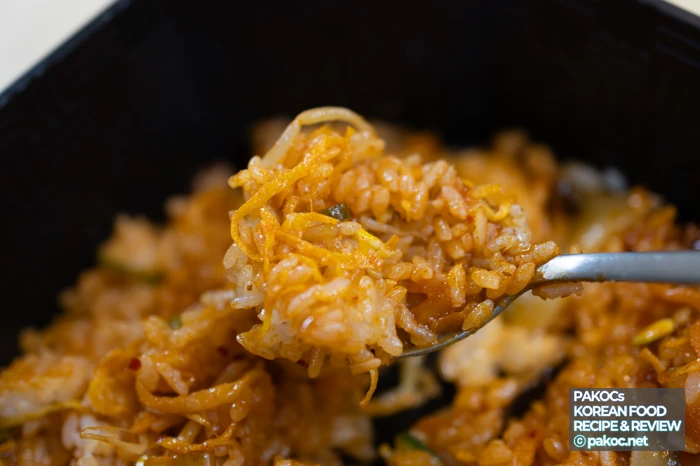
ⓒ
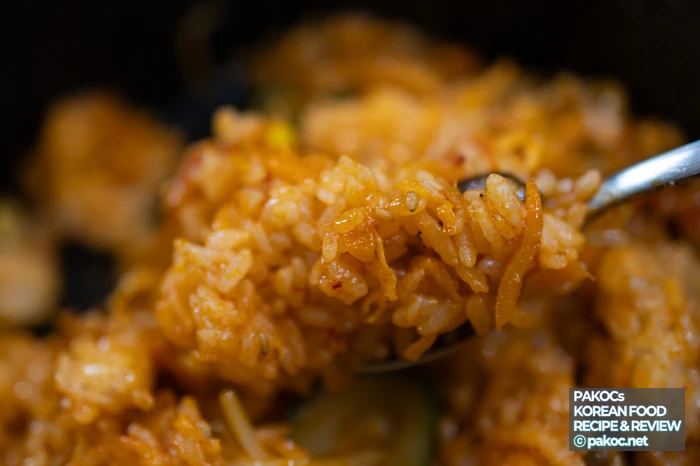
Copyright PAKOC https://pakoc.net | All Rights Reserved Pakoc(http://Pakoc.net)Overall this reads close to a familiar mountain herb bibimbap while being distinctly different — the deodeok’s crunch gives it an edge that separates it from any other bibimbap in the category. Familiar and distinctive at the same time, which is an interesting balance to achieve.
ⓒ
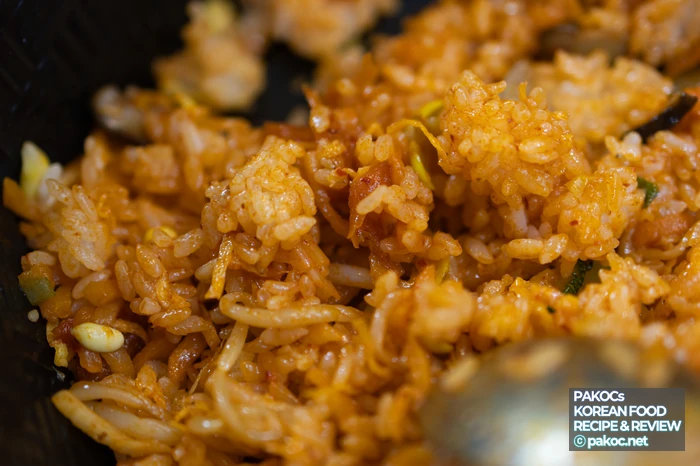
Copyright PAKOC https://pakoc.net | All Rights Reserved Pakoc(http://Pakoc.net)As a meal portion it hits the right spot — filling without being heavy, with enough fiber from the mountain herbs to feel like a genuinely healthy choice. Korean convenience store food can carry a slight sense of guilt when it’s all processed products and frozen items. A vegetable-forward bibimbap like this sidesteps that entirely.
ⓒ
Copyright PAKOC https://pakoc.net | All Rights Reserved Pakoc(http://Pakoc.net)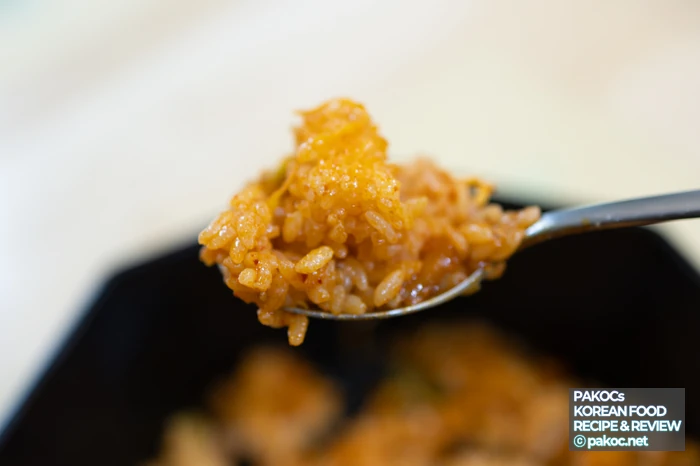
ⓒ
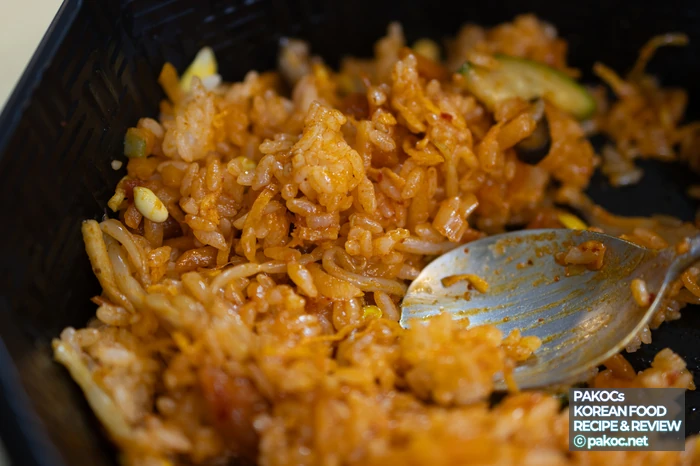
Copyright PAKOC https://pakoc.net | All Rights Reserved Pakoc(http://Pakoc.net)No egg on top and no meat — for some that will be a limitation, but it’s exactly what lets the deodeok flavor come through fully. Personally more drawn to regular bibimbap than mountain herb styles, but this one worked. The absence of meat concentrates the flavor focus in a way that serves the concept well.
ⓒ
Copyright PAKOC https://pakoc.net | All Rights Reserved Pakoc(http://Pakoc.net)Final Verdict
A light, satisfying meal that delivers on the mountain herb and deodeok flavor promise. For anyone looking for a quick, healthy convenience store option — or curious to taste deodeok’s crunchy, nutty character — this is a strong choice. If you visit Korea and want to experience a genuinely traditional Korean vegetable bibimbap in an accessible, affordable format, this Seven-Eleven collaboration is worth seeking out.
ⓒ
Copyright PAKOC https://pakoc.net | All Rights Reserved Pakoc(http://Pakoc.net)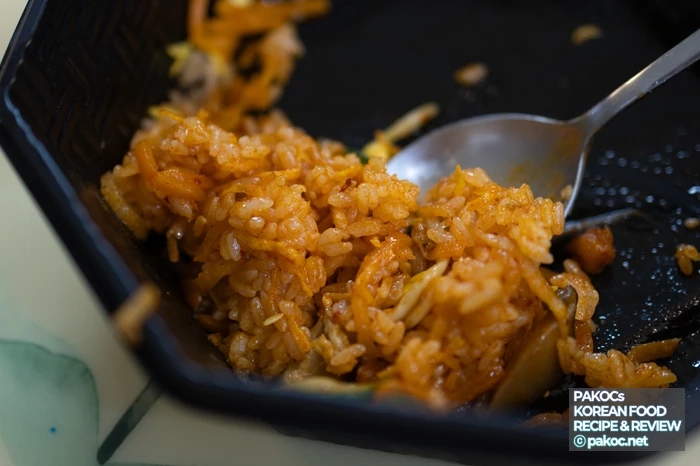
ⓒ
Copyright PAKOC https://pakoc.net | All Rights Reserved Pakoc(http://Pakoc.net)For background on the Seven-Eleven and Chef Kim Hee-eun collaboration lineup launch, see the (Korean source) Newsis report on the Seven-Eleven and Chef Kim Hee-eun convenience food collaboration.
Frequently Asked Questions
Q. How much does the Seven-Eleven Deodeok Bibimbap cost?
At 5,200 won it’s on the higher side for a Korean convenience store bibimbap, but the Michelin 1-star chef collab positioning and the novelty of deodeok as a main ingredient justify the premium. Compared to a basic convenience store bibimbap in Korea (typically 3,500–4,500 won), the step up is reasonable for what you’re getting.
Q. What is deodeok and what does it taste like?
Deodeok (Codonopsis lanceolata) is a Korean mountain root vegetable prized for its crunchy texture and mildly nutty, slightly bitter flavor. It’s commonly used in Korean mountain herb dishes — seasoned side dishes, grilled preparations, and traditional bibimbap — but almost never appears in convenience store food. In this bibimbap, the deodeok is seasoned and well-prepared: the bitterness is largely tamed, leaving the crunchy, savory character intact. The deodeok used here is sourced from China.
Q. Is it filling without meat?
At 368 g and 580 kcal it’s light but adequate for a meal. The generous portion of deodeok and seven herb toppings covers the volume gap left by the absence of meat. It won’t be the most substantial meal, but for a quick, clean lunch or light dinner it’s exactly right — especially for anyone looking for a healthier alternative to processed convenience food.
image sources
- 들깨 닭갈비 삼각김밥 라인업: Copyright PAKOC https://pakoc.net | All Rights Reserved Pakoc(http://Pakoc.net)