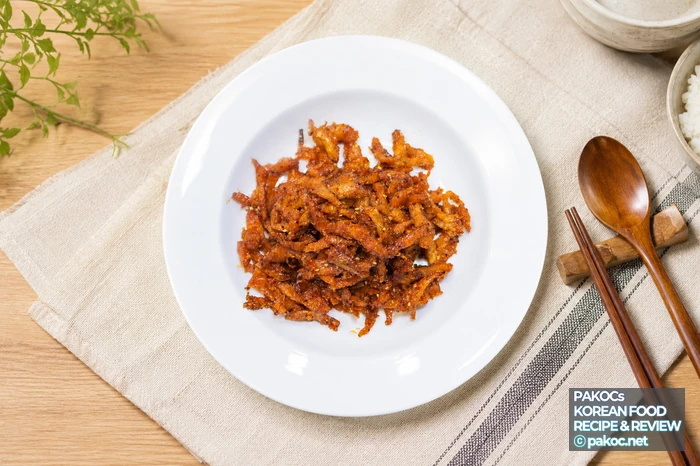
Hello! Today’s recipe is Hwangtae Gochujang Stir-Fry — shredded dried pollack (hwangtae) torn into small pieces and stir-fried once with gochujang. Apart from tearing the pollack, it’s very simple to make, and it’s great to prep as a side dish and enjoy over several days, especially when prices have you worried these days. Just adjusting a few basic seasonings gives it a different character, so it’s easy to tailor to your taste. So shall we take a look at the recipe?
📋 At a Glance
- Dish: Hwangtae Gochujang Stir-Fry (shredded dried pollack in gochujang)
- Category: Spicy side dish (banchan, stir-fried)
- Main ingredients: Shredded dried pollack 80g, gochujang, gochugaru, sesame oil, minced garlic, plum syrup, cooking wine, oligo syrup, mayonnaise
- Cookware: Frying pan
- Time: 15 min prep + 10 min cook (about 25 min)
- Difficulty: Easy (only tearing the pollack takes a little effort)
- Tip: 1 Tbsp of mayo keeps it tender even after refrigerating, and a little cheongyang pepper adjusts the heat!
Hwangtae Gochujang Stir-Fry: Ingredients
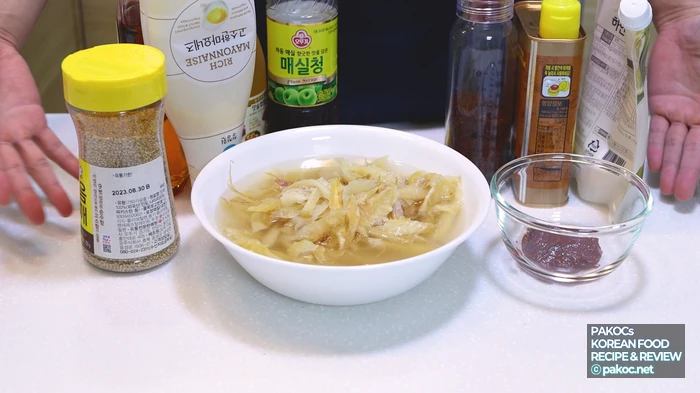
The ingredients for this recipe are very simple. First, I used 80g of shredded dried pollack (hwangtae). These days you can find pre-shredded hwangtae at the mart, so keep that in mind. I soaked the hwangtae in water ahead of time. For soaking, just 15 minutes in cold water is plenty.
ⓒ
Copyright PAKOC https://pakoc.net[Ingredients — based on 80g of hwangtae]
- Shredded dried pollack (hwangtae) 80g
- Sesame oil 3 Tbsp
- Gochujang 2 Tbsp
- Gochugaru (red pepper flakes) 1 Tbsp
- Sugar 0.5 Tbsp
- Minced garlic 0.5 Tbsp
- Plum syrup (maesil-cheong) 1 Tbsp
- Cooking wine 2 Tbsp
- Oligo syrup 1 Tbsp
- Mayonnaise 1 Tbsp
- Roasted sesame seeds, a little
[Recipe summary — based on 80g of hwangtae]
- Rinse the hwangtae once under running water, soak briefly, and tear into bite-sized pieces. Squeeze the shredded hwangtae firmly by hand to remove excess water and set aside.
- Mix 2 Tbsp gochujang, 1 Tbsp gochugaru, 0.5 Tbsp sugar, 0.5 Tbsp minced garlic, 1 Tbsp plum syrup, 2 Tbsp cooking wine, and 1 Tbsp oligo syrup to make the sauce.
- Drizzle 3 Tbsp sesame oil into a suitable frying pan, heat over medium, then add the hwangtae.
- Stir-fry the hwangtae over medium heat until golden, and once the moisture is almost gone, set it aside separately.
- Wipe the oil from the pan, lower to low heat, add the prepared sauce, and warm it until it just begins to bubble. Residual heat can bring it to a boil quickly, so take care not to burn it.
- Once the sauce starts to bubble, add the pre-fried hwangtae and toss to coat evenly as you stir-fry.
- After stir-frying it all without burning the sauce, add 1 Tbsp mayonnaise to the hwangtae, mix well to coat, and finish with a sprinkle of roasted sesame seeds.
🥫 Adding mayonnaise keeps the hwangtae tender even when refrigerated. I add it because I like the nutty aroma, but if you dislike a slightly oily texture, you can leave it out.
🧊 Freezing isn’t impossible, but the texture tends to turn dry and crumbly, so I don’t recommend it. It’s best to make only as much as you’ll eat.
🌶 A version that adds a little sliced cheongyang pepper at the end for extra heat is also great. Feel free to make your own variations to taste!
🍤 Prep time: 15 min
🍳 Cook time: 10 min
Prepping the Ingredients
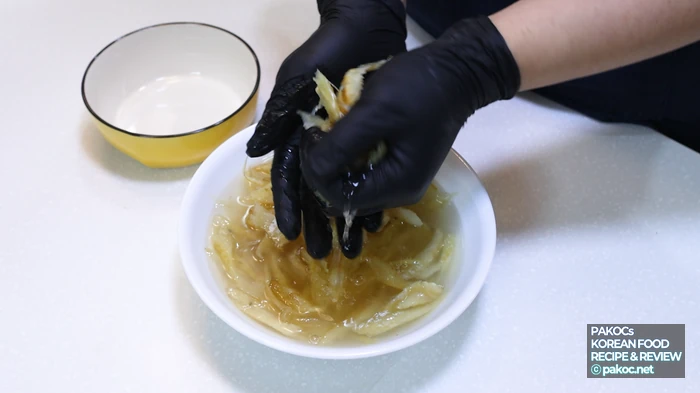
Let’s prep the ingredients. Rinse the soaked hwangtae once under running water and tear it into bite-sized pieces. As I mentioned, pre-cut products are readily available these days, but you’ll still want to trim them into pieces easy to pick up in one chopstick pull. It’s a little tedious, but it tears nicely along the grain.
ⓒ
Copyright PAKOC https://pakoc.net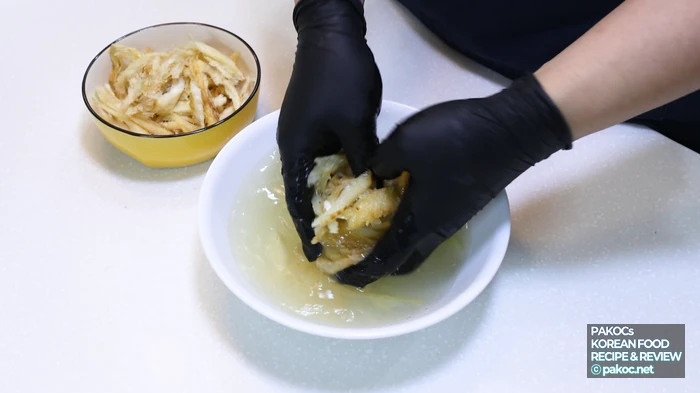
ⓒ
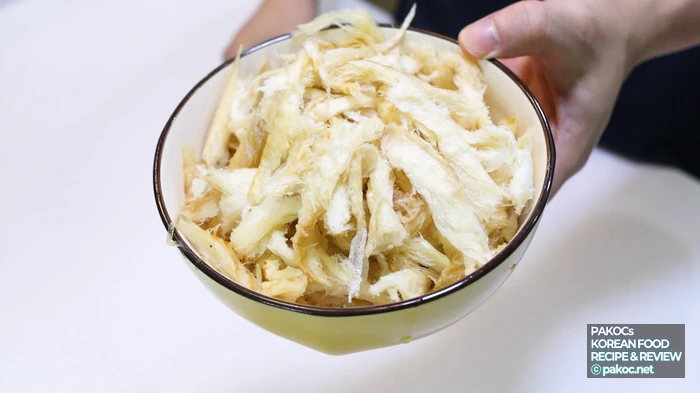
Copyright PAKOC https://pakoc.netSince the torn hwangtae will be stir-fried once, squeeze it firmly by hand to remove the water and set it aside.
ⓒ
Copyright PAKOC https://pakoc.netNext, let’s make the sauce right away. In a suitable bowl, add 2 Tbsp gochujang, 1 Tbsp gochugaru, 0.5 Tbsp sugar, 0.5 Tbsp minced garlic, 1 Tbsp plum syrup, and 2 Tbsp cooking wine. Add 1 Tbsp oligo syrup as well — it mainly adds a glossy sheen, so you can skip it if you like.
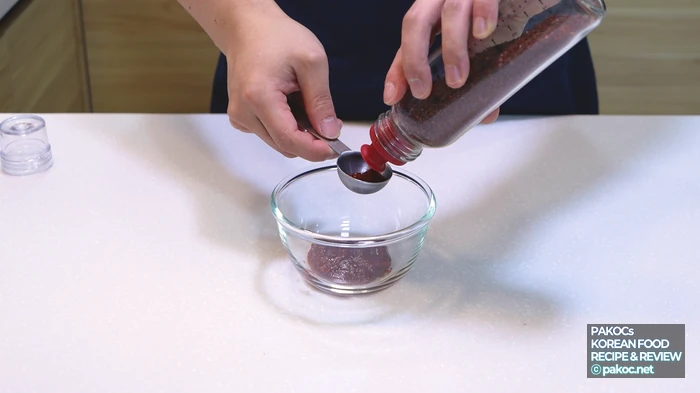
ⓒ
Copyright PAKOC https://pakoc.net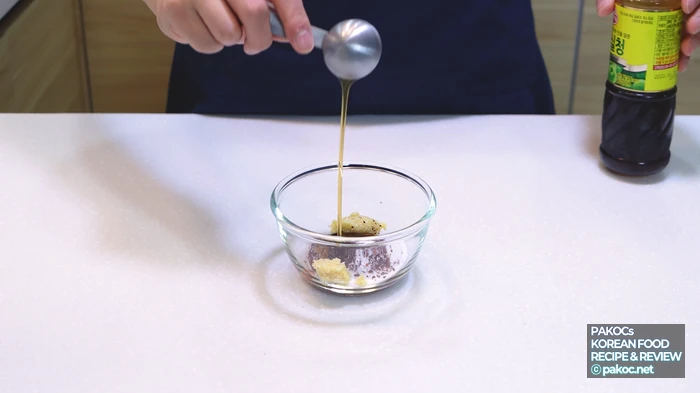
ⓒ
Copyright PAKOC https://pakoc.netJust mix the seasonings together well. And with that, the sauce is done too. The prep really is simple, isn’t it?
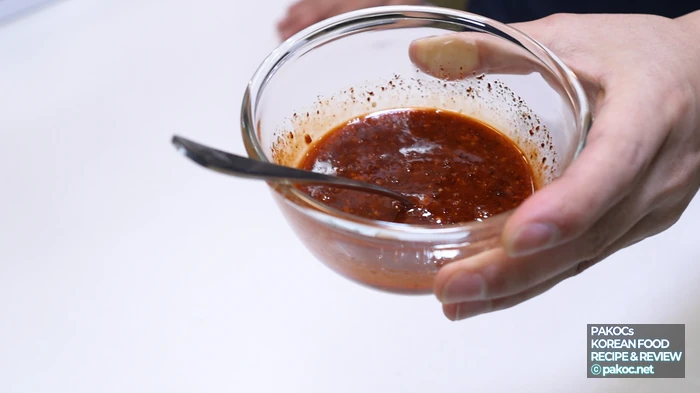
ⓒ
Copyright PAKOC https://pakoc.netHow to Make the Hwangtae Gochujang Stir-Fry
Let’s start cooking right away. Drizzle 3 Tbsp sesame oil into a suitable frying pan and heat over medium. Once the nutty aroma of the sesame oil rises, lower the heat to low so the oil doesn’t burn.
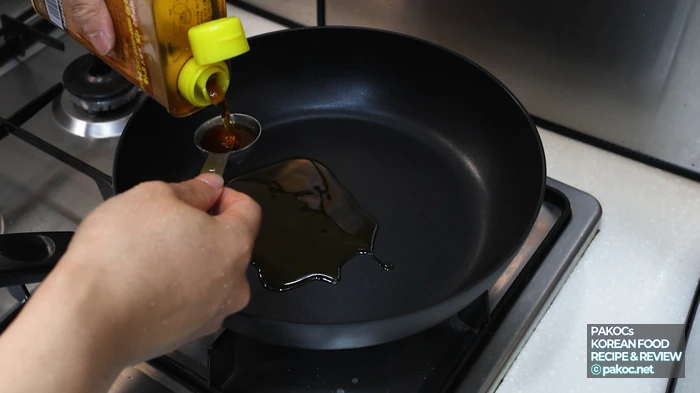
ⓒ
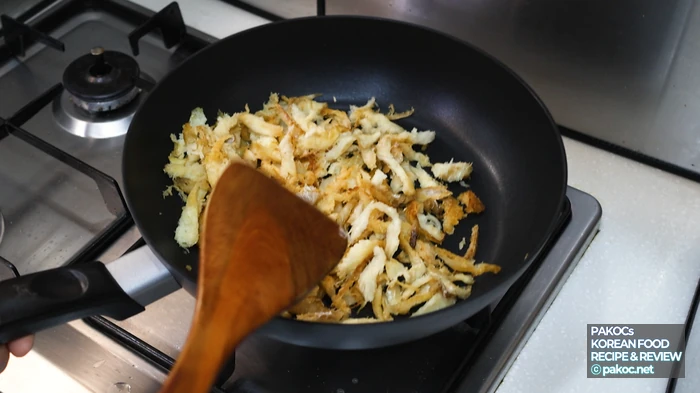
Copyright PAKOC https://pakoc.netNext, add the hwangtae and stir-fry it just until lightly golden. Once most of the moisture in the hwangtae has evaporated, take it out. Depending on how much you fry it, you can tame the characteristic fishy smell and coax out the hwangtae aroma, but frying it too hard can make it tough or burnt, so just watch that part.
ⓒ
Copyright PAKOC https://pakoc.net
ⓒ
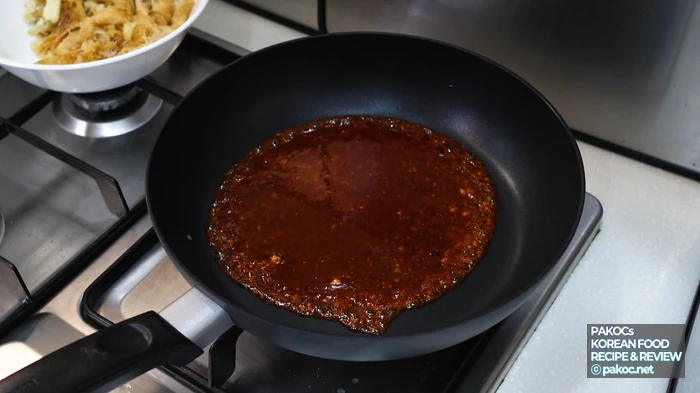
Copyright PAKOC https://pakoc.netBy now there’s probably almost no sesame oil left, but if a little remains, wipe the oil from the pan. Keeping it on low heat, add the prepared sauce and heat until it just begins to bubble. Keep a close eye so the sauce doesn’t burn!
ⓒ
Copyright PAKOC https://pakoc.net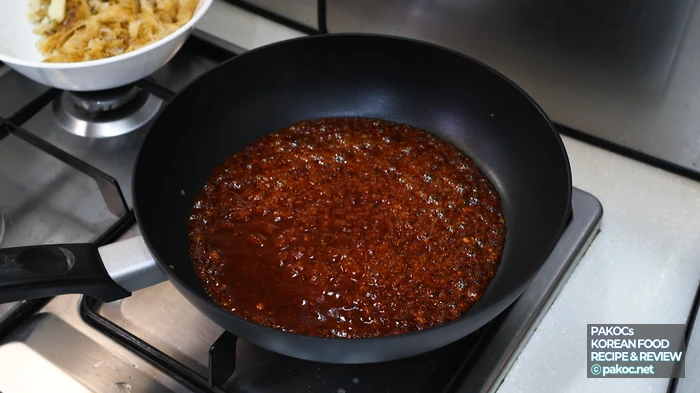
ⓒ
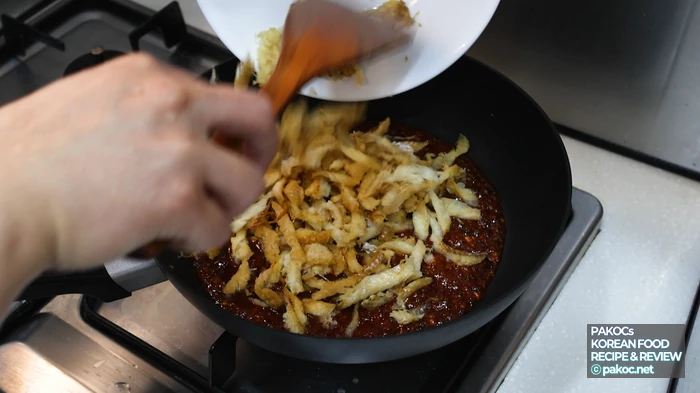
Copyright PAKOC https://pakoc.netOnce the sauce starts to bubble, add the pre-fried hwangtae and toss to coat evenly as you stir-fry. At this point you can cook using residual heat alone, and since the hwangtae has already been fried enough, you can turn off the heat.
ⓒ
Copyright PAKOC https://pakoc.net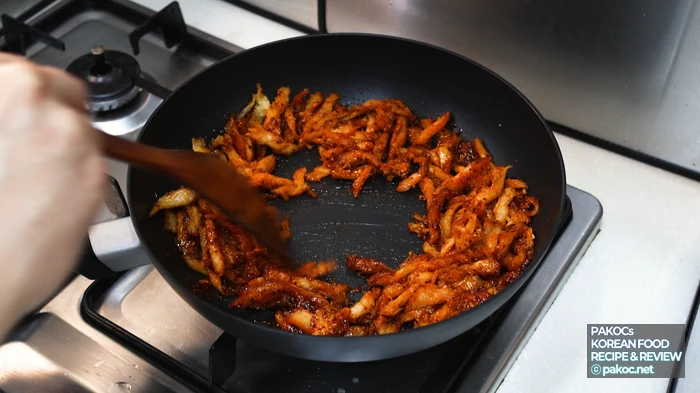
ⓒ
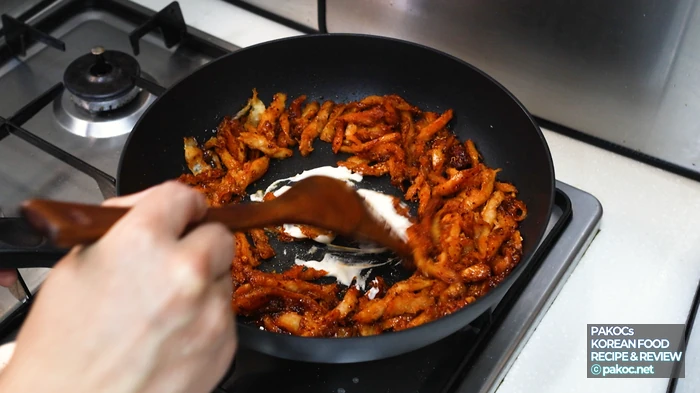
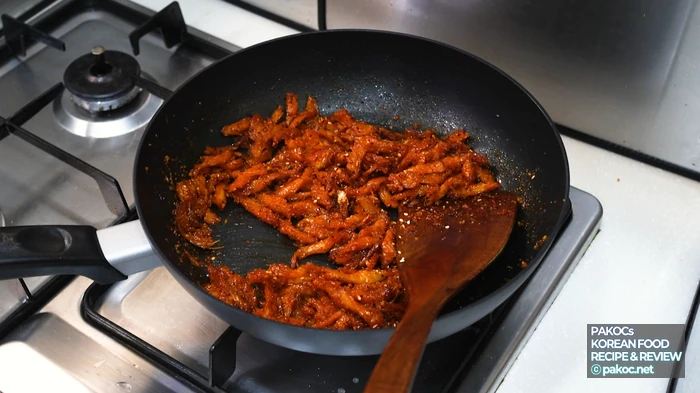
Copyright PAKOC https://pakoc.netI cooked it on even lower than low heat! Once everything is stir-fried without burning the sauce, add 1 Tbsp mayonnaise to the hwangtae and mix to coat well. Mayonnaise is ultimately oil when heated, so it helps keep the hwangtae from hardening in the fridge — though honestly that effect isn’t dramatic, and I mostly use it to add a nutty richness.
ⓒ
Copyright PAKOC https://pakoc.net
ⓒ
Copyright PAKOC https://pakoc.netIt’s not essential, but as an option, sprinkle roasted sesame seeds at the end to add a bit of finish to the look. A little black sesame is fine too!
ⓒ
Copyright PAKOC https://pakoc.netFinished Dish Gallery
ⓒ
Copyright PAKOC https://pakoc.net
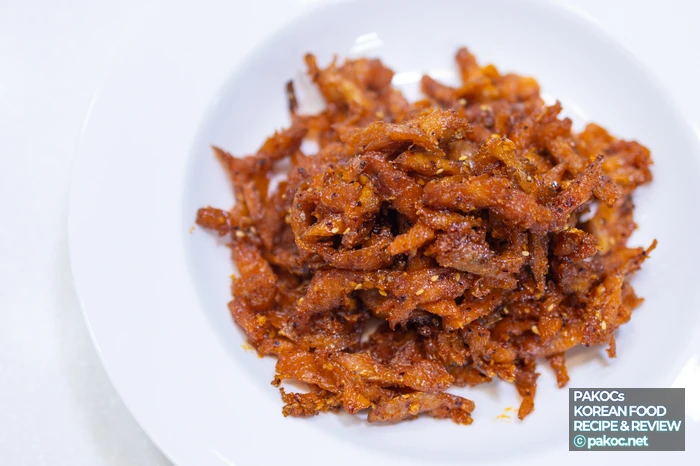
The Finished Hwangtae Gochujang Stir-Fry
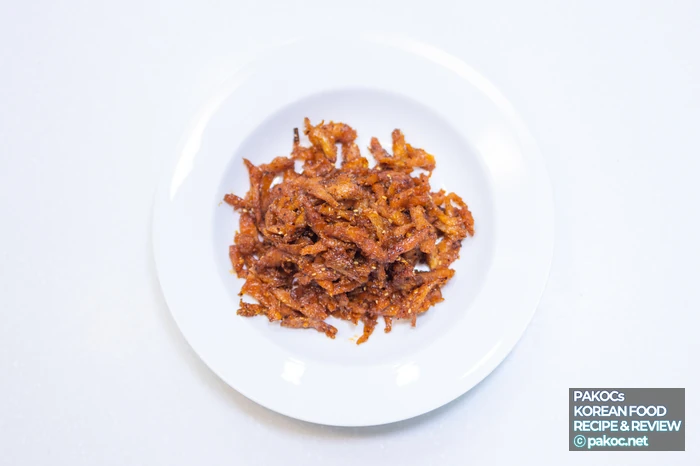
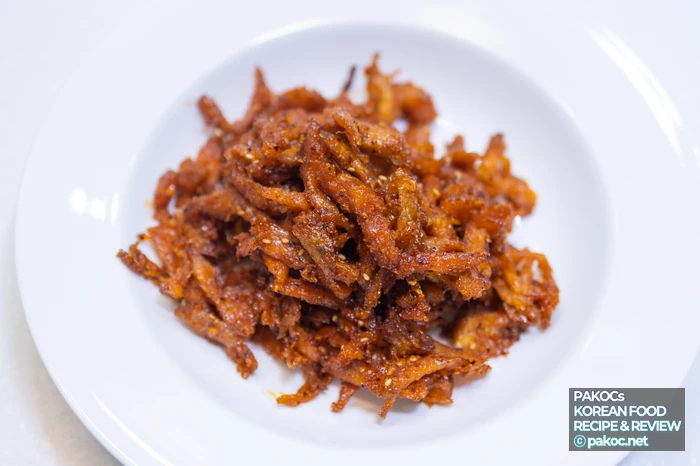
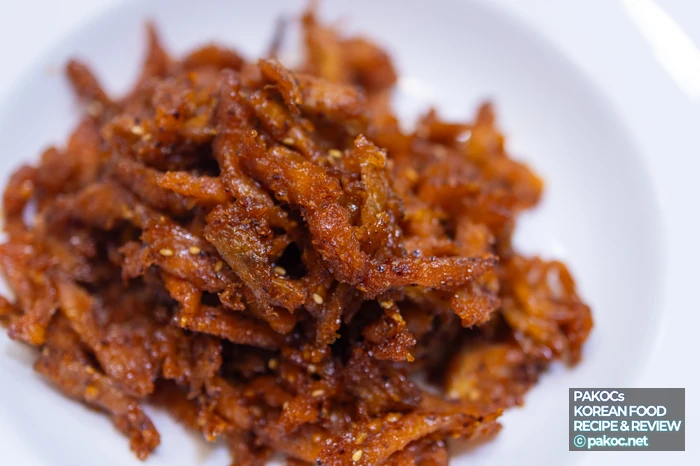


And there you have it — the finished hwangtae gochujang stir-fry. It’s mildly spicy, and because I bought well-trimmed hwangtae, it’s not tough at all — quite a tender texture!
ⓒ
Copyright PAKOC https://pakoc.net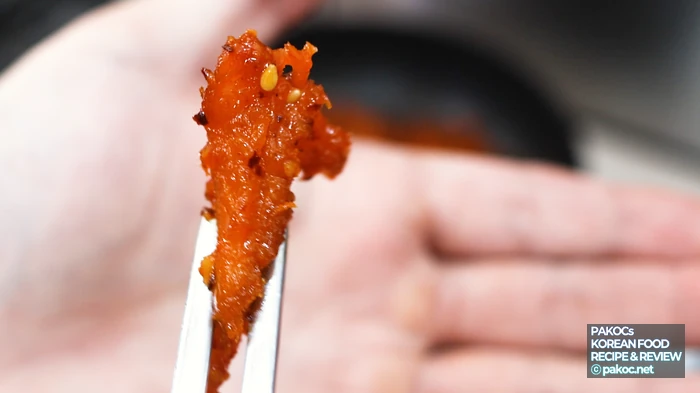
ⓒ
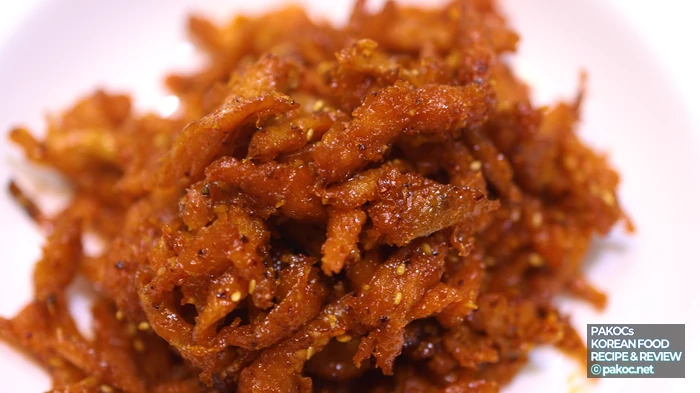
Copyright PAKOC https://pakoc.netWith just 20–30 minutes of effort, it’s a side dish you can enjoy little by little over several days. It’s perfect to make when your spread of banchan feels a bit lacking, or when you need something to liven up a simple lunchbox.
ⓒ
Copyright PAKOC https://pakoc.netCutting back a little on the gochujang and adding some soy sauce makes it milder and gentler, and just tweaking the amount of seasonings makes it easy to tailor to your taste — the kind of recipe you’ll end up making often. It’s a flavor you absolutely won’t regret.
ⓒ
Copyright PAKOC https://pakoc.net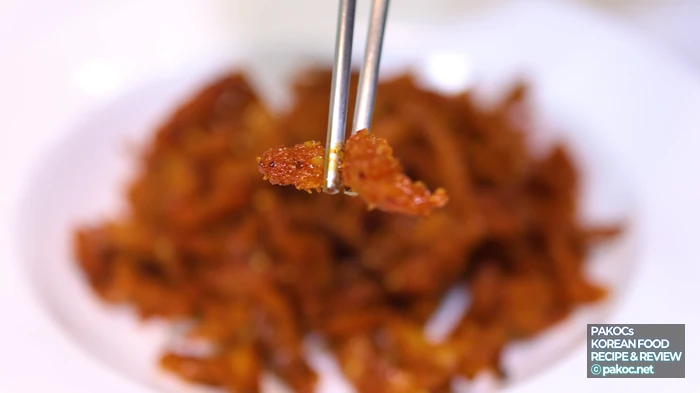
ⓒ
Copyright PAKOC https://pakoc.netFor more on gochujang, the heart of this sweet-and-spicy seasoning, you can check the Wikipedia entry on gochujang.
Frequently Asked Questions
Q. What goes into hwangtae gochujang stir-fry?
The base is 80g of shredded dried pollack (hwangtae) with 3 Tbsp sesame oil, 2 Tbsp gochujang, and 1 Tbsp gochugaru. To that you add 0.5 Tbsp each of sugar and minced garlic, 1 Tbsp each of plum syrup, oligo syrup, and mayonnaise, 2 Tbsp cooking wine, and some roasted sesame seeds.
Q. How long does it take to make?
About 25 minutes total — 15 minutes of prep and 10 minutes of cooking. Only tearing the hwangtae into bite-sized pieces takes a bit of time; the rest of the process is very simple.
Q. How long does it keep?
It’s a side dish that easily keeps for several days refrigerated. Adding 1 Tbsp of mayonnaise keeps the texture tender even in the fridge. Freezing, however, makes the texture dry and crumbly, so it isn’t recommended.
Q. Can I adjust the spice or make variations?
Yes — cutting back on the gochujang and adding soy sauce makes it milder and gentler. Conversely, slicing in some cheongyang pepper at the end adds heat, so just adjusting the seasoning amounts lets you tailor it to your taste.
Youtube
image sources
- 황태채 고추장볶음 실패 없는 레시피: Copyright PAKOC https://pakoc.net
- 황태채 고추장볶음 완성 사진: Copyright PAKOC https://pakoc.net
- 참기름 향긋한 조리 과정: Copyright PAKOC https://pakoc.net
- 황태채 볶음 재료 준비 사진: Copyright PAKOC https://pakoc.net
- 매콤한 황태채 요리 비주얼: Copyright PAKOC https://pakoc.net
- 황태채 고추장 비율 조정 팁: Copyright PAKOC https://pakoc.net
- 실속형 반찬 황태채 사진: Copyright PAKOC https://pakoc.net
- 황태채 고추장볶음 다양한 변형: Copyright PAKOC https://pakoc.net
- 고소한 맛 고추장 요리 사진: Copyright PAKOC https://pakoc.net
- 고급스러운 황태채 요리 비주얼: Copyright PAKOC https://pakoc.net
- 황태채 볶음 전통 반찬 특징: Copyright PAKOC https://pakoc.net
- 참기름 조리 비법 공유: Copyright PAKOC https://pakoc.net
- 황태채 고추장볶음 인기 레시피: Copyright PAKOC https://pakoc.net
- 황태채 손질방법 자세한 설명: Copyright PAKOC https://pakoc.net
- 볶은참깨 고명 완성사진: Copyright PAKOC https://pakoc.net
- 황태채 볶음 간단한 레시피: Copyright PAKOC https://pakoc.net
- 맛있는 밥반찬 추천 이미지: Copyright PAKOC https://pakoc.net
- 황태채 고추장 볶음 추천 레시피: Copyright PAKOC https://pakoc.net
- 고추장 따뜻한 한끼 요리 사진: Copyright PAKOC https://pakoc.net
- 고추장 볶음 간단한 레시피 아이디어: Copyright PAKOC https://pakoc.net
- 황태채 고추장볶음 집밥 아이디어: Copyright PAKOC https://pakoc.net
- 황태채 반찬 유지 방법: Copyright PAKOC https://pakoc.net
- 황태채 식감 부드러운 특징: Copyright PAKOC https://pakoc.net