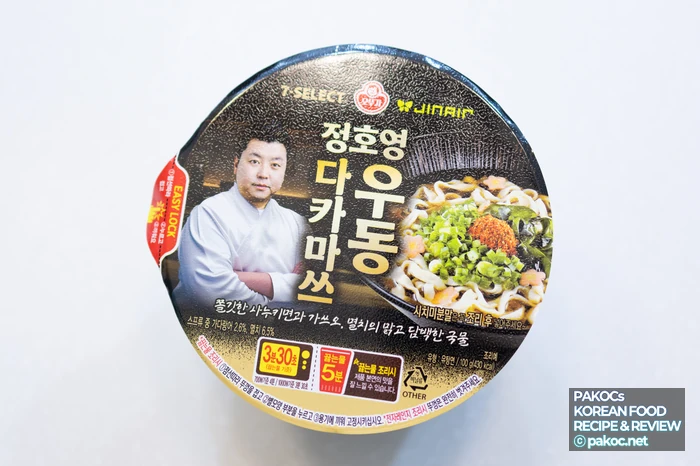
Hello! Today’s new cup noodle from Seven-Eleven is the Jeong Ho-young Takamatsu Udon, a collaboration between chef Jeong Ho-young, Ottogi, and Jin Air. It aims to recreate the chewy noodles of Takamatsu’s Sanuki udon, one of Japan’s three great udon styles, in cup-noodle form, paired with a clear, delicate broth built on bonito flakes and anchovy. Seven-Eleven is quietly serious about Japanese-style udon and ramen cups, and since this is a new release from Jeong Ho-young, a chef who has long partnered with Seven-Eleven on solid menus, I picked one up right away. So let’s see what it’s all about.
📋 At a Glance
- Product: Seven-Select Jeong Ho-young Takamatsu Udon
- Store: Seven-Eleven (four-way collab with chef Jeong Ho-young, Ottogi, and Jin Air)
- Price: 2,200 won (approx. $1.60 USD)
- Calories: 430 kcal
- Weight: 100 g (sodium at 84% of the daily recommended intake)
- Main components: Sanuki-style udon noodles, bonito-anchovy powder soup, shichimi powder, dried toppings (green onion, seaweed)
- Cooking: boiling water recommended (microwave also possible)
- Verdict: ★4.0 — chewy, thick noodles in a rich bonito-anchovy broth; a premium cup with impressive fidelity!
Takamatsu Udon: Price and Key Points
This one launched under the concept of “chewy Sanuki noodles with a clear, delicate bonito-and-anchovy broth.” On top of that, it’s a collaboration between four names: Seven-Eleven, Ottogi, Jin Air, and chef Jeong Ho-young. It reads as an extension of an earlier release, the Tokushima ramen that Seven-Eleven put out with Eastar Jet. At Seven-Eleven, each cup goes for 2,200 won.
ⓒ
Copyright PAKOC https://pakoc.net | All Rights Reserved Pakoc(http://Pakoc.net)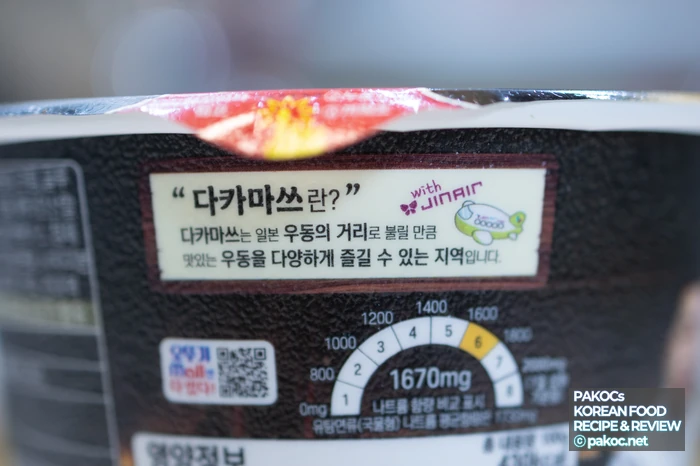
ⓒ
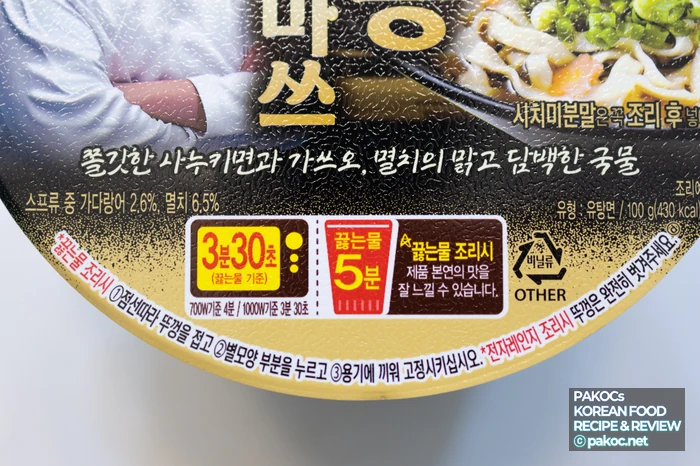
Copyright PAKOC https://pakoc.net | All Rights Reserved Pakoc(http://Pakoc.net)This menu comes with two cooking methods: microwave and boiling water. Usually the microwave is the recommended route, but oddly enough, this one recommends boiling water instead! Think of the microwave method as more of a shortcut for when you want it a bit faster.
ⓒ
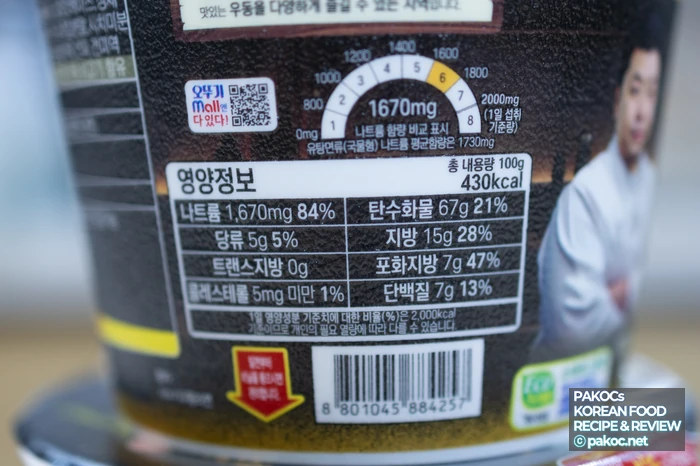
Copyright PAKOC https://pakoc.net | All Rights Reserved Pakoc(http://Pakoc.net)In total, this box weighs 100 g and comes to 430 kcal, with sodium at about 84% of the daily recommended intake. The volume, calories, and total sodium aren’t all that different from other cup noodles. As a meal substitute, it feels just about right.
ⓒ
Copyright PAKOC https://pakoc.net | All Rights Reserved Pakoc(http://Pakoc.net)What’s in the Cup
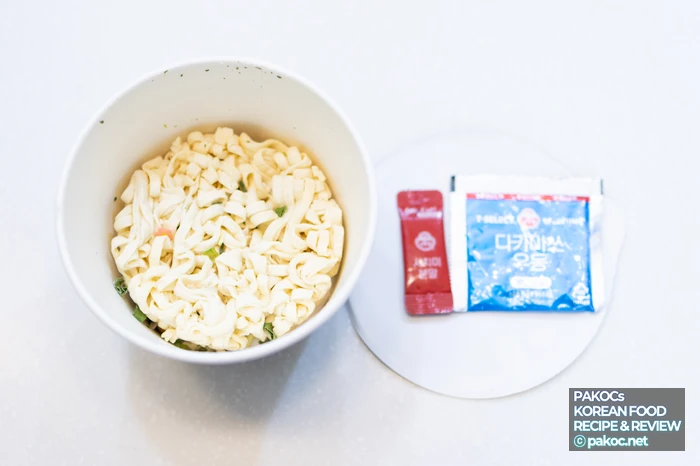
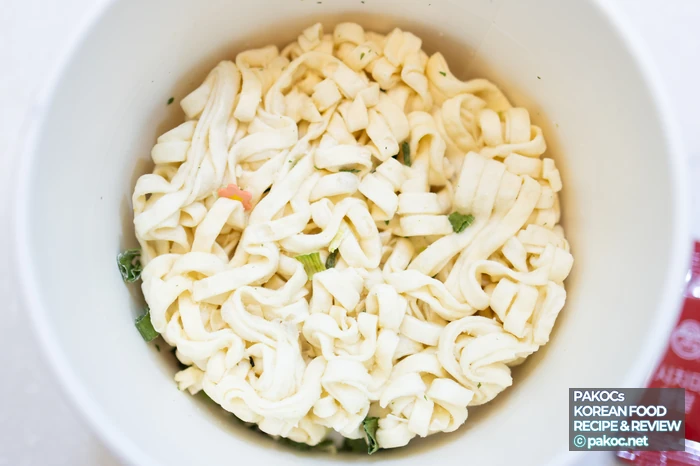
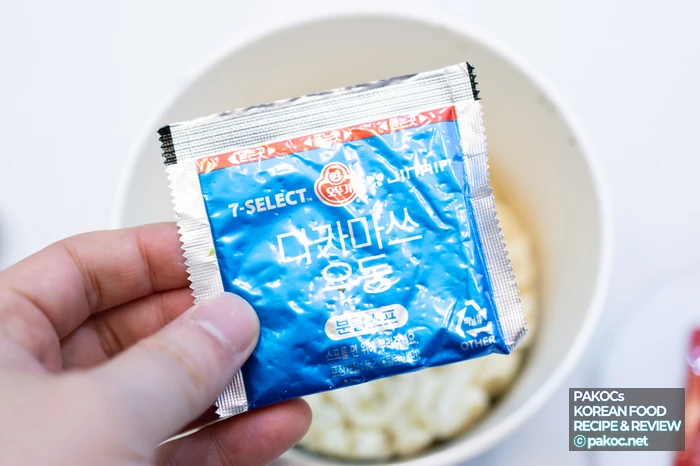
Let’s run through the contents quickly. This menu comes with four parts: the udon noodles said to recreate Sanuki udon, the udon powder soup, shichimi powder, and dried toppings.
ⓒ
Copyright PAKOC https://pakoc.net | All Rights Reserved Pakoc(http://Pakoc.net)The noodles are clearly much thicker than in other ramen menus. Of course, these aren’t fresh noodles, so there are limits, but I got genuinely curious about how they’d feel once cooked. The toppings look mostly like dried green onion and dried seaweed, tucked underneath the noodles.
ⓒ
Copyright PAKOC https://pakoc.net | All Rights Reserved Pakoc(http://Pakoc.net)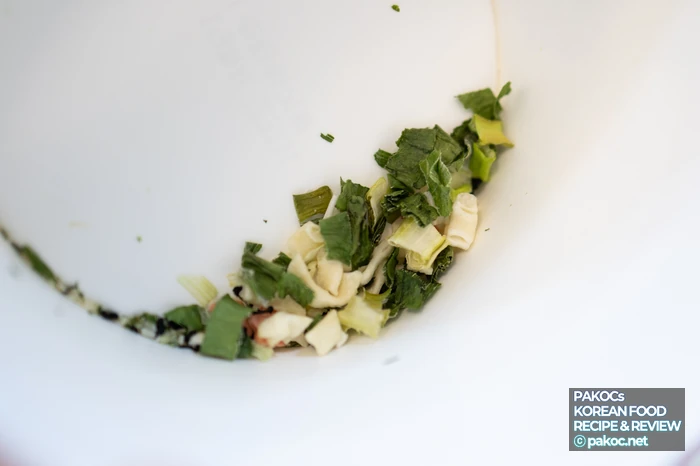
ⓒ
Copyright PAKOC https://pakoc.net | All Rights Reserved Pakoc(http://Pakoc.net)The udon powder soup naturally goes in while cooking. There’s also shichimi powder in a small stick. However, compared to what you’d get at a proper udon shop, there’s quite a lot of it, so I’d recommend adjusting the amount to taste.
ⓒ
Copyright PAKOC https://pakoc.net | All Rights Reserved Pakoc(http://Pakoc.net)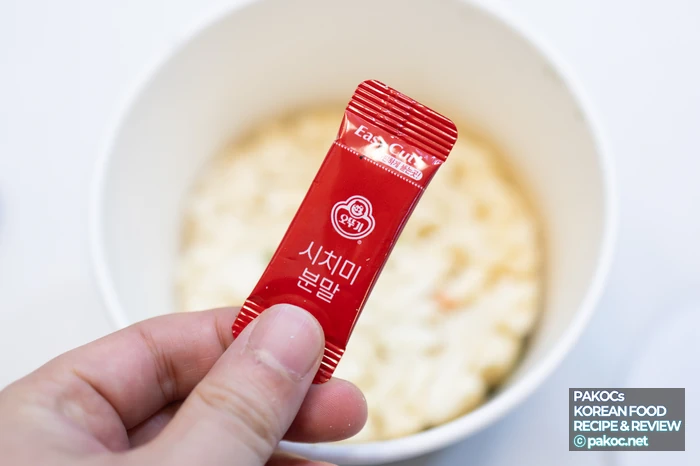
ⓒ
Copyright PAKOC https://pakoc.net | All Rights Reserved Pakoc(http://Pakoc.net)Cooking It Up
Now let’s get cooking. There’s a reason I stressed earlier that, while the microwave works, boiling water is the recommended method. Honestly, since a microwave method was printed on the label, I assumed that was the go-to and popped it straight into the microwave. Ha. I hope you avoid my mistake. Anyway, I placed the powder soup on top of the noodles and poured in hot water.

ⓒ
Copyright PAKOC https://pakoc.net | All Rights Reserved Pakoc(http://Pakoc.net)
ⓒ
Copyright PAKOC https://pakoc.net | All Rights Reserved Pakoc(http://Pakoc.net)Three and a half minutes in the microwave gets you something like this. The boiling-water method is probably recommended because letting the noodles loosen slowly in water gives a truer result. Still, even the microwave version isn’t half bad, right?
Taste Test: How Does It Actually Taste?
Now let’s dig in. Before lifting a single bite, I added only about half the shichimi and stirred it well into the broth. Since there’s more shichimi than you’d expect, you’ll want to be careful not to dump it all in at once.

ⓒ
Copyright PAKOC https://pakoc.net | All Rights Reserved Pakoc(http://Pakoc.net)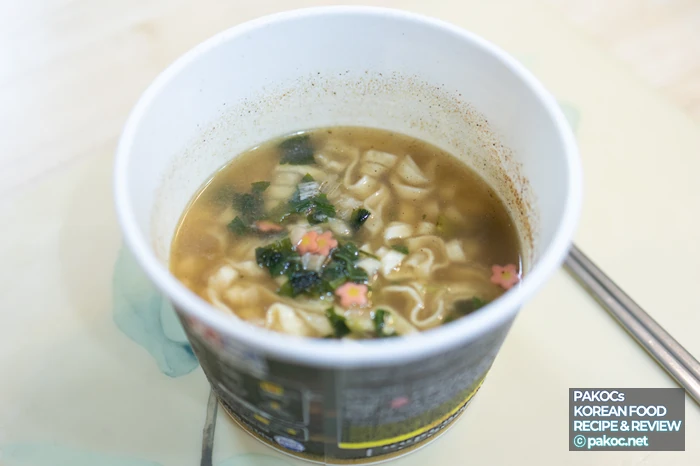
ⓒ
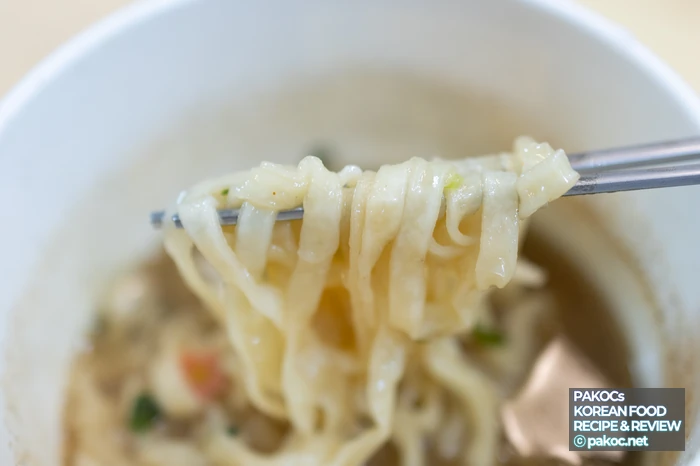
Copyright PAKOC https://pakoc.net | All Rights Reserved Pakoc(http://Pakoc.net)At the microwave standard of three and a half minutes, the noodles turned out surprisingly chewy. Five minutes in boiling water alone would likely make them quite soft. For the microwave, cooking longer could loosen the noodles a bit, so keep that in mind and either cook just slightly more or let it steam briefly. Either way works fine.
ⓒ

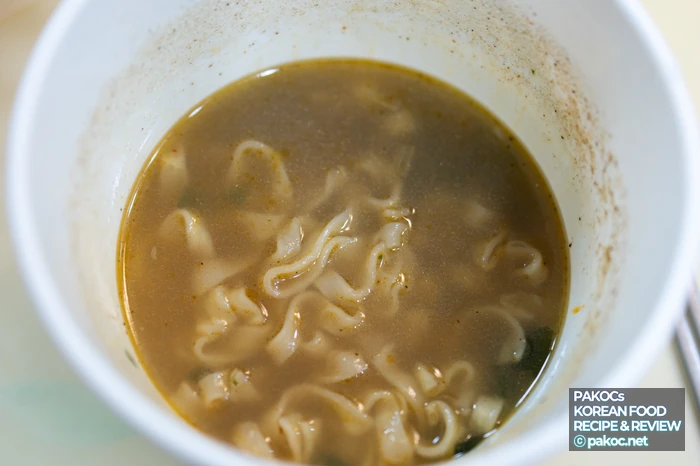
Copyright PAKOC https://pakoc.net | All Rights Reserved Pakoc(http://Pakoc.net)On top of that, the broth is quite rich. You can clearly taste that anchovy-and-bonito base. It’s in the same family as Ottogi’s own tempura udon, but the broth here is far deeper, and the bonito aroma comes through generously.

ⓒ
Copyright PAKOC https://pakoc.net | All Rights Reserved Pakoc(http://Pakoc.net)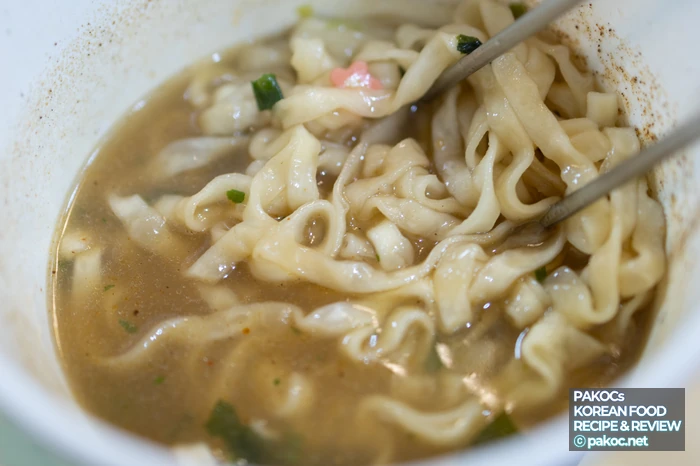
ⓒ
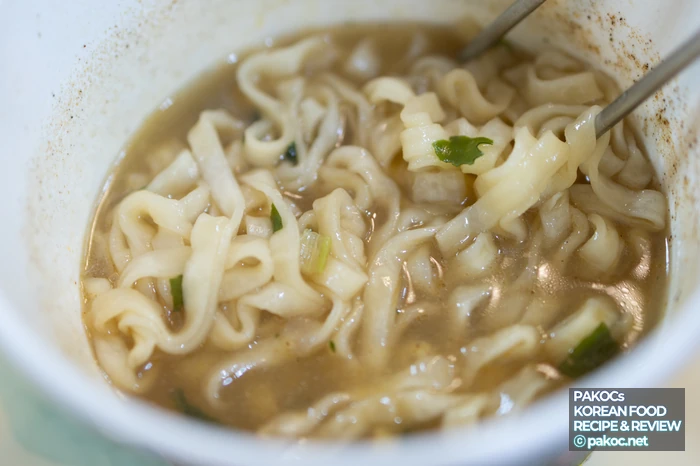
Copyright PAKOC https://pakoc.net | All Rights Reserved Pakoc(http://Pakoc.net)Since the noodles are generously thick, the broth soaks in nicely, so they pair together really well. It isn’t too aggressive, yet it carries a pleasantly savory, mildly salty depth. When you’re after a less punchy noodle, this quietly hits the spot.
ⓒ
Copyright PAKOC https://pakoc.net | All Rights Reserved Pakoc(http://Pakoc.net)Because the broth is udon-based, eating only this for a while can get a touch cloying. When that happens, loosen a little of the reserved shichimi bit by bit for a mild kick, and it works nicely. There’s a bit of pepper in the base that gives a faint tingle. Still, the impression differs quite a lot between mixing in the shichimi and leaving it out.
ⓒ
Copyright PAKOC https://pakoc.net | All Rights Reserved Pakoc(http://Pakoc.net)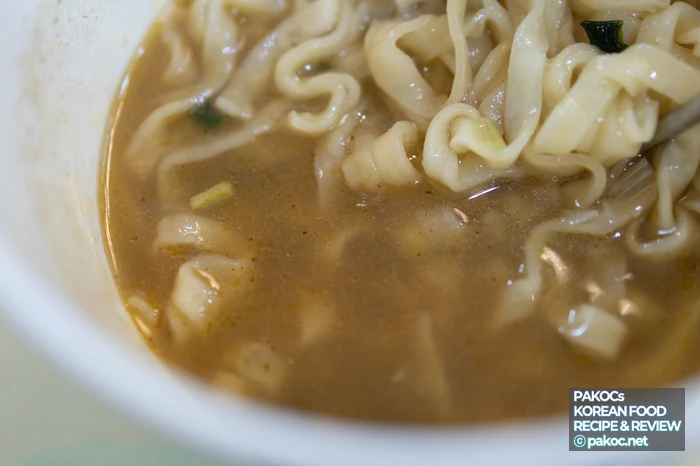
ⓒ
Copyright PAKOC https://pakoc.net | All Rights Reserved Pakoc(http://Pakoc.net)Final Verdict
Personally, among the 2,200-won premium cup noodles, a ramen with this level of savory depth and a slightly rich broth is hard to come by. It might feel a touch pricey, but I think it’s more than enough as the main of a meal. What about you? It’s no match for high-end instant meals, but for a cup noodle the fidelity is genuinely decent. If you’re curious, it’s well worth a try. For anyone in Korea craving a milder, dashi-forward noodle, it’s an easy Seven-Eleven grab.
ⓒ
Copyright PAKOC https://pakoc.net | All Rights Reserved Pakoc(http://Pakoc.net)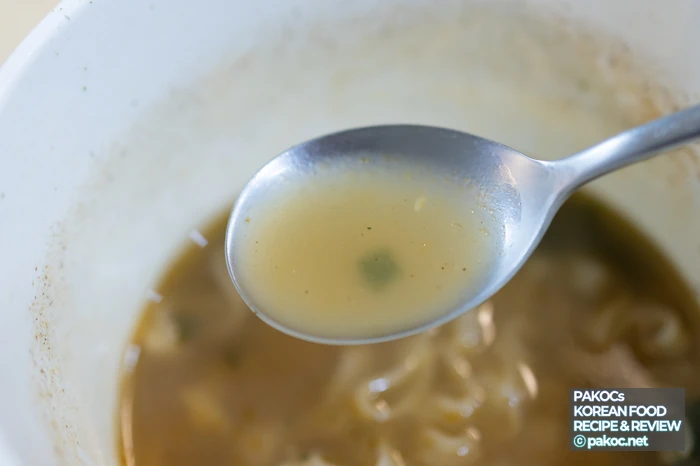
ⓒ
Copyright PAKOC https://pakoc.net | All Rights Reserved Pakoc(http://Pakoc.net)For more on this four-way collaboration and the on-site development in Takamatsu, you can read the (Korean source) News1 report on the Takamatsu Udon launch.
Frequently Asked Questions
Q. How much is the Seven-Eleven Takamatsu Udon?
It’s 2,200 won (about $1.60 USD). The cup weighs 100 g and comes to 430 kcal, with sodium at 84% of the daily recommended intake, placing it in the premium cup-noodle bracket.
Q. Should I cook it in the microwave or with boiling water?
Boiling water is the recommended method. The microwave (3 minutes 30 seconds) works too, but letting the noodles loosen slowly in hot water gives a truer Sanuki-style chew. Add only about half the shichimi at first, since there’s more than you’d expect.
Q. What does the Takamatsu Udon taste like?
The broth is noticeably rich, with an anchovy-and-bonito base that comes through clearly. The noodles are surprisingly chewy and thick for a cup, so the broth soaks in well, and the overall flavor is a mild, savory udon rather than an aggressive one.
image sources
- 사누키 스타일 넓적한 면발 특징: Copyright PAKOC https://pakoc.net | All Rights Reserved Pakoc(http://Pakoc.net)